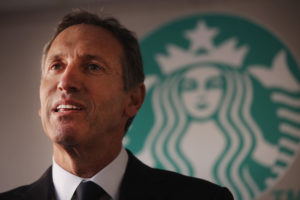
CEO Howard Schultz
As if the drink orders aren’t complicated enough, now the Starbucks CEO is asking his baristas to delve into the bruising thicket of race relations in America when they hand over the cup of latte to customers.
In a campaign the coffee giant is calling #RaceTogether, Starbucks is embarking on a daring effort to nudge the country—at least the ones who drink Starbucks coffee—to confront the monumental problems of racism and racial inequality. CEO Howard Schultz convinced USA Today to come on board by printing a supplement that will be released on Friday, March 20, that talks about race at length and includes questions that can serve as “conversation starters.” One of the questions, according to The Washington Post, is: “In the past year, I have been to the home of someone of a different race ___ times.”
The entire effort was too much for Twitter users to resist, as two hashtags drew an avalanche of caustic commentary and also messages that highlighted the hypocrisy of such a campaign being initiated by a company with an overwhelmingly white corporate leadership team.
A user by the name of @NewaHailu wrote, “Starbucks pays Ethiopian farmers pennies for coffee beans. They turn around and charge $10 for grande latte. #ExploitTogether #RaceTogether”
User @JamilSmith tweeted, “The only folks happy about Starbucks baristas discussing race with customers are the suits who run it. Feel-good liberalism at its worst.”
But then there were the humor tweets, now exploding on social media with the hashtag #NewStarbucksDrinks.
These are some of those intended for laughs:
@jujoffer: Malcolm Xpresso
@AngryBlackLady: Some of My Best Friends Are Black Coffee
But Schultz is not the type to run away from controversy or ridicule. He publicly championed gay marriage and came out against guns. When a shareholder questioned the company’s public support for gay marriage in 2013, Schultz said, “We want to embrace diversity. … It is a free country. You can sell your shares in Starbucks.”
It all began with forums Schultz has held around the country with his “partners,” as he calls his employees, initiated by the killings of Michael Brown and Eric Garner and the conversations about racial inequality that grew out of the killings and protests. The CEO felt the first one was so successful, he did them in five other cities, even in some cases bringing in representatives of the police department to talk with members of the community, many of them African-Americans.
“Staying silent is not who we are,” Schultz said at the December forum.
In a video message to “partners” posted on the company website, Schultz asked them to consider writing #RaceTogether on each customer’s cup.
“If a customer asks you what this is, try to engage in the discussion, that we have problems in this country with regards to race and racial inequality,” Schultz said. “And we believe we’re better than this. And we believe the country is better than this. And if this makes you have a conversation with a customer about the need for compassion, the need for empathy, the need for love for others. If you can do that with one customer one day, then you are making a significant difference.”


