
An Illinois roofing company will pay $700,000 to settle a civil rights lawsuit alleging one of its managers racially and sexually harassed employees, including calling one Black worker the N-word and “slave.”
The U.S. Equal Employment Opportunity Commission (EEOC) filed the lawsuit on behalf of Derrick Graves, a 43-year-old Black warehouse worker at Anthony Roofing in Aurora, Illinois, a subsidiary of Tecta America. Graves also filed his own class-action lawsuit against his former employer.
The EEOC announced on Nov. 6 that a federal judge had approved a settlement resolving both lawsuits.
Graves began working as a warehouse manager for Anthony Roofing in November 2019,
where he was a “highly qualified, competent employee” who met or exceeded the company’s expectations, according to the complaints.
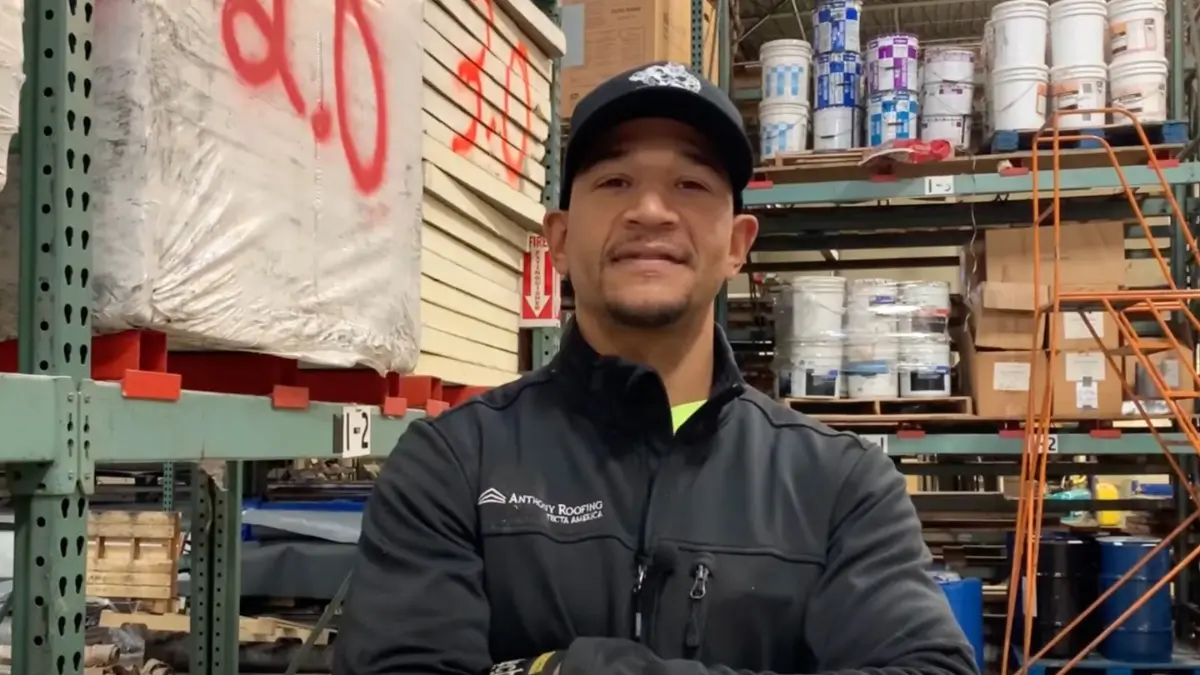
In an early 2020 company video, Graves described his duties as a shop manager, including opening the warehouse at 4 a.m., maintaining heavy equipment, and “making sure the foremen have what they need.”
He said he enjoyed the “hands-on work,” the opportunity to learn more about the roofing industry, and the prospect of “moving up in the industry,” potentially as a superintendent.
But his coworkers soon subjected him to a hostile, abusive, and offensive working environment, the lawsuits said.
A company vice president, Ted Staniszewski, routinely called Graves “n–ger” and “slave,” and told him he did not want his “Black a–” in a meeting.
While discussing an upcoming work project that required air travel, Staniszewski allegedly told Graves he “does not sit by ‘black people’ or Muslims because ‘it is not safe with those people anywhere,’” the plaintiffs claimed.
Other supervisory and nonsupervisory employees also routinely engaged in racial harassment of Black employees, calling them “n–ger,” “Black Motherf–ker,” and “boy.”
The lawsuits allege that on April 11, 2022, employee Steve Niggins told Graves, “This isn’t a racist joke, but why don’t black guys listen to country?” Niggins then added, “Because every time we say a ho down, they always think one of their women got shot.”
The same day, another co-worker, Ted Seven, allegedly told Graves, “You need a chime that just says ‘n–ga’ when someone needs you.”
When Graves approached Staniszewski two weeks later to inform him of a court appointment for child support that he needed to attend, his manager responded, “It’s just like a black guy to have court,” the lawsuit said.
In May of 2022, employee Bill Bodnar came into the shop and allegedly said, “What up, nig” to Graves, who responded by saying, “Bill, with all due respect, I’m not your nig, n–ga, or n–ger.” Bodnar’s retort: “Fu—you then.”
The complaint says Graves reported the exchange to Staniszewski on May 6, 2022, but Staniszewski allegedly dismissed his concerns, saying, “Bill is just comfortable with you,” before grabbing Graves’ butt and asking if it made him feel uncomfortable. Graves told him it did.
A week later, Staniszewski, a company vice president “who had the power to hire, fire, demote, promote, reassign and discipline employees,” suggested to Graves that he put in his two-week notice and quit.
He then allegedly told Graves that he “needs to do what he is told and shut the fu—up,” that “what he says or feels doesn’t matter,” “stay in your cage,” and “nigs don’t get lunch.”
The lawsuit said Graves reported the racial harassment to his supervisors, to the president of Anthony Roofing, and to Tecta America’s human resources department, as directed, multiple times, but that the harassment continued and constituted retaliation for his complaints.
Unable to tolerate the hostile working conditions and ongoing harassment, Graves resigned on May 31, 2022, which the lawsuit called a constructive discharge due to his employer’s unlawful employment practices, “which included threats and at least one instance of unwelcome physical contact.”
Staniszewski also allegedly made sexual comments about female employees’ bodies, including telling one employee that her “a– looks very big in jeans” and asking another if she was “pregnant or just fat.”
He also made sexually inappropriate comments regarding “blow jobs” in a conference room and asked employees about their sexual relationships, the plaintiffs say.
The complaints said Staniszewski also made demeaning remarks about women, including stating that women did not belong in the office.
Female employees reported the sexual harassment to Tecta America’s Director of Human Resources, Bonnie Ogden, but she did not take reasonable steps to stop or prevent the harassment, the plaintiffs claimed.
The lawsuits alleged that the conduct of the employees and managers at Anthony Roofing violated Title VII of the Civil Rights Act of 1964, which prohibits workplace harassment based on race and sex, as well as retaliation against individuals who oppose such harassment.
Graves sought a jury trial to determine compensatory and punitive damages to cover his lost pay, emotional distress, mental anguish, and his legal costs.
The EEOC, with Graves as a plaintiff-intervenor, also sought compensation for a class of Black employees and a class of female employees who faced the reported harassment, and injunctions “to eradicate the effects of the unlawful employment practices” and requiring the defendants to institute and carry out policies and practices that provide equal employment opportunities for their employees regardless of race and sex.
The settlement between the parties includes an agreement for Anthony Roofing Tecta America, LLC to pay a total of $700,000 to resolve both lawsuits. The judge dismissed its parent company, Tecta America Corp., from the lawsuit via a joint motion on Nov. 5.
A two-year consent decree signed by the EEOC, Graves and Anthony Roofing, and approved by U.S. District Judge Sunil R. Harjani, says it fully resolves the matter while “defendant denies the allegations made by the EEOC and Plaintiff-Intervenor” and “should not be construed by either party as an admission of the claims or the defenses of the other party.”
In addition to monetary relief, the consent decree requires training for Anthony Roofing’s managers and human resources employees on preventing and correcting racial and sexual harassment; posting notice of the lawsuit and settlement, record-keeping, and compliance-related reporting to the EEOC.
It says that within 14 days of the approval of the decree, Anthony Roofing shall make payment to Graves and each “Aggrieved Individual,” including other Black and female employees.
Atlanta Black Star contacted the plaintiffs’ attorneys to ask whether any other employees had joined the lawsuits’ two plaintiff classes and would seek compensation from the settlement.
Bret Pufahl, an attorney representing Graves, responded in an email, “My client and I are pleased with the resolution of this matter. We appreciate the EEOC’s involvement and efforts in bringing this case to a satisfactory conclusion.”
He did not address whether other claimants would benefit from the settlement.
According to his LinkedIn profile, Graves is now working as a roofing technician for a roofing company in West Chicago.
Attorneys for the EEOC did not immediately respond to the ABS request for information.
In a statement announcing the settlement, EEOC Deputy General Counsel Christopher Lage said, “Employers must not tolerate race or sex harassment in the workplace. Company officers face particularly serious legal consequences when they perpetrate harassment.
Employers have a duty to address harassment at every level of the organization and to take steps to prevent harassment from continuing.”


