Octavia Spencer has spent 15 years being called an overnight success.
This week, she told Keke Palmer what that phrase actually cost her — and it comes down to one question she now asks anyone who wants her on a project.
The actress has grabbed roles in popular movies such as “Hidden Figures” and “The Life of Madam C.J. Walker,” in which she portrays the late, great beauty mogul.
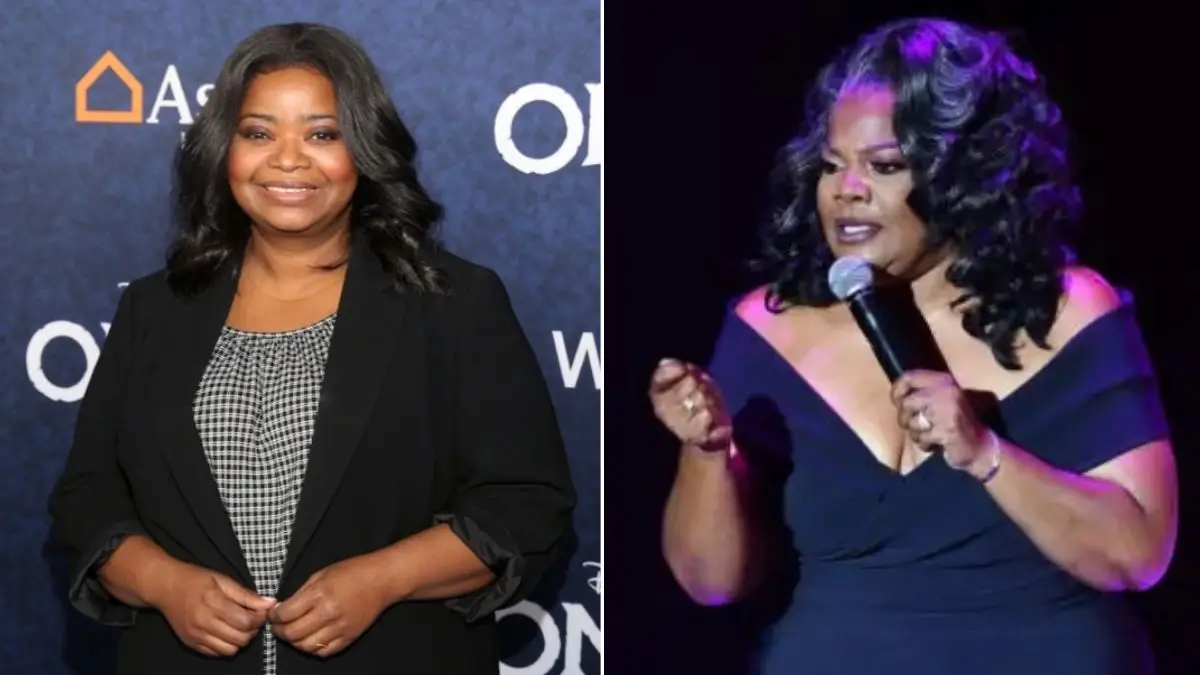
The Academy Award-winning actress appeared on the newest episode of Palmer’s podcast, “Baby, This Is Keke Palmer,” released Tuesday, Sept. 15.
Palmer steered the conversation to the period after her role in the 2011 film “The Help,” where she played a maid exposing racism and civil-rights injustices in 1960s Jackson.
Spencer won an Oscar for her role yet still found herself comparing paychecks with her co-stars.
“You gotten the Oscar. People clearly knew your talent was insane,” Palmer told her. “But somehow it came up that you guys would get paid differently.”
Spencer has pushed back on Hollywood’s math before. But she had never walked anyone through the actual phone call.
She did this time.
Before “The Help,” Spencer spent more than a decade in one-scene roles. From nurses, clerks, neighbors, work that paid scale and quickly disappeared. The 2011 drama ended that. She won Best Supporting Actress.
Jessica Chastain, who portrayed Celia Foote in the film, earned an Oscar nomination in the same category. The two ended up coming off that set as close friends.
When Chastain called to pitch “Deck the Y’alls,“ a holiday comedy she planned to produce, Spencer agreed immediately. The project would mark their first on-screen reunion since “The Help,” but Spencer attached one firm condition before signing on.
“I said yeah, all that’s great, the idea sounds great, but you gonna have to pay me,” Spencer recalled during the episode posted on YouTube. Chastain said she intended to pay. But apparently, that was the wrong answer.
“I said no, no. People always say ‘of course,’ and then they only have, when they go to white actors, they have dollars, and by the time they get to the Black actors they have cents,” Spencer said. “So I need to know, do you have some dollars?”
Chastain said yes, so Spencer showed her the payment records and the amounts she earned for each role.
“She sat quietly on the phone,” the actress continued, “and she said, ‘Oh my God.'”
“It’s hard sometimes to know what you’re missing,” Palmer said, laughing. It takes “a sister that’s a sister” to slide the pay stub across the table.
Chastain backed up her promise. By tying her salary directly to Spencer’s under “favored nations” terms, she negotiated a deal that secured both actors five times their initial asking rate, according to TIME.
But the part that set the internet off came next. Spencer said the tell is in the follow-up. A producer will usually sigh, point to the $10 million budget and claim nobody is going to make money from the project. “Well, let’s talk backend,” she said. Then she imitated the voice on the other end: “Backend?”
“That imaginary money that you haven’t made,” Spencer said. “I’m peeping that you’re peeping that you’re gonna make that money, and then in success I want my, not dime, I want my dollar. You want me to sign on for pennies in the front but won’t give me any of the imaginary money in the back? We can’t be friends, honey.”
Palmer knew the lesson well. She credited Tyler Perry with introducing her to backend participation when she was a child actor on “Madea’s Family Reunion.”
“You hear me?” Spencer said. “The imaginary money is where you get rich.”
Social media was definitely behind Spencer on this, but it certainly wasn’t the first time they’d heard this story from an award-winning Black actress.
“They shouldn’t have let Monique be loud by herself about them not paying Black actors,” one user wrote. Another needed five words: “That’s what Monique was saying…”
A third person recalls that when the comedic actress raised it, “I ain’t hear nor see not one BLACK Hollywood actress come to her defense yet.”
Another said, “The beef was with Netflix in this case because they lowballed her.”
Meanwhile, Perry’s name surfaced on its own in the comments, with people praising him for always looking out for his own. “My folks get paid when they work with him,” one user said.
The comparison to Mo’Nique isn’t a stretch, either. In January 2018, the “Precious” Oscar winner said Netflix offered her $500,000 for a comedy special.
Netflix initially offered Amy Schumer $11 million, and Chris Rock and Dave Chappelle $20 million each.
Mo’Nique called for a Netflix boycott, faced accusations of bitterness, and sued the company in 2019. She alleged racial and gender discrimination. The two sides settled the lawsuit in 2022.
To this day, though, she is still demanding accountability from Perry and Oprah Winfrey. For years, Mo’Nique has accused both producers of blackballing her after she refused unpaid international promotional tours for “Precious.” She says her contract did not require overseas travel.
Despite Mo’Nique’s ongoing feud with Perry, Palmer credits his early backend payout with keeping her family afloat after relocating from Chicago with virtually nothing.
Taraji P. Henson has also said Perry was the first to pay her $500,000 for 2009’s “I Can Do Bad All by Myself,” after Hollywood went quiet on her following her Oscar nomination. Perry booked her for two more films, “Straw” and “Why Did I Get Married Again?”
Perry’s leverage stems from complete ownership. By retaining full rights to his entire catalog, he built the nation’s largest Black-owned studio on the grounds of a former Confederate army base in Atlanta. At the 2025 BET Awards, he told the crowd he has made more Black millionaires than any studio in town combined.
Spencer reached a similar outcome through a different path — a phone call from a friend who willingly leveraged her own star power without hesitation.


