Defense Secretary Pete Hegseth reversed course within days after religious groups objected to a new Pentagon policy.
Black service members have been waiting much longer for answers.
The Pentagon changed its newly shortened list of religious affiliations this week after lawmakers and religious leaders complained about how it organized the categories.
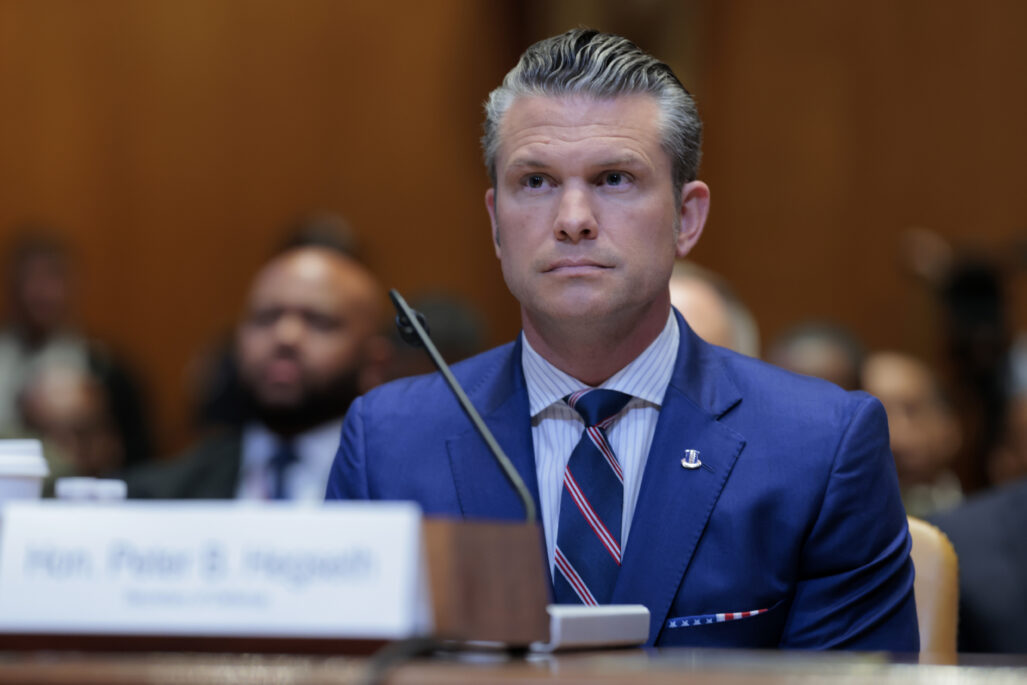
The swift reversal comes as questions continue to swirl around Hegseth’s reported decision to block promotions for several Black and female military officers.
Last week, Pentagon spokesman Sean Parnell shared a list of 31 religious affiliations service members could choose from. The move dramatically reduced the previous list of roughly 200 faith codes.
Earlier this year, Hegseth called the longer list “impractical and unusable.”
“An overwhelming majority of the military population used only six of the codes,” Hegseth said in March, according to The Hill.
He argued that a shorter list would help military chaplains better serve troops based on their faith backgrounds and religious practices.
But the rollout quickly sparked backlash.
The original list grouped 21 affiliations under a “Christian” label. The Church of Jesus Christ of Latter-day Saints was not included among them.
The omission angered several Republican lawmakers from Utah, including Sen. Mike Lee, Sen. John Curtis and Rep. Mike Kennedy.
“I find this offensive,” Lee said in a video posted on social media Sunday.
Lee argued the government should not insert itself into theological disputes or determine which faiths belong under specific religious labels.
Pentagon Reverses Course After Backlash
Just days after the criticism began, the Pentagon changed the policy.On Monday, Parnell released a revised version of the list. The new version removes the “Christian” label entirely.
The Pentagon said the original version included “redundant and unnecessary labeling” and that the update corrected the issue.
“The Pentagon’s job is not to adjudicate theological debates, but instead to ensure sincerely held faith is respected and encouraged in our ranks,” the department said.
The Pentagon also said the goal was to simplify what it described as an “out-of-control” religious coding system.
Lee praised the change and thanked Hegseth for correcting the issue.
Under the revised policy, service members can still identify with about 20 Christian denominations or select Jewish, Muslim, Hindu, Sikh, Buddhist, Bahá’í or agnostic affiliations.
Other religious designations disappeared from the list, including Unitarian Universalist, Wiccan, Pagan and Humanist categories. Troops may also choose “No Religion” or “Other Religion.”
Black Officers Still Waiting for Answers
The quick response stands in contrast to another controversy surrounding Hegseth.
Last week, The New York Times reported that Hegseth removed several naval officers from a promotion list that had already been approved by a board of senior Navy admirals.
According to the report, three of the officers were women and two were Black men.The Pentagon dismissed suggestions that race or gender played any role in the decision.
Parnell called the report “race-baiting garbage.”
“[The New York Times] continues to push this worn-out narrative,” Parnell wrote on social media. “They view almost everything through the lens of race and gender over merit.”
Hegseth has repeatedly criticized Diversity, Equity and Inclusion programs.During a recent speech at West Point, he declared, “Diversity is not our strength. Unity is our strength.”
Since taking office, Hegseth has reportedly fired or sidelined more than two dozen generals and admirals.Among them were Adm. Lisa Franchetti, the first woman to lead the Navy, and Gen. Charles “CQ” Brown, only the second Black chairman of the Joint Chiefs of Staff.
Military officials continue to insist promotions are based solely on merit.But lawmakers have questioned the long-term impact of removing experienced officers from leadership positions.
“You are hollowing out the military’s bench of experience and highest-performing senior officers, while making young officers wonder if they should continue to serve,” Sen. Jack Reed told Hegseth during an April Senate hearing.


