White House press secretary Karoline Leavitt stepped out to defend President Donald Trump like she always does, framing Trump as a strong and decisive leader, just as a rescue mission in Iran became the latest example she pointed to.
But a very different picture was taking shape behind closed doors, one in which the president wasn’t leading a tense military operation at all but was deliberately kept at arm’s length as it unfolded.
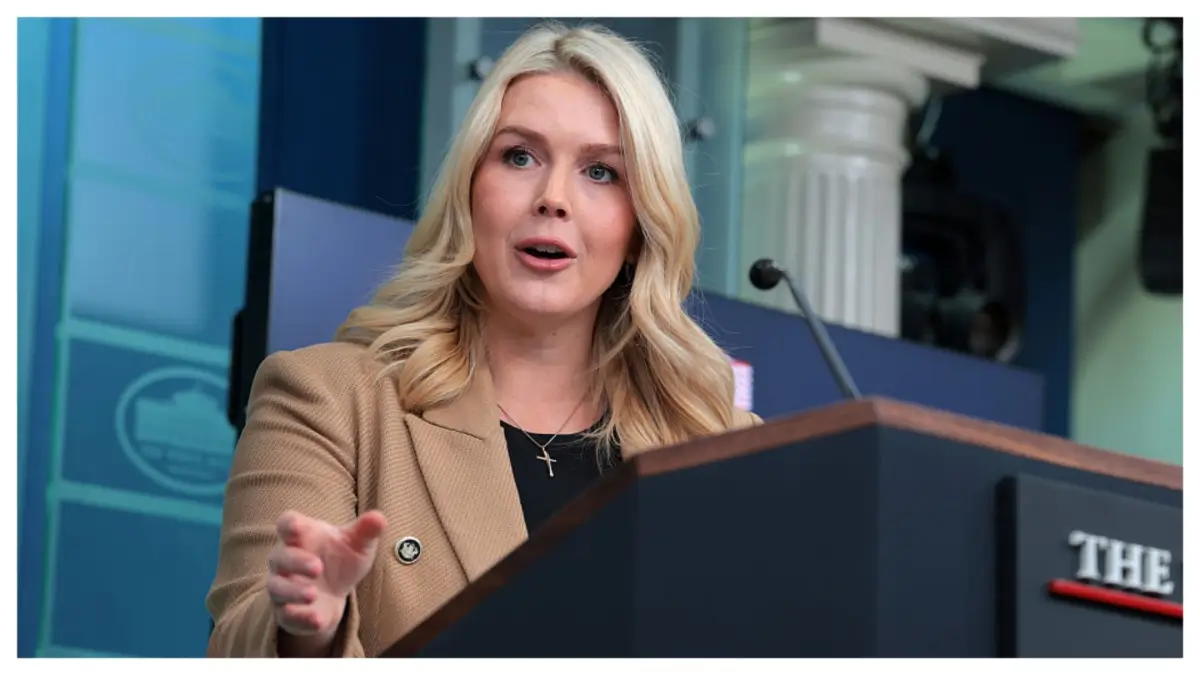
At the time, Leavitt publicly insisted Trump had directed the heroic rescue of a downed pilot, but a detailed report shows military advisers sidelined him during the operation out of concern his behavior could derail the entire mission. The gap between the image being sold and what really happened is now hard to ignore, while exposing a broader pattern in how Trump handles high-pressure moments.
According to the Wall Street Journal, the situation began spiraling the moment Trump learned a U.S. jet had been shot down over Iran. What followed wasn’t a steady command response. Instead, Trump turned volatile.
Trump appeared to be growing nervous as the crisis unfolded, with his confidence slipping and his fears starting to take over.
Inside the West Wing, he “screamed at aides for hours,” the report said, circling the same anxieties: gas prices, European allies, and the political damage he feared could mirror past presidential failures.
He fixated in particular on one moment in history. “If you look at what happened with Jimmy Carter…with the helicopters and the hostages, it cost them the election,” Trump said in March, referring to the failed Iran hostage rescue that helped sink Carter’s reelection bid. “What a mess.”
That fear carried into the crisis involving the missing airman, shaping his urgency and agitation as he demanded immediate action. But the military refused to hand him the keys.
View on Threads
Instead, officials made a calculated decision to keep Trump out of the command room. As the rescue operation unfolded, he was only updated at “meaningful moments.”
Trump’s impatience and unpredictability were seen as risks, not assets.
The mission itself nearly collapsed, and the aircraft got stuck. U.S. personnel had to improvise to avoid tipping off Iranian forces. Eventually, both airmen were recovered, turning what could have been a political and military disaster into a narrow success.
That’s the version Leavitt pointed to when she lashed out at critics.
“While President Trump Directed Heroic Rescue, the Radical Left Spread Deranged Lies,” she wrote, framing the moment as proof of Trump’s leadership and dismissing concerns about his conduct.
But even as that message went out, Trump’s own actions undercut it.
Hours after the rescue, he posted a threat that raised alarms across Washington and beyond.
“Open the F–kin’ Strait, you crazy bastards, or you’ll be living in Hell,” he wrote on Truth Social, adding “Praise be to Allah” at the end. The message wasn’t coordinated through his national security team. It was, by all accounts, improvised.
Privately, Trump explained the thinking in his own way. He said he wanted to appear unstable, believing that projecting unpredictability might force Iran to negotiate, the Journal reported. But even then, he seemed unsure of the fallout, asking aides afterward: “How’s it playing?”
Trump’s indecisiveness has become a defining feature of his approach during the conflict. Advisers described a president toggling between aggressive threats and deep concern about consequences, including the risk of American casualties and political damage at home.
At one point, he resisted a proposed military move because, as he put it, U.S. troops would be too exposed. “They’ll be sitting ducks,” the president said. At another, he floated the idea of awarding himself the Medal of Honor.
The inconsistency has extended beyond military decisions. During critical stretches of the war, Trump’s concerns have drifted into unrelated topics, such as midterm fundraising, ballroom construction, and even cryptocurrency policy, while aides are tripping over themselves to keep his focus on the Iran crisis.
Critics say that the lack of discipline is showing up in the broader results.
“We are witnessing astonishing military successes that do not add up to victory and that is squarely on the president and how he’s chosen to do his job, lack of attention to detail and lack of planning,” said Kori Schake, according to the Journal.
Public reaction has been just as sharp, especially as the details of the rescue operation and Trump’s limited role in it circulated online.
“Why is he still the president if he can’t [be trusted] with information regarding military missions,” one person wrote on Threads.
Others questioned whether the administration was even being fully transparent about the operation itself.
“Where are they?? Haven’t seen a face, heard a name…if any of this is true, the orange narcissistic blob would be prancing them out all over the place.”
In some corners, the skepticism quickly hardened into outright disbelief.
“There was NO rescue. We have seen NO evidence. We have no grateful family. No NAMES. NO pictures. It’s BS!”
The reactions went beyond partisan anger, pointing to a credibility gap that has widened as Trump’s words, actions, and internal reports continue to collide.
This time, Leavitt’s defense and the underlying facts tell a different story, one where the commander-in-chief wasn’t steering the operation so much as being managed around it.
And as the war with Iran drags on, with no clear end in sight, rising economic pressure, and allies holding back, the stakes of that disconnect are only getting higher.


