Rick Ross is the current owner of the largest residence in the state of Georgia, but before he purchased his Promised Land, the rapper manifested the major investment by moving in nearby.
The property, originally named the Villa Vittoriosa and constructed in 1994, was a massive 235 acres when the Maybach Music boss purchased it in 2014, complete with 109 rooms, 12 bedrooms, 21 bathrooms, and the largest residential pool in the country, among a multitude of additional amenities.
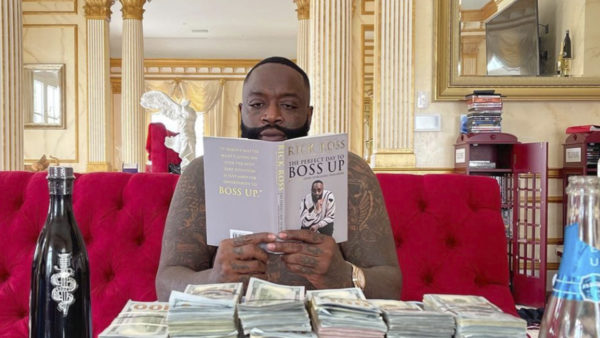
“Real estate has always been an asset,” he told “Assets Over Liabilities” co-hosts Rashad Bilal and Troy Millings of his love of property ownership. “You can make a new car. You can’t make that corner. You gotta buy that corner. And if my last name on it, you gotta come see me.”
Ross plans to expand the former home of champion boxer Evander Holyfield by an additional 87 acres thanks to an adjacent property he purchased for $1 million just so he could ride by the palatial mansion before it went back on the market. One day when he rode by, he saw a “red sign” on the gate, and that was the only sign he needed.
“Homes was something I was always fascinated about, so me and my homies started coming up to Atlanta, we used to ride by here all the time,” he explained. “Stop. Pull over, smoke one, and just be like ‘God d**n.’ After I got my deal and my situation, I bought a million-dollar home maybe two minutes from here that I still own that’s right around the corner just so I can ride by it every day while I’m in Atlanta, and that’s what the play was.”
Fans weren’t completely convinced that the “Hustlin'” rapper’s motivation behind dropping so much cash on a home was justified, however.
“so we just wasting money to drive by a property? [skull emoji]”
“And y’all think that’s being a boss?”
“Man go open a homeless shelter”

The producer and businessman also discussed ways that he is allowing his lavish home, which he has since dubbed “The Promised Land,” to create more wealth for himself, which includes film and television production and opening it up to the public in certain ways.
“Different films, videos, visuals, the automobiles, and the list just goes on,” he said of turning a potential liability into an asset. “You’d be amazed how many offers I get every week for marriages and this and that. ‘Yo, we just want to rent it, how much is it per hour?’ We’ve put it on a platform and in a position where it’s just something that people from different countries want to come. … I had to tell the security let’s not waste energy trying to stop people from taking a picture in front of the gate. We can’t f*****g stop it.”
“Coming 2 America,” “Superfly,” and “Drop Dead Diva,” are among the projects that have used the Promised Land estate as a backdrop. Ross reportedly paid $5.8M for the property.