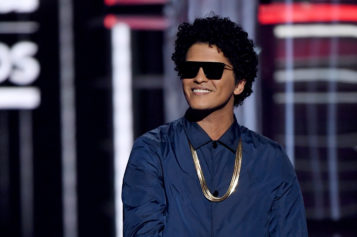
Unlike the players who took the field for the Seattle Seahawks and Denver Broncos at Super Bowl XLVIII, halftime performer Bruno Mars won’t be paid for his efforts–as is the custom at the year’s biggest entertainment event.
“No appearance fee,” confirms NFL spokesperson Brian McCarthy. “Same as always.”
For the Super Bowl’s halftime acts, payment comes in the form of exposure–and in the case of Bruno Mars, the dividends should be both considerable and long-lasting. The 28-year-old Hawaiian wowed the audience at MetLife Stadium and more than 100 million at home with a set that included a dazzling drum solo and a few gravity-defying dance moves in addition to his singing.
Like the legendary acts who’ve played the halftime show before him, he’ll undoubtedly see a bump in record sales–Beyoncé’s album 4 got a 59 percent boost from her performance in New Orleans last year, while Madonna’s back catalog surged 410 percent in the wake of her halftime show the year before.
But Mars stand to gain the most financially from the bump in earnings from concert ticket sales as his Moonshine Jungle tour rolls on. In 2013, the singer grossed $72.4 million on 84 shows; his average ticket price sits at about $66. With the added exposure from the Super Bowl, he could easily push prices closer to the $120 average of his halftime show predecessor, Beyoncé.
“I think the exposure and the favorable comments cannot help but catapult him into one of the highest earners in the business,” says veteran entertainment attorney Owen Sloane.
The display could also lay the groundwork for Mars to make the jump from being an arena act to becoming a stadium act in just as short a time as it took for him to go from the club circuit to the Super Bowl.
It will, of course, be hard to know what portion of Mars’ ticket sales are the direct result of his performance at the big game. The weekly singles and alums charts, not to mention increases in Twitter and Facebook followers, will tell a clearer story in the meantime.
At any rate, it seems safe to say that agreeing to play the Super Bowl–despite the fact that there’s no performance fee involved–was an excellent move. For Mars it was perhaps an even better one than for the more established superstars who preceded him.
Read the full story at forbes.com