Donald Trump finally admitted something people have been saying about his appearance for years.
For a man who has built so much of his identity around looking powerful, the admission probably did not come easily. Trump has rarely shied away from talking about his looks or defending the way he presents himself.
But this time, even he seemed to acknowledge the obvious.
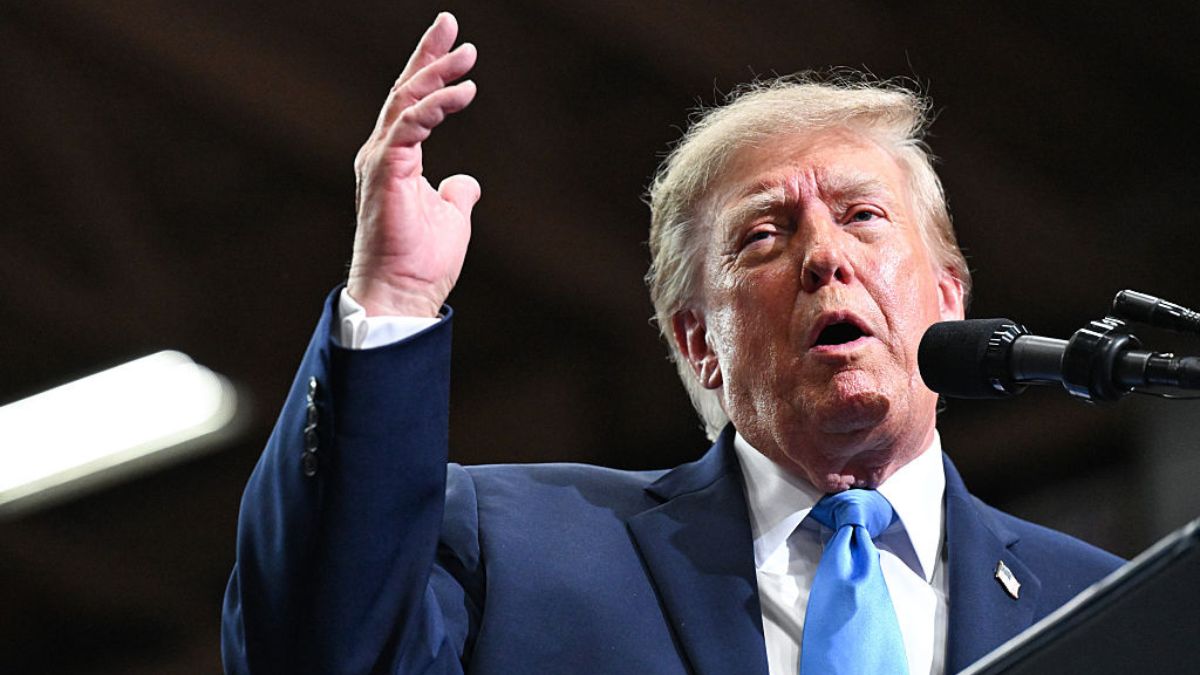
Now, one unflattering shot has Trump asking why no one warned him.
The president traveled to San Antonio, Texas, to support Republican Ken Paxton in his Senate race against Democrat James Talarico.
While discussing immigration, Trump pointed supporters to an overhead screen showing border footage, only to get startled by an unexpected look at himself.
“Wait a minute. I’m not happy right now,” the president told the crowd on Wednesday.
The brutal close-up exposed his thinning hair.
While touching his head, he said, “Getting a little bit thin up there, I’m not happy. Now I’m depressed.”
Trump said he was confident that he looked “sharp tonight. Then I just looked at myself from the back. This is not good.”
One glance at the screen changed the mood as he erupted at the crowd for not telling him what he had apparently just seen for himself.
“Why didn’t you tell me? Why didn’t you tell me?” he demanded.
The crowd laughed, but the hair talk wasn’t over.
Minutes later, Marie Vega, whose son, former Marine and Border Patrol agent Javier “Harvey” Vega Jr., was killed in a 2014 robbery attempt, joined him onstage.
“If I were you, I wouldn’t worry about your thinning hair, you’re still handsome,” she assured him. Trump smiled and replied, “Aw, thank you.”
The internet was considerably less comforting.
“No offense, Trump, but your hair is …..well, let me put it this way: Trumpo, the big rat in the cellar called. He wants his hair back,” one Yahoo! News reader joked.
Another was less amused, writing, “So weak. So insecure. A real man would just shave his head and keep on going like it’s nothing because it is.”
A third couldn’t resist taking a swipe at his signature hairstyle. “Hair? You mean that bleached blonde birds nest?” one commenter piled on. Another went even further, writing, “Soon his dementia will make him forget about his hair altogether.”
The roasting continued on X.
“A malignantly narcissistic sociopath with fading pathological tendencies finally tells a TRUTH!!!” one person wrote.
Trump’s hair has been a political sideshow for years. During a 2015 campaign appearance, he allowed a woman to touch his head to prove his hair was real.
“It’s my hair, I swear,” he insisted.
At the 2018 Conservative Political Action Conference, he admitted, “I try like hell to hide that bald spot, folks.”
The president’s hair troubles resurfaced in August 2026 when he appeared in Las Vegas sporting noticeably fuller locks.
The sudden transformation sparked speculation that he had traded his signature combover for a hairpiece, wig, or toupee. It was hard to tell, but days later, the familiar thinning look returned in White House images.
By September, the POTUS’ changing appearance had become a spectacle of its own.
During a Sept. 2 gathering in the Rose Garden, Trump addressed the rumors head-on.
“For years I had to suffer with people saying, ‘He wears a wig.’ I don’t wear a wig,” he told a crowd of Republicans.
But the denial did little to quiet the chatter. On Sept. 4, photographers caught Trump heading to New Jersey with noticeably darker hair and thinning locks on display. Viewers also scrutinized his waistline, speculating about what he wore underneath.
The makeover marathon soon reached late-night television.
On Sept. 8, Jimmy Fallon joked on “The Tonight Show,” “That’s what happens when you hire the Reflecting Pool people to dye your hair,” before airing a fake ad for “Just for Men: Touch of Cray.”
Jimmy Kimmel joked that “the only thing he got done was his hair,” adding, “The leaves are changing colors, and so is the president’s head.”
He also asked, “Is it possible to have a midlife crisis at 80 years old?” and dubbed him “Benjamin Glutton.”
The jokes followed claims, not independently verified, from Trump biographer Michael Wolff that the president carries a kit of small hair patches applied with paste for extra coverage.
Trump’s former physician, Dr. Harold Bornstein, previously disclosed that the president used finasteride, commonly sold as Propecia, to treat hair loss. The medication has not appeared on his more recent publicly released medical reports.
For a president who has spent years insisting his hair is real, the latest problem is not whether it belongs to him.
It’s whether there’s enough left to cover the back.
Trump notices he’s going bald: ‘Wait a minute. I’m not happy right now. Now I’m depressed. This is not good’ https://t.co/Xrzorr5sru
— Headquarters (@HQNewsNow) October 7, 2026


