Pope Leo XIV is facing criticism online after a short video from his recent visit to France appeared to show him turning away from a Black clergyman during a greeting line.
The September footage, recorded at Saint-Étienne Cathedral in Metz, spread rapidly on social media, with some viewers accusing the pope of deliberately avoiding the man because of his race.
However, longer footage of the encounter appears to offer additional context that was missing from the widely shared clip.
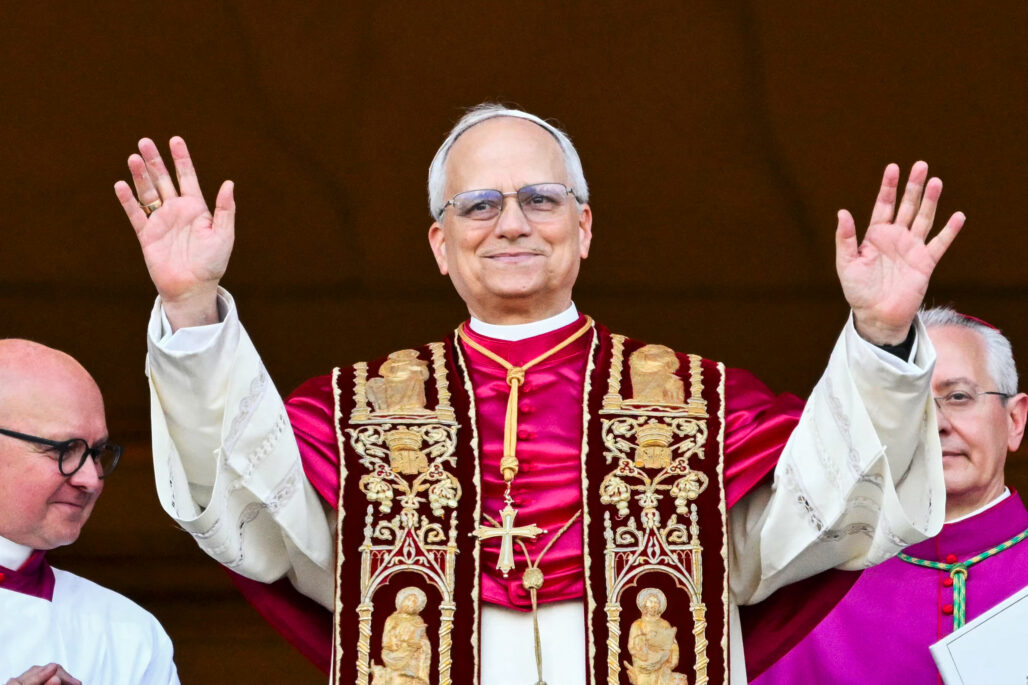
In the shorter video, Leo greets people as he moves along the line. After shaking hands with several individuals, he turns away just before reaching the Black clergyman.
That moment prompted an immediate backlash.
One commenter wrote, “Can’t imagine claiming to believe in any form of religion and still operate in hate — people are unwell.”
Another user wrote, “People who don’t even see you as humans will never show you the way to their paradise.”
Others referenced the history of racism and slavery while criticizing the pope, with one person writing, “They used to enslave us…. They literally wrote a code for it.”
Another commenter focused on the pope’s own family background complicating matters, writing, “Leave him alone!!! He is literally part Black and specifically of Haitian descent and said it himself!! He also has roots in Chicago. Y’all are extremely reaching with this.”
Leo’s racial ancestry has resurfaced amid the controversy.
Records examined by ABC News show that historical census records identified the pope’s maternal grandparents, Joseph Martinez and Louise Baquié, as Black or “mulatto”. The couple lived in New Orleans before moving to Chicago, and Martinez’s records connect his family to Louisiana and Haiti.
Genealogist Chris Smothers told ABC News, “It’s clear that the Pope has centuries-long ties to free people of color in Louisiana.” Historical records from 1900 identified both of Leo’s maternal grandparents and two of their daughters as Black while the family lived in New Orleans.
The controversy also gained attention because of remarks Leo made earlier during his visit.
While in Metz, the pope called on Europe to promote equality regardless of “race, color, class or profession” and encouraged greater respect for migrants. As translated by Türkiye Today, during Mass at Saint-Étienne Cathedral, he also said Europe’s future “does not lie in uniformity, but in the harmony of differences.”
Those comments added another layer to the criticism as users compared his message about inclusion with the brief interaction shown in the viral video.
But the short clip does not clearly establish why Leo stopped greeting people at that exact moment.
Longer footage appears to show Diego Ravelli, the Master of Pontifical Liturgical Celebrations, approaching the pope just before Leo changes direction. According to TF1, Ravelli appears to direct Leo toward French officials, including President Emmanuel Macron.
One social media user who said they watched the longer footage argued that the viral clip had removed the surrounding context.
“A video is circulating on X that looks like Pope Leo XIV refused to shake a Black priest’s hand and walked away,” the user wrote. They later added that the pope had greeted other Black people earlier in the same line and said an assistant appeared to alert him that a French official was present.
Other users reached a similar conclusion.
“I think he was interrupted and he was talking,” one commenter wrote.
Another user, while saying they did not support the pope, dismissed the accusation as an overreaction: “I don’t even f–k with this pope! But this is clearly a reach he was clearly distracted at that very moment, as u can see.”
The viral video has nevertheless continued to fuel debate over whether the pope’s actions reflected racial bias or whether viewers were reacting to a moment stripped of its surrounding context.
For now, the Vatican has not publicly addressed the social media controversy, and the pope has not responded directly to the accusations.


