Rodney Hinton Jr.’s aunt worried about his mental health after he watched police body camera footage of his son’s death.
His family did not want him driving home alone. Hours later, prosecutors say, he deliberately struck and killed a sheriff’s deputy.
As Hinton’s murder trial began Wednesday, his attorney described a mental health crisis that started years before the crash. Childhood abuse, depression and psychosis left him vulnerable, attorney Clyde Bennett II told jurors. Watching an officer fatally shoot his son pushed him further from reality, Bennett argued.
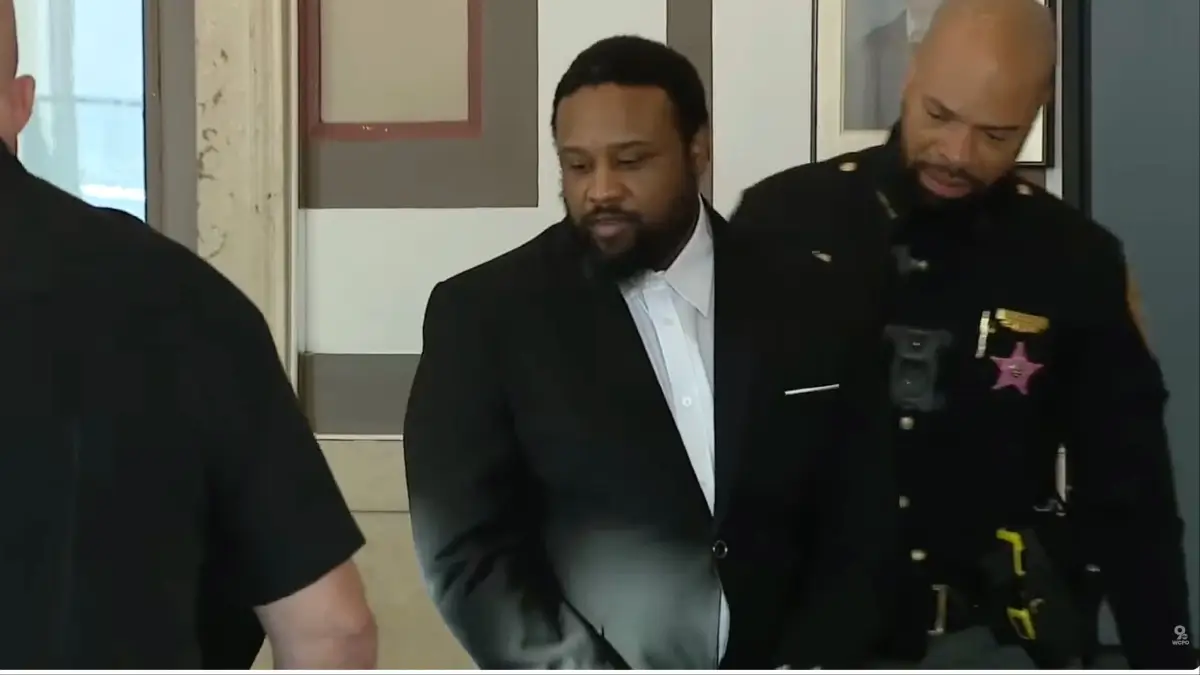
Hinton, 40, faces charges including aggravated murder in the May 2, 2025, death of Hamilton County Deputy Larry Henderson. Prosecutors say Hinton intentionally drove into Henderson as the deputy directed traffic near the University of Cincinnati’s graduation ceremonies. Earlier that day, Hinton had watched footage of a Cincinnati officer killing his 18-year-old son, Ryan, the previous day.
Hinton has pleaded not guilty by reason of insanity. The aggravated murder charge carries a maximum sentence of life in prison without parole.
His aunt’s testimony offered jurors a glimpse of his behavior between the video viewing and the fatal crash.
She said several relatives joined Hinton at the Cincinnati police building on Linn Street to watch the footage. Afterward, they did not want him driving home. Her concern centered on his mental health and well-being, she testified.
Hinton went to a relative’s home and slept for at least an hour. After he woke up, someone took him back to the police building to retrieve his vehicle.
“I think we should follow Rod home,” his aunt recalled saying.
But the trip quickly became confusing. Hinton left the parking lot, made several turns and returned, she testified. He told relatives he thought he had forgotten something.
When he left again, his aunt and another relative followed him toward Clifton, where graduation traffic crowded the streets.
While they sat in traffic, Hinton changed lanes. His aunt assumed he had noticed them following him and wanted to get away.
“He just takes off,” she testified, describing his speed as “really, really fast.”
Bennett argued that Hinton did not understand the wrongfulness of his actions that day. He described his client as an unmedicated man suffering from psychosis and overwhelming grief.
Hinton had a “psychotic, delusional belief that what he was doing was right,” Bennett told jurors.
Prosecutors disputed that account.
“He knew it was wrong. He just didn’t care,” Assistant Prosecutor Heidi Rosales said during opening statements.
Rosales acknowledged that Hinton received diagnoses of bipolar disorder and schizoaffective disorder after the crash. But she argued that a mental illness diagnosis does not establish legal insanity.
Three psychologists who evaluated Hinton will testify, she said. Two — one hired by prosecutors and another appointed by Judge Jody Luebbers — concluded that he did not meet Ohio’s legal standard for insanity. A third, hired by the defense, reached the opposite conclusion.
Rosales argued that Henderson became a target because he was the first law enforcement officer Hinton encountered who “was visible and accessible.”
Bennett, meanwhile, traced Hinton’s mental health problems through childhood and adulthood. He described severe neglect and abuse, followed by depression and a later break from reality.
In 2023, as Hinton’s second marriage fell apart, he began experiencing visual hallucinations, Bennett said. By May of that year, his condition had deteriorated so severely that he walked naked through Middletown.
In Hinton’s mind, Bennett argued, he was doing the right thing.
A hospital later treated him and diagnosed several conditions, including atypical psychosis, according to Bennett. Medication eased his symptoms, but he eventually stopped taking it.
Days before Henderson’s death, Hinton’s wife took him to a doctor because he again showed signs of severe mental illness. A doctor prescribed an antipsychotic medication, but Hinton did not take it, Bennett said.
Henderson’s widow, Lori Henderson, testified first Wednesday. She recalled the morning of May 2 — the last time she saw her husband alive.
Steve Sabers of the Hamilton County Sheriff’s Office followed her on the witness stand. He explained that Henderson retired at the end of 2024 but kept working special patrol assignments for extra income.
That work brought Henderson to the university’s graduation ceremonies on May 2. Sabers showed jurors the bright reflective vest Henderson wore while directing traffic.
The 12-person jury also visited the crash scene on Martin Luther King Drive near the entrance to Burnet Woods.
A separate dispute over alleged juror recordings emerged as the trial got underway.
Prosecutors asked Luebbers to hold Sharrell Fuller in indirect contempt, alleging she recorded prospective jurors on or near courthouse property Tuesday.
Their motion says the judge had already admonished Fuller and that she signed an order prohibiting such recordings.
The court scheduled a hearing for 1 p.m. Thursday, after earlier delays, to give Fuller time to consult her attorney. If the judge finds her guilty, Fuller could face a fine, jail, or other sanctions, including exclusion from the trial.
Testimony in Hinton’s trial was scheduled to continue Thursday.


