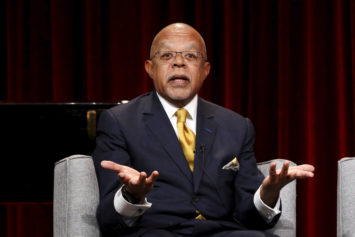
When Henry Louis Gates Jr. set out to trace the family tree of America’s first pope, he had no idea he was about to uncover one of the most diverse and complex ancestries in his decades-long career.
The Emmy-nominated host of PBS’ “Finding Your Roots” discovered that Pope Leo XIV, born Robert Prevost in Chicago, shares bloodlines with some of the world’s biggest celebrities while also carrying the profound legacy of both enslaved people and enslavers in his family history.
According to the New York Times, the genealogical journey revealed connections that stretch across continents and centuries.
Through a maternal ancestor born in the 1590s, the 69-year-old pontiff is ninth cousins several times removed to an impressive roster of A-list figures including Angelina Jolie, Justin Bieber, Canadian Prime Ministers Pierre and Justin Trudeau, Hillary Clinton, and pop star Madonna.
Gates took to social media with a quip that played on the pope’s position as a cleric and Madonna’s hit song, “Like a Prayer.”
It’s like a prayer… and a plot twist.
— Henry Louis Gates Jr (@HenryLouisGates) June 16, 2025
Through a distant relative @madonna and Pope Leo are related! Read more about the Pope’s ancestry here: https://t.co/j28uJr3NNX https://t.co/CEpzBb4VB3 pic.twitter.com/l9c7n213Bs
This remarkable web of relationships traces back through French-Canadian lineage.
Gates, 74, was able to trace Pope Leo’s ancestry back an astounding 15 generations, uncovering stories that span from 16th-century Spanish nobility to the complex racial dynamics of New Orleans. The research revealed a rich tapestry of African ancestry, with the Pope descending from a long line of individuals — at least 17 — who were identified in various records as “mulatto,” “mulatress,” “mulâtress créole,” “free person of color” and “quadroon.”
“On Saturday, my wife, the historian Dr. Marial Iglesias Utset, and I were granted the profound honor of a private audience with His Holiness Pope Leo XIV at the Vatican to present him with a copy of his family tree,” Gates shared on Instagram following their July 5 meeting.
The moment represented the culmination of extensive research conducted in collaboration with genealogists at American Ancestors and the Cuban Genealogy Club of Miami.
Among the most significant discoveries was the Pope’s maternal grandfather, Joseph Martínez Ramos, who was born in Haiti, as noted in the 1900 U.S. Census, and later resided in New Orleans’ Seventh Ward, a historically Creole neighborhood. This connection to Haiti adds another layer to the Pope’s African heritage.
The research also uncovered the profound contradiction within the Pope’s ancestry — he descends from both enslaved people and enslavers. His fourth-great-grandfather François Lemelle enslaved at least 20 people, while his second-great-grandfathers Joseph Aristide Baquié and Eugène Grambois enslaved three and five people respectively. Charles Louis Boucher de Grandpre, who served as Spanish governor of the Baton Rouge District, owned at least 11 enslaved people while also fathering Celeste Olympe de Granpre, the Pope’s third-great-grandmother, who was listed as a “free quadroon.”
“She and I had worked with an outstanding team of researchers to publish it in The New York Times Sunday Magazine and were deeply grateful for the chance to walk His Holiness through the branches of his family tree, sharing stories of his ancestors back to his 12th great-grandparents who were born some 500 years ago,” Gates continued in his heartfelt social media post about the Vatican meeting.
The genealogical research also revealed the Pope’s diverse geographical roots, with 40 ancestors from France, 24 from Italy, and 21 from Spain. New Orleans, where many of his ancestors settled, served as a crucial melting pot where French, Spanish, Native American, and African cultures intersected. By 1805, more than half of the city’s population was composed of enslaved and free people of color, making it the perfect backdrop for the Pope’s multicultural heritage.
Many fans chimed in online to express their amazement over the moment. One wrote, “Whoa, this is incredible,” while another added, “What an amazing meeting.” Others echoed the sentiment with comments like “Wow, just wow.”
Beyond the ancestral revelations, it makes sense that Pope Leo XIV has garnered attention for his outspoken criticism of immigration policies.
Before his historic election, the then-Cardinal Prevost challenged deportation practices through social media, posting “Do you not see the suffering? Is your conscience not disturbed? How can you stay quiet?” in response to the deportation of a Maryland father despite a court order.
Despite their policy differences, President Trump offered congratulations following the papal election, posting: “Congratulations to Cardinal Robert Francis Prevost, who was just named Pope. It is such an honor to realize that he is the first American Pope. What excitement, and what a Great Honor for our Country. I look forward to meeting Pope Leo XIV. It will be a very meaningful moment!”
For Gates, the experience of presenting this research to the Pope represented a career highlight. “This was one of the most meaningful and deeply moving moments of our lives,” he reflected, noting that after more than a decade of genealogical work, the Pope’s roots make for one of the most diverse family trees his team has ever created.
The discovery serves as a powerful reminder of how America’s complex history of race, immigration, and identity continues to shape even the highest levels of global leadership.