A federal judge ruled that it will be up to a jury to decide whether a Michigan police officer used unlawful excessive force when he shot a Black man in the back of the head after a traffic stop in Grand Rapids in April 2022.
In a civil suit filed in December 2022, Peter Lyoya alleges that former Grand Rapids Police Officer Christopher Schurr had no lawful basis to shoot and kill his 26-year-old son Patrick Lyoya during an encounter when the officer chased and struggled to subdue him after pulling him over for a license plate violation, arguing that Patrick Lyoya was unarmed and posed no threat.
Schurr contends in his legal filings that after wrestling with Lyoya in the front yard of a residence, Lyoya had grabbed his Taser gun and that he feared for his safety in the moments before he drew his handgun and fired a single bullet into the back of Lyoya’s head.
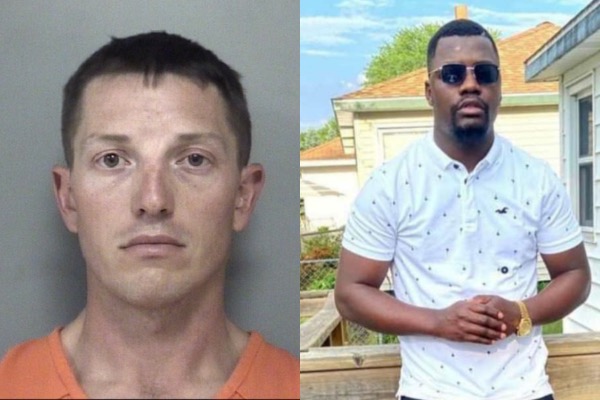
Judge Rejects Immunity Claim
Kent County District Attorney Chris Becker concluded that Schurr was not acting in self-defense and charged him with second-degree murder. But a jury in Kent County couldn’t reach a unanimous verdict during a trial in 2025.
After reviewing Schurr’s motion to dismiss the civil lawsuit, and closely watching four sets of video capturing the incident, in his opinion of Aug. 6 U.S. District Court Judge Paul L. Maloney found that the video evidence in this case would allow a jury to conclude that Schurr shot Lyoya in the back of the head “even though he had already subdued him and had no reason to think he was a threat,” in violation of his civil rights.
Maloney ruled that Schurr’s claim of governmental tort immunity fails because he likely violated Lyoya’s Fourteenth Amendment right to be free from the use of excessive force by law enforcement during an arrest.
Judge’s On The Traffic Stop and Violent Struggle
In reciting the facts of the case, Maloney noted that after Schurr pulled Lyoya over, Lyoya stood outside the car and asked, “What’d I do?”
The officer told him to get back in the car and also asked him for his license. He told Lyoya his license plate didn’t match the vehicle’s registration.
While a passenger in the front seat of the car, Aime Tuyishime, seemed to be looking for the license, Lyoya began walking around the front of the car, which prompted Schurr to grab Lyoya’s arms and tell him to put his hands behind his back.
Lyoya, a Congolese immigrant, then broke away from the officer and took off running, and Schurr chased him and tackled him in a nearby front yard. The officer struggled to get physical control of Lyoya, and kicked him with his knee, punched and slapped him, and put his arm around his neck.
During the two-and-a-half-minute physical encounter, caught on police dash cam and body cam video, as well as a doorbell camera and a cellphone, Lyoya was briefly able to get back on his feet, was pulled back down by Schurr, who eventually pulled out his Taser gun, aimed and fired it at Lyoya, who put out his hand and blocked the charge from hitting him. Then Lyoya grabbed the barrel of the Taser as Schurr discharged it a second time, missing him again.
Video Discounts The Officer’s Tale Of The Taser
At this point, the video shows Lyoya face down on the ground, with Schurr on top of him and his left arm around Lyoya, the judge wrote. The officer says, “Let go of the Taser,” and Tuyishime, who is filming on his cellphone, is heard saying, “He ain’t got no Taser.” The Taser is no longer visible in the video.
As Lyoya moves to support himself with his hands and knees, Schurr, still on top of him, with his left arm around his neck, uses his right hand to draw his gun. Giving Lyoya no warning, Schurr shoves Lyoya’s head into the ground and fires his gun into the back of his head, instantly killing him.
Schurr, who was fired by Grand Rapids Police after he was charged with murder in 2022, testified in a deposition in the civil case that Lyoya had his fingers and thumb wrapped around the Taser near the safety switch just before he shot him.
But the judge said this account “conflicts with a rational interpretation of the video and with the passenger’s statements. A rational jury could thus decide to credit the video and discount Defendant’s testimony.”
Judge Acknowledges Cops Need for ‘Split-second Judgments’
Acknowledging that police officers often have to make “split-second judgments — in circumstances that are tense, uncertain and rapidly evolving,” Maloney said the law requires courts to evaluate whether the degree of force used is reasonable under the circumstances.
Considering the facts of this case in the light most favorable to the Plaintiffs, he concluded that the circumstances justified “some use of force, but not lethal force.”
A reasonable jury could conclude from the video evidence that Lyoya was not holding the Taser, Maloney wrote, noting that even if he was holding it, the weapon had already been discharged twice, leaving it operable only in “drive stun mode” — requiring it to be pressed directly against a person’s body to deliver localized pain rather than full muscle immobilization — something that Schurr himself admitted an untrained person might not know.
The judge said “the record suggests that Defendant shot a man who posed no threat of violence, held no weapon, and who was under Defendant’s physical control. … In those circumstances, it would have been obvious to any reasonable officer that shooting Lyoya was unlawful.”
Noting that “a mismatched license plate is hardly life threatening,” the judge said that a jury could also consider the other options available to Schurr, including monitoring the suspect, issuing him a warning or even allowing him to run away rather than resort to deadly force.
What The Jury Will Decide
While ruling that the case should proceed to trial on the alleged excessive force and other federal civil rights violations, Maloney dismissed the negligence claims brought against Schurr under Michigan law, finding that they could not be separated from the excessive force claims.
Maloney allowed the plaintiff’s intentional tort claims to remain, writing that if a jury finds that Lyoya was not holding the Taser, it could also conclude that Schurr “is lying, and was misrepresenting what was happening when he issued the final command to ‘drop the Taser’” — allowing the jury to find Schurr was not acting in good faith, which is required for governmental immunity under state law.
Attorneys Respond to Judge’s Ruling
Ven Johnson, an attorney representing the Lyoya family, said in a statement that the judge’s ruling “is a resounding rejection of former Grand Rapids Police Officer Christopher Schurr’s attempt to escape accountability for the killing of Patrick Lyoya. Despite every effort to have this case thrown out, the court ruled that the core of Patrick’s civil rights claims will move forward.”
While his legal team expects Schurr to appeal the judge’s decision, Johnson said, “the Lyoya family remains committed to seeing this case through and having a jury ultimately decide the facts.”
The lawsuit seeks compensatory and punitive damages on behalf of Patrick Lyoya’s estate, including medical, hospital, funeral and burial expenses; compensation for Lyoya’s pain and suffering, the loss of his financial support, services, companionship, and parental training and guidance.
Lyoya was a factory worker who had two young daughters at the time of his death. His execution-style shooting by a police officer sparked massive public protests and marches in western Michigan. Rev. Al Sharpton spoke at his funeral, demanding justice for his family.
Schurr’s attorneys did not immediately respond to a request for comment from Atlanta Black Star.
A settlement conference is scheduled for Sept. 2, and if it’s unsuccessful, the trial is scheduled for Oct. 19.


