A Black woman alleges that manager began asking vulgar questions about her relationship and making intrusive calls to her personal cell phone two years after Mastronardi Produce-USA hired her at its packaging center in Livonia, Michigan.
He allegedly said, “So you don’t like to get f***ked with the strap at all?” and asked her other personal questions at work, such as whether she enjoyed “dildos.”
In November 2022, she says Johnny Galarza called her when he knew her partner was out of town and began questioning her about photos on her social media account.
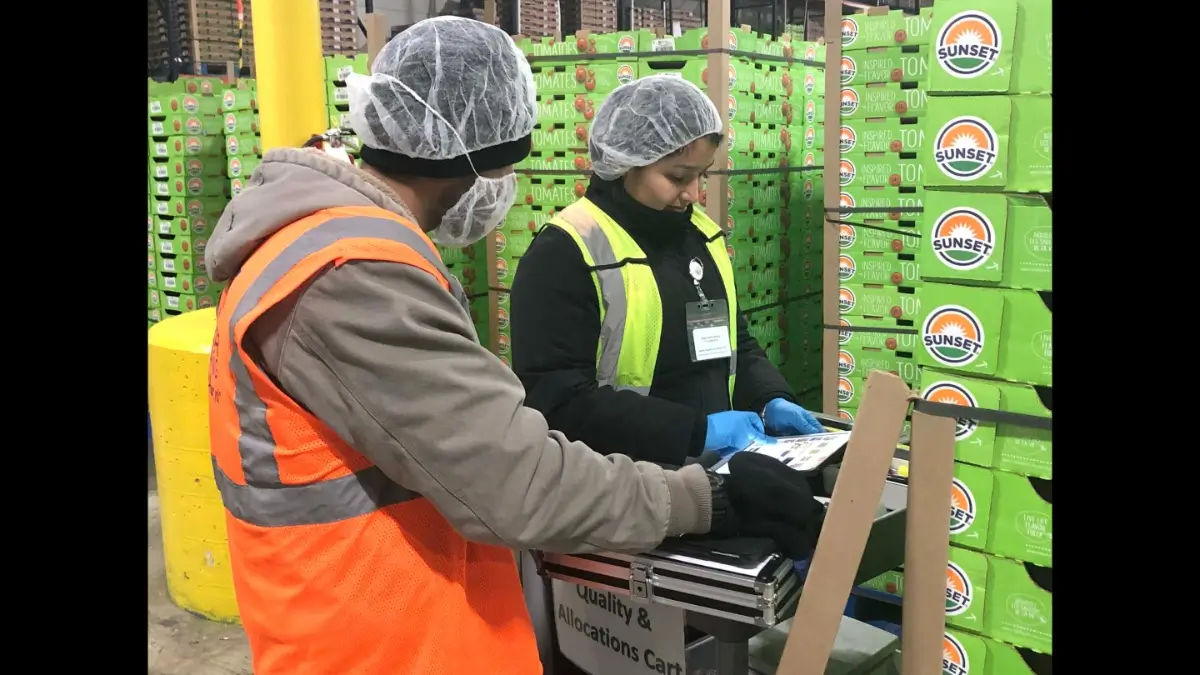
At the plant, in earshot of other workers, Galarza allegedly told Williams he could not assign young Black women to work on her line, making vulgar homophobic remarks. The complaint also alleges he routinely referred to Williams and other female employees using homophobic slurs.
Williams claims Galarza made unwanted advances toward her, despite her lack of interest. He also frequently asked other coworkers if they “had done different sexual actions to the same or opposite sex.”
A week before Williams went to Human Resources to report his conduct, Galarza allegedly made a vulgar, sexually explicit comment about her to co-workers over the plant radio.
The lawsuit states that Mastronardi barred Williams from a specific section of the warehouse and subjected her to different working conditions than other supervisors. She reported Galarza’s conduct to his manager on Dec. 29, 2022.
After hearing her concerns, the manager promised to speak with Galarza, but the following day she issued a write-up, according to the lawsuit. Williams then reported the conduct to HR, but alleges no corrective action was taken.
She says Galarza taunted her about her reports to HR, bragging that she could “join the list” of other employees who had previously reported him. According to the lawsuit, when she or her co-workers threatened to report his harassment, Galarza mocked them, offering, “Go ahead, I’ll call them for you.”
The complaint also alleges that a white co-worker named William was secretly recording Black employees in the restroom — an incident Williams and her sister, who also worked at the plant, reported to Galarza. Although Galarza reportedly “went to HR about the situation,” the complaint states the employee faced no disciplinary action or repercussions.
Multiple male supervisors made unwelcome sexual advances, explicit comments, and gestures, “including touching Plaintiff,” the complaint alleges.
Williams alleges she and other Black employees endured a racially hostile work environment, receiving lower pay and less favorable treatment than their non-Black counterparts.
Despite her supervisory role, Williams states she was compensated below similarly situated white supervisors.
The complaint also details a pattern of offensive racial remarks and slurs by management and co-workers on the plant floor.
In one incident, production manager Jeff Emberton allegedly asked Williams, “Why are Black basketball players so tall?” and answered that it was because “[their] knee grows.”
Emberton would also ask Williams why Black women had names like “LaTisha” and “LaQuanda,” the lawsuit states.
Chris Felosak, a production supervisor, told Williams he ate company-provided chicken in an effort to “fit in with y’all,” according to the lawsuit. When Williams asked what he meant by the comment, Felosak confirmed he was referring to Black people.
Williams also alleges more egregious racial slurs in her complaint.
She says other white production supervisors and managers called her “skinny Black bi**h,” “ghetto Black bi**h,” told her that she does not have “hips and a** for a Black girl,” and referred to her as a “monkey” and a homophobic slur.
Williams repeatedly reported the escalating pattern of racial and sexual harassment to HR. However, according to court filings, no corrective action or investigation took place.
She says she complained to senior manager Slim on Dec. 29, 2022, that Galarza had barred her from one side of the warehouse and subjected her to racial and sexual harassment. Slim allegedly said he “would handle” Galarza.
The next day, however, Galarza wrote her up for unacceptable conduct and poor job performance. After an HR investigation, the lawsuit says HR determined that Galarza had violated the company’s anti-harassment policy and removed the write-up from her employment record.
But Galarza continued harassing her, Williams says, and in March 2023 she sent an email to a senior manager to report the ongoing harassment.
Williams alleges that management did not address her complaints and retaliated again — this time by transferring her to an “undesirable line” in the plant.
After that, Williams and other Black and female workers continued to face persistent harassment, discrimination, and retaliation from supervisors — including unwarranted disciplinary write-ups, according to the lawsuit.
Williams remained employed at the plant when she refiled her complaint in 2024, which outlined ongoing workplace isolation. According to court records, co-workers warned that “no one likes her” because of her reports to HR and remarked that she was “on her ‘last leg.'”
Her appellate filings show that the hostility persisted — resulting in missed promotional opportunities and her eventual departure from the company.
The lawsuit alleges race and gender discrimination, a hostile work environment, and retaliation in violation of federal and state civil rights laws.
A federal appeals court recently ruled that her race and gender discrimination lawsuit against Mastronardi Produce-USA can move forward —reversing a lower court ruling that barred the case because she initially sued the company’s Canadian parent entity.
The Canadian parent, Mastronardi Produce, Ltd., secured a dismissal in December 2024 after establishing that plaintiff Diamond Williams worked for the U.S. subsidiary at its fresh produce packaging plant where is does business under Sunshine, rather than the Kingsville, Ontario-based headquarters.
To support its dismissal motion in the initial lawsuit, Mastronardi Produce, Ltd. argued that its employees, workplace policies, and financial records were “separate and distinct” from those of its American subsidiary.
However, when Williams refiled her lawsuit directly against Mastronardi Produce-USA alleging the same facts, the American company argued the action was a duplicate that violated federal rules against relitigating claims.
This time, Mastronardi Produce-USA claimed it was closely related to its Canadian parent, pointing to shared corporate ownership, shared defense counsel, and a shared corporate officer.
A district court agreed with the company and dismissed Williams’s lawsuit. However, last month, U.S. Circuit Judge John K. Bush, writing for the Sixth Circuit appellate panel, reversed that decision, saying that the corporate entities could not have it both ways. The court ruled that Mastronardi Produce, Ltd. was prevented from relying on its corporate separateness to limit its liability in the first suit and then setting it aside so its domestic subsidiary could “borrow” a favorable preclusion ruling, HCAMag noted.
Williams has requested a jury trial to determine compensatory and exemplary damages for lost earnings, benefits, and career opportunities, as well as for outrage, mental anguish, physical and emotional distress, and loss of professional reputation.
Following her appellate victory before the Sixth Circuit, the case was remanded to the U.S. District Court for the Eastern District of Michigan, Southern Division.
Although the underlying dispute spans nearly three years, formal discovery in the case is only beginning. The parties are set to convene for a status conference on Sept. 29 before U.S. District Judge David M. Lawson at the federal courthouse in Detroit.


