ESPN MLB reporter Jeff Passan had a negative outlook on a massive change to the 2026 Home Run Derby in Philadelphia, but St. Louis Cardinals slugger Jordan Walker quickly made that take look silly.
Walker won what MLB all-time home run leader Barry Bonds called the best Home Run Derby he has ever seen on Monday night, defeating Philadelphia Phillies star Kyle Schwarber in the final round in front of Schwarber’s home crowd.
Walker did so under a brand new format that limited the number of swings each player had and removed the timer in each round that became a staple in recent years. Passan said before the event that he thought the change was “gonna stink.”
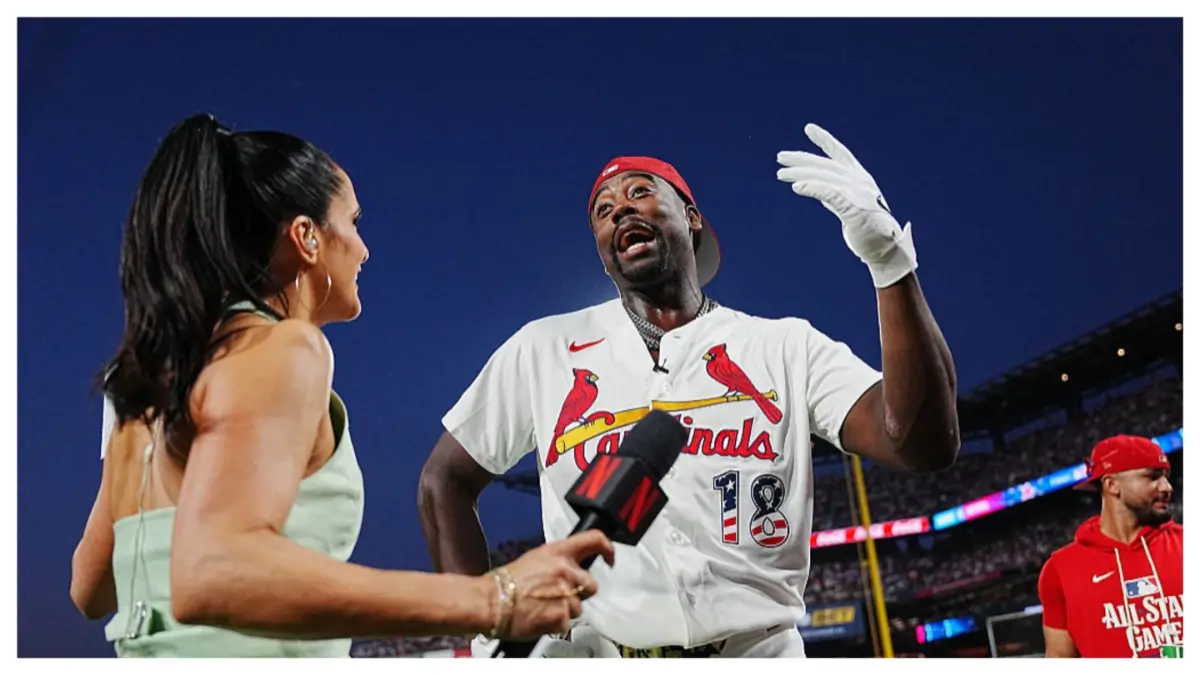
However, to his credit, Passan immediately changed his tune after the Cardinals right fielder’s victory.
“Passan is a moron,” the ESPN reporter wrote on X.
Netflix took over broadcasting the Home Run Derby this year after it had been on ESPN airwaves since 1994. Each player participating was given 20 swings to hit as many home runs as possible in the first round.
‘The More Whites the Better Off We’ll Be’: MLB Announcer Cooked For Not Reading the Room on Live TV
The amount of swings allowed decreased to 15 in the semifinals and finals of the event, but there was a catch that once you reached your final swing of a round you got to keep swinging until you do not hit a home run.
Walker used the bonus swings to his advantage, as he homered six times in a row with one swing left on his total to upset the Philadelphia designated hitter, who entered the tournament with the most home runs in MLB during the regular season so far.
The Cardinals outfielder, who was born in Stone Mountain, Georgia, just outside of Atlanta, was able to win with his father, mother, grandmother and sister watching live near the front row.
Walker now hopes that his suspenseful triumph will motivate more Black kids to play baseball. Just 6.8 percent of players on MLB active and inactive rosters were Black to start this season, according to MLB.com.
“I mean, I hope it means a lot to them,” Walker said about his Home Run Derby win, per Bob Nightengale. “I want to be a role model for the Black kids, you know, and I want more Black kids in baseball.
“Hopefully this raises some awareness. I know a lot of them are playing basketball, football route, but I want them to know the baseball route is open to them, too.”
“And there are a lot of kids that are athletic enough and mentally strong enough, Black kids that can play this game, and I want to see them do it,” Walker added.


