Lee Daniels is very familiar with racism.
As a Black filmmaker, the subject has been raised in many projects he’s worked on, including “The Butler.”
The film tells the story of a man who worked as a butler in the White House serving eight first families during times of racial oppression and the civil rights movement.
It was also a central theme in “The United States vs. Billie Holiday,” in which singer Billie Holiday is targeted by the U.S. government for performing her anti-lynching song “Strange Fruit.”

But Lee didn’t just address racism in his work, he’s also had to face it in real life.
The 66-year-old took to his Instagram on Wednesday, June 17 where he opened up about a recent experience he had in New York City.
Sitting in his Uber with his phone held up to his face, he said, “I swear to God, I feel like I’m back in the ’90s or maybe early 2000s where I’m in New York City, I’m waving down f-cking taxi drivers and I can’t get one. Are you f-cking kidding me?!”
He claimed that it was anywhere between four to six taxis that refused to pick him up.
Though he was talking to the phone, his Black Uber driver chimed in with more startling commentary.
The driver said, “It’s because of your appearance and you look aggressive.”
Daniels, who turned the camera toward the driver at this point, asked him to repeat himself twice, and twice the driver said, “You look aggressive.”
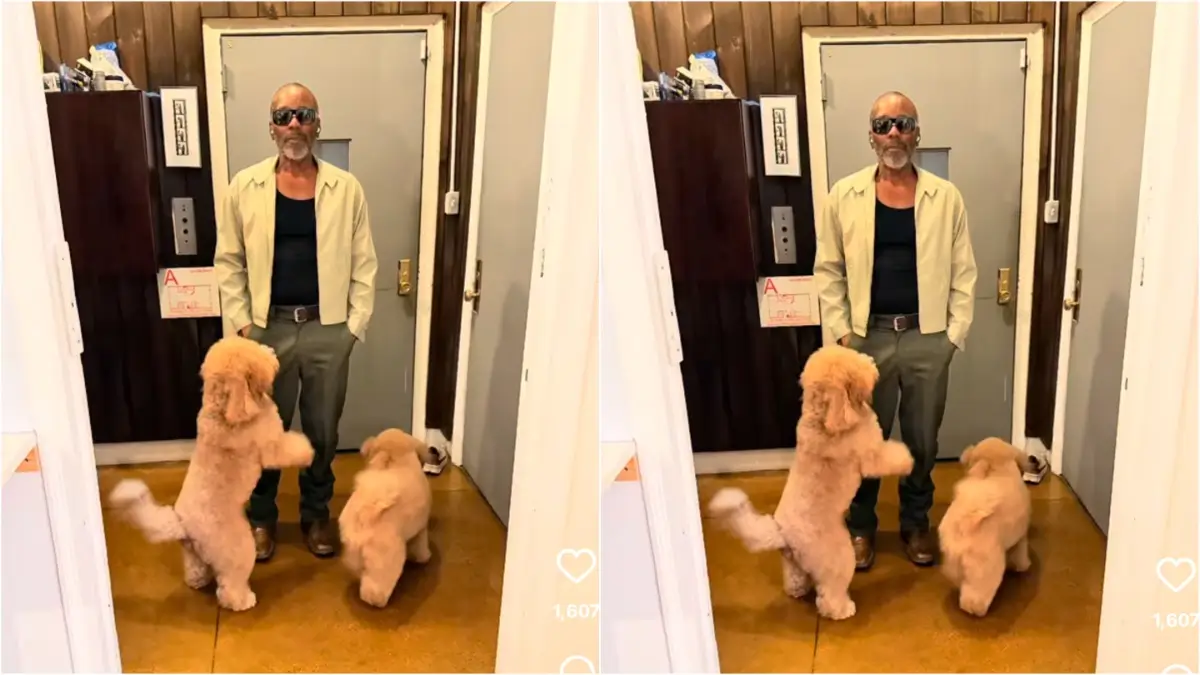
It was at that moment in the video that Daniels inserted a full-body photo of himself. He was seen wearing a black tank top with a khaki-colored jacket over it, gray slacks, and brown dress shoes.
At the bottom of the photo, he wrote, “I look aggressive?”
The clip jumps back to Daniels’ interaction with the unnamed Uber driver.
He pressed the man again, asking whether his appearance was the reason he couldn’t get taxis. The Uber driver simply replied, “Yeah.”
For further clarification, Daniels said, “What’s my appearance?” in shock.
In accented English, the driver said Daniels, running with a bottle in his hand while trying to flag down a taxi, is likely what scared drivers off.
“It scared a lot of people. Down in the middle of the street looking for a cab,” the man said.
Daniels, who appeared gobsmacked, simply replied “Hmmmm” before later asking, “I can’t scream racism?”
The Uber driver responded, “It’s there. I won’t deny it. But also, your appearance also contributed.”
Again, Daniels responded, “My appearance,” before showing the full body photo once more as a reminder.
The Uber driver seemed to believe the bottle of water Daniels was a big factor in his appearance being “scary.”
Daniels softly said, “The bottle of water … ain’t that some sh-t.”
In the caption, the filmmaker wrote, “Maybe I should learn to dress less aggressively? Life in the big apple!”
His story seemed to resonate well with others who called it just like he did.
Onperson who was shocked by the man’s statement said, “Your black skin is the only problem. Period! The AUDACITY of him to validate blatant racism. Uber is the great equalizer — alleviated daily transport stress for me and probably most Black folk.”
Others in Daniels’ comments gain sharing their firsthand experience, alleging, “I was told this while in N.Y years ago I had to flag a taxi they don’t stop for black men.”
Another person responding to the Uber driver said, “Man don’t even know he in a car with a multi millionaire.”
It’s unclear what action if at all Daniels plans to take.
But it does mirror a similar incident occured with “Color Purple” actor Danny Glover in 1999, which led to him taking legal action.
Glover claimed that a taxi driver refused to let him sit in the front seat despite explaining he had a bad hip, which occurred after he, his daughter, and her roommate had already been ignored by five other taxis. He filed a complaint with the NYC Taxi and Limousine Commission.
This led to then-Mayor Rudolph Giuliani and the TLC to enforce “Operation Refusal,” which cracked down on racist cab drivers who refused to drive minorities. Many taxi drivers were suspended or had their license revoked. So a group of them retaliated in 2000 by suing the city instead.
By 2006, the legal battle ended with the city paying 500 cabbies $7 million for penalizing them without granting them a hearing first.