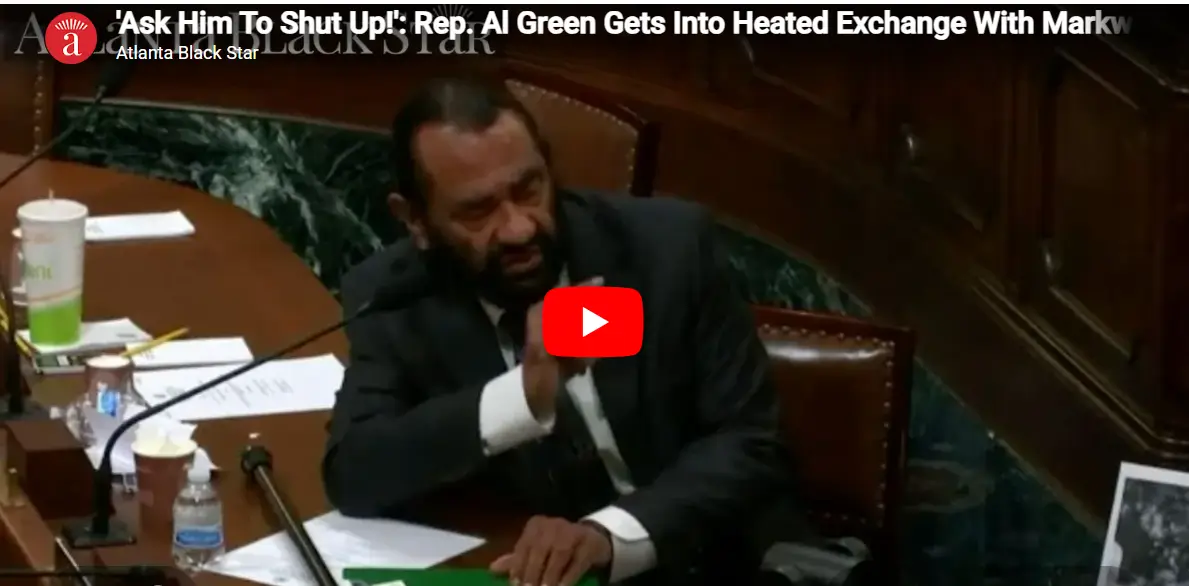
In a House hearing last week, Rep. Al Green turned his five minutes into one of the most charged moments of the congressional session — methodically laying out the characteristics of racism on the record, playing video evidence of Homeland Security Secretary Markwayne Mullin’s past behavior, and refusing to be silenced when Mullin tried to interrupt him.
The Texas Democrat opened his five-minute question period in the Homeland Security Committee hearing by establishing his authority on the subject — not academically, but personally.
“In my lifetime I went to the back door to get my food, I drank from filthy colored water fountains. I sat in the back of the bus, in the balcony of the movie when the seat was available,” the 78-year-old congressman said.
Then, with photographs in hand, he began listing the characteristics of racism — depicting people of color as apes, taking offense at peaceful protest — without ever directly calling Mullin a racist. Mullin couldn’t take it.
“Are you calling me a racist?” Mullin interrupted.
Green didn’t miss a beat.
“Reclaiming my time. Ask him to shut up.”
The room erupted. Mullin continued talking over Green, insisting he wouldn’t allow anyone to call him a racist. “No one will call me a racist. I’m Cherokee too…”
The chairman struggled to restore order, warning Green against personally disparaging the secretary. But Green had video evidence waiting.
He played footage of Mullin physically approaching a peaceful protester at the State of the Union and then, in a second clip, Mullin’s now-infamous Senate hearing threat: “You want to run your mouth — we can be two consenting adults. We can finish it here. Let’s stand your butt up.”
Green let the video speak for itself before delivering his verdict.
“I do not believe that he is qualified because he doesn’t have the temperament to deal with people in a respectful way.”
When Mullin sneered that Green’s constituents had “voted him out” in a recent Democratic primary, Green didn’t flinch. He closed standing exactly where he started.
“I peacefully protested. I would do it again … because I know the history of apes and how they have been used to demean people of color.”
The chairman called time. Green had said everything he came to say.
Watch the full clip here.