Phillip Martin, a Black 71-year-old retired investigative reporter, was denied service at a suburban Boston coffee shop last month after he was falsely accused of urinating inside the store while being abusive to staff.
“Are you mistaking me for someone else?” the Black man asked the employee, accusing him inside the Cambridge, Massachusetts, shop he was visiting on Nov. 20 for a meeting with another journalist.
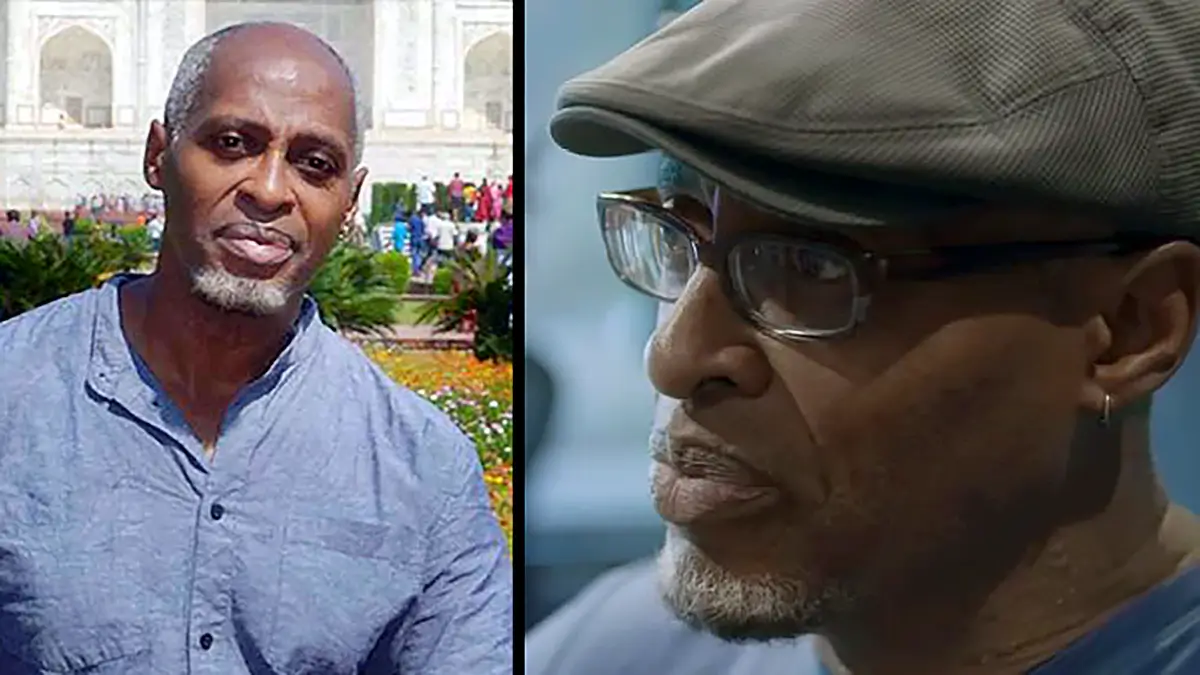
“No, it’s you. We have you on videotape,” responded the female barista in Caffe Nero, a European company that has several locations throughout the New England area.
But it turned out to be another case of falsely accusing a Black person of “matching the description” of another Black person alleged to have committed crimes, something Atlanta Black Star has reported on many times over the years.
Even modern technology, like facial recognition cameras and license plate readers, has a much higher rate of falsely profiling Black people as criminals.
‘We Are Livid!’: Teen Girl Strip-Searched Three Times By Florida High School Staff After Complaining About Racial Harassment, Lawsuit Says
Martin, who spent 15 years working for GBH, a news station in Boston formerly known as WGBH, has also written articles on Black people getting falsely accused — something he said would happen often to him as a teenager growing up in Detroit during the 1960s.
“That’s the type of thing that occurred in my youth more than once, and it obviously had nothing to do with me,” Martin said in an interview with the Boston Globe.
“In the world of race and discrimination, ‘someone who looks like you’ is pervasive. These things are predicated on stereotypes and are the logical conclusion of stereotypes.”
Caffe Nero has since issued a public apology and has vowed to train its employees in how not to falsely accuse Black people of crimes.
“This was a genuine case of mistaken identity due to the close similarity of height, build, and style of beard and glasses with a customer who had been responsible for significant anti-social behavior previously,” a Caffe Nero spokesperson told Boston.com.
“While it is not acceptable to confuse any customer with another, the prior incident was traumatic for the barista involved, and it triggered her response.”
However, Martin, who has seen a photo of the Black man accused of terrorizing employees, said they look nothing alike because the other man is a younger, light-skinned Black man with a scruffy beard.
“I looked at the photo, and I told them, ‘He looks nothing like me,’” Martin told Boston.com. “This was not a doppelgänger in the least.”
‘A Misunderstanding’
Martin arrived at Caffe Nero at 5 p.m. on Nov. 20 to meet Naomi Kooker, a freelance journalist and journalism professor at Regis College.
He walked up to the counter to order a tea when he was told he was not going to be served. He then saw the employee calling the police, so he pulled out his own phone to call the police.
“It’s something I would do instinctively to try to even out the playing field,” Martin told Boston.com, a separate news site owned by the Boston Globe.
“When someone calls the police, it’s best to also have some role in that,” he added.
Cambridge police arrived, spoke to both complainants, and determined there was “a misunderstanding” when the employee accused Martin of something he did not do.
The cops told employees that Martin was not the man who had created havoc inside the store a week earlier. Martin was allowed to stay, but never received the tea he ordered.
“I did not want anyone to have the satisfaction of having kicked me out,” he told the Boston Globe.
“We didn’t buy anything subsequent to that, but we did stay because the notion of leaving, to me, would have been a victory for that type of prejudice,” he said.
He left after 10 minutes and has since filed complaints with the Massachusetts Commission Against Discrimination and the Cambridge Human Rights Commission, describing the incident as “humiliating.”
“It’s completely understandable that they might be concerned about theft or vagrancy … but they have to institute some type of policy where they’re absolutely sure that the person that they’re addressing is the person that is engaged in some transgression,” Martin told the Boston Globe.
“They cannot make assumptions based on what the person appears to look like, because that is subject to the most vile stereotype when those things happen.”
‘Lasting Mark on Journalism’
Martin graduated with a master’s degree from the Fletcher School of Law and Diplomacy at Tufts University in Massachusetts during the early 1980s, according to the Bay State Banner, which reported on his retirement in October.
He furthered his education at Harvard University in 1997, focusing on the International protection of human rights, before becoming NPR’s first national correspondent focused on race in 1998, working for NPR until 2006, according to his LinkedIn page.
He began working at WGBH in 2010 as a senior investigative reporter, earning several journalism awards, and was also inducted into the Massachusetts Broadcasters Hall of Fame.
“His reporting has exposed hidden worlds and told powerful human stories,” stated the GBH article about his retirement published on September 30.
“He’s left a lasting mark on journalism in Boston and beyond, and now, after decades of work, Martin is retiring.
Martin also stressed he does not want the cafe employee to be fired for falsely accusing him of a crime.
“These are working folk, and they’re doing their job, but obviously they got some wrong direction,” he said.


