Buffalo police did not appreciate a Black man recording them from across the street as they were investigating a drive-by shooting of a house in 2019 so they approached him and told him the neighbors did not want him recording them.
But Dean Taylor, 65, not only had the First Amendment right to record the entire scene from public, he told the officers he was mainly recording them which is also his legal right.
Buffalo cops responded by punching him in the face several times before shoving him to the ground and piling on top of him with one cop pressing his knee into Dean’s neck.
He was then transported to jail on charges of harassment, obstructing governmental administration, disorderly conduct and resisting arrest which were all dismissed the following month.
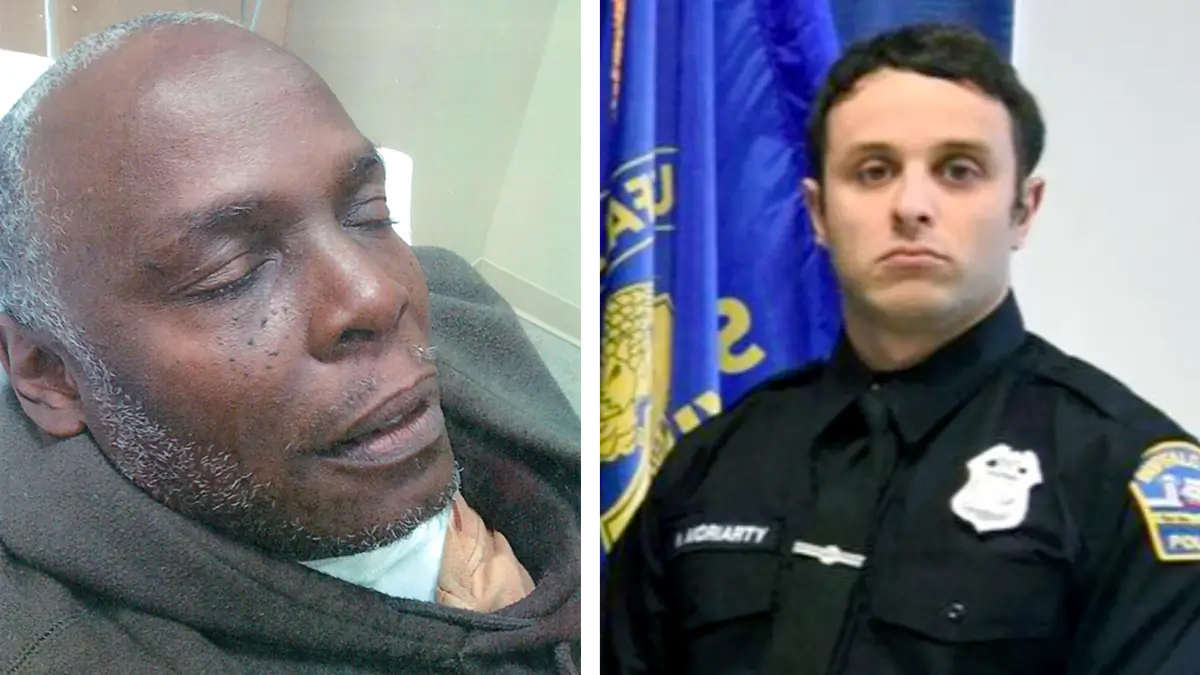
However, when Taylor filed a lawsuit against the Buffalo cops who arrested him, the jury earlier this year sided with the officers.
But in a rarely used legal move, the judge overseeing the civil trial overturned the jury’s verdict after one of Taylor’s attorneys, Blake Zaccagnino from the Shaw & Shaw law firm, filed a post-trial motion asking the judge to set aside the jury’s decision for a new verdict or trial under CPLR (Civil Practice Law and Rules) Rule 4404(a),
“The plaintiff’s physical position and presence at the incident scene was a public space that he was constitutionally entitled to traverse and occupy, which the officer defendants were trained to respect as part of their public duty,” New York Supreme Court Judge John DelMonte wrote in his opinion published on September 19, 2025.
Judge DelMonte ordered a new trial to determine the amount of monetary damages Dean will receive for having his First Amendment right to record police violated.
“The factual record in this case is clear on this issue…the officer defendants admitted that they knew the plaintiff was entirely within his constitutional right to videotape the public presence and performance of duties of the BPD.”
Listed as defendants in the lawsuit are Buffalo police officers Kyle T. Moriarity and Christopher Bridgett as well as the city of Buffalo, the Buffalo Police Department, Buffalo Police Commissioner Byron G. Lockwood and several John Doe cops whose real names have not been determined.
The complaint accuses the defendants of excessive force, battery, false imprisonment, intentional infliction of emotional distress, negligent hiring, negligent retention, negligent training and supervision and failure to intervene.
Moriarity, the cop who punched Taylor, has had previous accusations of abuse.
Taylor’s arrest was captured on his own video as well as body camera video but none of the videos have been released to the public. Atlanta Black Star reached out to his attorneys for the footage but they did not respond.
‘No Legitimate Purpose’ to Record Police
The incident took place on Sept. 1, 2019, as Taylor was riding his bicycle from the store back to his home when he came across several police cars in front of a home and decided to lay down his bicycle, take out his phone and begin recording from across the street — which numerous court decisions have determined is constitutionally protected activity.
Police said a drive-by shooting had occurred but nobody had been killed or injured.
In a deposition from 2020, Taylor testified that he did not know what had taken place when he started recording but a young woman drove through the scene with her son in the car and demanded to know why he was recording, asking him “what your old ass is filming for, you too old to be filming” and saying other curse words.
Taylor said he responded under his breath that the woman needed to have her child taken away from her since she was cursing in front of the boy.
He said he remained standing on the corner for about 20 minutes when a cop later identified as Moriarity walked up to him and informed him the victims of the drive-by shooting did not want him recording, telling him he had to move to another location, further away from the scene.
But when he refused to move from the area, he was knocked out cold by a cop who sucker punched him from the side.
“I said I’m not filming their house,” he responded, according to his deposition. “I said I’m filming y’all.”
“He said well, can you move over here. I said no, I don’t need to move over there. Lights went out.”
“He stood on the side of me and he hit me with his left hand, like three or four times, and I went down and I think everybody jumped on me then and that was that.”
“When I went down I guess I got blanked out. But when I was on the ground I heard people, ‘stop resisting.’ My arms are being bent back, legs, knees, whatever else.”
He said he was thrown in the back of a patrol car with his hands cuffed behind his back while the cop who was driving purposely drove recklessly to give him a “rough ride.”
Taylor, who spent the night in jail, said he was left with multiple injuries including chronic pain on his arms and back.
“I lost my tooth. My face, side of my face, is still numb, my eye still hurts,” he said in the deposition.
Photos included in court documents show the cops split his head, resulting in multiple stitches.
‘No Legally Legitimate Justification’ to Arrest Taylor
During the trial, Moriarity, one of the cops who arrested him, testified that Taylor’s act of recording was “annoying and alarming behavior” and served “no legitimate purpose” which he claimed made it an “arrestable offense.”
Moriarity also claimed he told Taylor that he could record the cops all he wanted but not the citizens living in the home that had been shot at.
“After many options verbally, many, many attempts to deescalate this, I went and grabbed his left arm,” Moriarity testified.
“He threw his left elbow up, which I perceived as an attempted elbow strike on my face. I called for help, and he was taken to the ground and handcuffed.”
Moriarity also claimed that Taylor took a “fighting posture,” which made him fear for his safety and another reason why he called for help.
“He assumed what I perceived to be a fighting posture. He pulled his hands away, he hit my handcuffs out of my hands, he lifted his elbow up as if he was going to strike me in the face with his elbow.”
Taylor’s fabricated charges were all dismissed on October 11, 2019, less than six weeks after his arrest.
But despite hearing all this testimony, the jury sided with the cops, evidently believing they had the right to abuse and arrest Taylor for doing nothing but recording from a street corner because they believed it served “no legitimate purpose” as Moriarity had claimed.
However, Judge DelMonte disagreed, determining the cops had “no legally legitimate justification” to arrest Taylor in the first place.
“There was no legally legitimate basis for any ‘reasonably prudent person’ to find or believe that probable cause existed to confront the plaintiff and place him under arrest for any plausible and justifiable criminal offense under the ‘totality of the circumstances’ shown in this action,” the judge wrote in his 25-page opinion.