They’ve proposed adding his likeness to Mount Rushmore, ignoring the Constitutional mandate prohibiting presidents from serving more than two terms and making his birthday a national holiday.
Now, congressional Republicans want to change the currency in their unending efforts to curry favor with President Donald Trump.
Tennessee House Republican Brandon Gill said Monday he plans to introduce a bill to feature Trump’s likeness on the $100 note once his current term concludes, by which he meant once his fourth term ends. Last week, South Carolina congressman Joe Wilson proposed creating a $250 bill with Trump’s image.
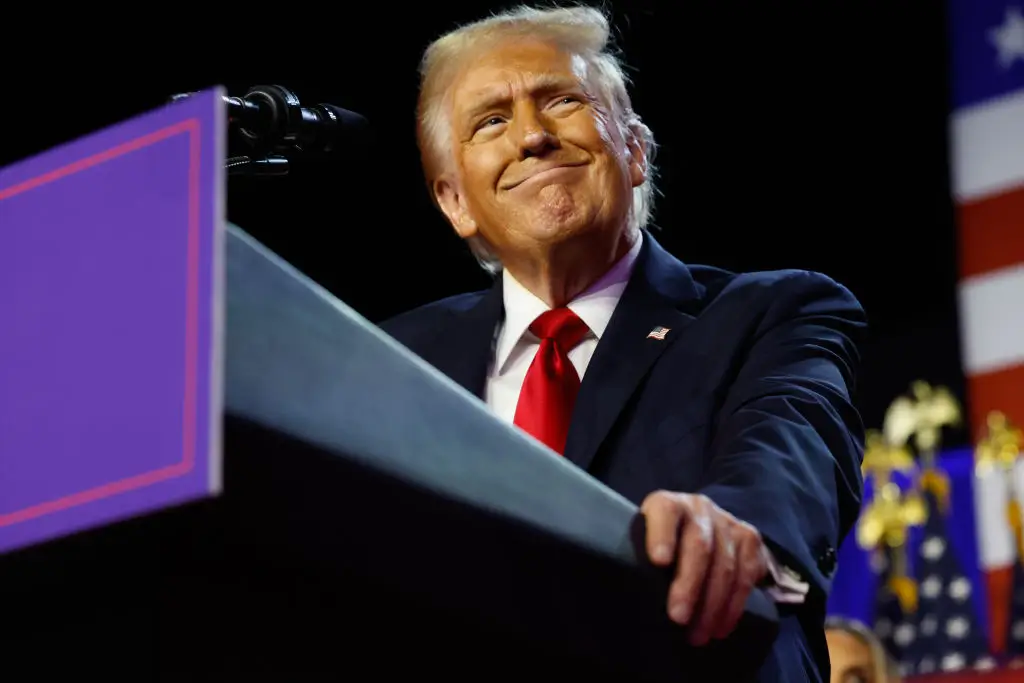
“President Trump could be enjoying his golden years golfing and spending time with his family,” Gill told Fox News Digital. “Instead, he took a bullet for this country and is now working overtime to secure our border, fix our uneven trade relationship with the rest of the world, make America energy independent again, and put America first by ending useless foreign aid.”
Trump’s image would replace Benjamin Franklin, a man of little-known accomplishment whose image was added to the inaugural $100 bill in 1914.
Gil may not know, or not care, that his bill has no chance of passage. Federal law prevents a president or other historical figure appearing on currency until two years after their death.
The story behind that law does not derive from democratic, anti-royalist tradition dating back to ancient Greece, where a living man’s portrait was not allowed on the Republic’s coinage.
(The plot to assassinate Julius Ceasar was set in motion after he placed his image on a silver coin.)
In America, prohibiting live people from appearing on currency was a reaction to the opportunism of an obscure artist and engraver turned bureaucrat.
In June 1864, the country decided it would honor William Clark, who famously explored the Louisiana Purchase with Meriwether Lewis between 1804 and 1806. But the bill that passed Congress only listed the explorer’s surname, Clark.
Spencer Clark, the first superintendent of the National Currency Bureau, a precursor to the Bureau of Engraving and Printing, saw the bill and assumed that Congress was recognizing his work, placing his image on a five-cent note. Congress was unimpressed, and in 1866, Rep. Martin Thayer of Pennsylvania offered legislation prohibiting the “likeness of any living person” to be engraved or placed upon “any of the bonds, securities, notes, or postal currency of the United States.”
Historically, America has been reluctant to remove its heroes from its money.
It’s been nearly 100 years since a U.S. banknote design was altered, when President Andrew Jackson replaced President Grover Cleveland on the $20 bill in 1929.
In 2016, President Barack Obama proposed placing Harriet Tubman, who had escaped enslavement and helped free dozens of others using the Underground Railroad, on the $20 bill. That proposal was put on hold by Trump during his first term.
Then-Treasury Secretary Steven Mnuchin blamed unspecified technical difficulties for the delay, saying the $20 bill featuring the abolitionist hero wouldn’t be ready until 2029. Left unsaid was Trump’s admiration for the current $20 poster boy, slaveholder Andrew Jackson.
Gill’s legislation found little support on social media.
“His face on Russian currency seems apropos..,” wrote one critic.
These people are a bunch of f***ing clowns!” opined another. “People are struggling to make ends meet and this is what they’re doing.”


