When Jason Fauntleroy bought a vacant lot at a sheriff’s office auction for $5,000 three years ago, it came with an unexpected bonus: the purchase also included the entire adjacent street, Bloomfield Court, a cul-de-sac with several other houses.
Now, the city of Trenton, Ohio, is trying to reclaim his property through eminent domain in order to convert what was a private drive into a public street.
But Fauntleroy says he’s not being offered what he deserves. He told WCPO that instead of assessing all of the land, including the street, the city only appraised the lot where he’d hoped to build a home. And now they won’t negotiate with him on the value.
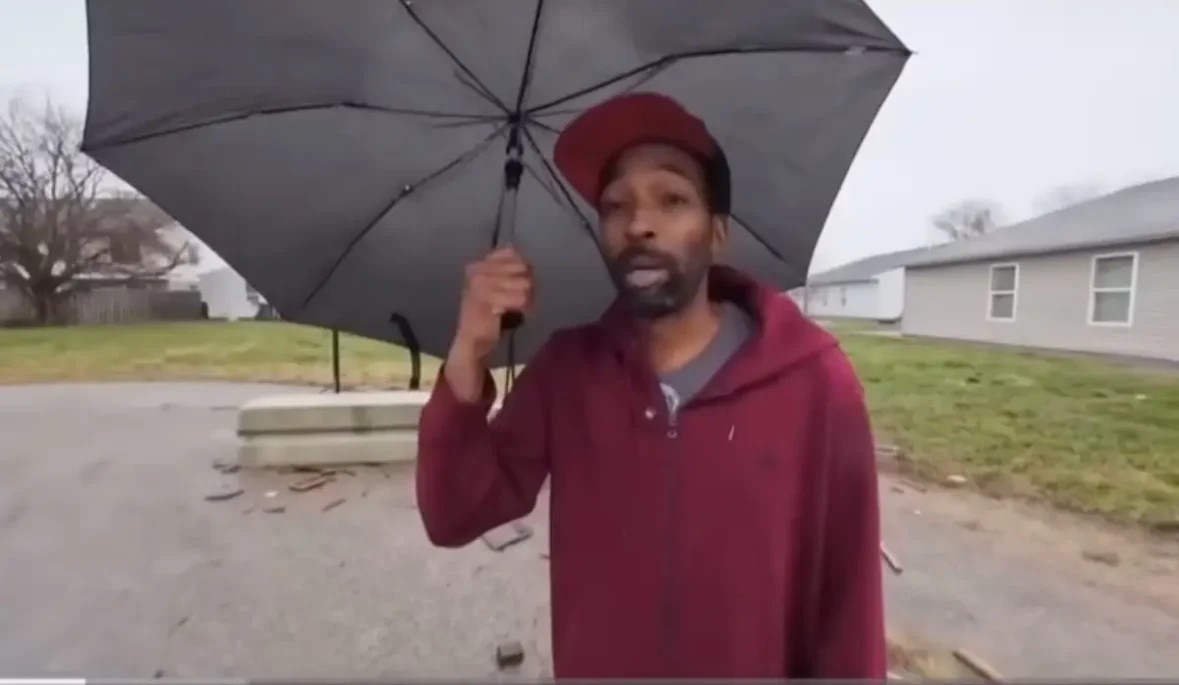
“They shut me out,” Fauntleroy said. “They blocked my calls. It’s hard to even get through to anybody. It’s been a nightmare.”
A WCPO reporter interviewed Trenton City Manager Marcos Nichols about the dispute. Nichols said the city’s actions were the results of contentious conversations with Fauntleroy and that he wasn’t clear on how Fauntleroy was able to purchase the street.
“I’m not sure how that occurs other than it was a private drive that was created through a homeowner’s association,” Nichols said. “The homeowner’s association was responsible for maintaining that property and upkeeping it.”
When asked why only a portion of the lot was appraised, Nichols said, “I cannot speak to the appraised value.”
The city, which initiated the eminent domain reclamation process in October, intends to convert the private drive, which provides access to several homes, into a public roadway so that the city can be responsible for maintaining it, he said.
But Fauntleroy wants the city to pay him the fair value of his land.
“Treat people fair; do honest work,” Fauntleroy said. “Don’t just take advantage of someone because they don’t have the means of getting an attorney.”
In Ohio, eminent domain law allows the government to seize private property for public use, but the government is required to pay the owner “just compensation,” which is defined as the fair market value of the property taken if the sale were voluntary.
If the property owner disagrees with the compensation value assessed by the government, the state or public agency involved will file a lawsuit, and there will be a jury trial to determine the amount of compensation owed.
Ohio has a long history of legal battles involving eminent domain, with mixed results for property owners, noted Moneywise.
In 2006, in the City of Norwood v. Horney, the city wanted to seize about 70 homes and businesses to make way for a private development and argued that the existing neighborhood was “deteriorating.” The Ohio Supreme Court disagreed, ruling unanimously in favor of the homeowners.
“We hold that an economic or financial benefit alone is insufficient to satisfy the public-use requirement,” the Court declared.
In Fauntleroy’s case, the public benefit of having access to the road may be more clear, but the city still needs to compensate him fairly for it, say legal experts.
“It’s obvious that the city must pay for what it takes,” Dana Berliner, who was the lead attorney for the City of Norwood, told Atlanta Black Star. Now the litigation director for the Institute for Justice, a libertarian public interest law firm, Berliner said, “If Mr. Fauntleroy owns the street and the city wants it, it must pay just compensation for it.”
Berliner, who isn’t up on the details of Fauntleroy’s case, added, “I’m not sure what happens if the city transferred title accidentally. Nor can I tell if the city did transfer the title accidentally or if it was part of the purchase. If the transfer of title was in error, the city would have to take whatever the correct legal steps are to correct the error. He’s owned it for three years, though, so it may be that the only possible step is eminent domain.”
She said she finds it confusing why the city is appraising the lot for the home “if it’s just trying to convert a private road to a public one. Even if it wants to acquire both, it can’t just pay for one.”
Berliner suggested that Fauntleroy contact an eminent domain attorney in Ohio for a consultation, which is normally free, “to figure out what is going on.”


