A group of Black people is suing a Mississippi city after officials deemed their homes “blighted,” a move that could ultimately lead to their property being swiped through eminent domain amid discussions of a redevelopment plan.
The longstanding property owners of Ocean Springs filed the lawsuit after officials “passed a resolution declaring Plaintiffs’ (and others’) properties to be an “urban renewal area,” which requires a factual finding of substantial blight or slum, and which allows for subsequent exercises of eminent domain,” per the federal lawsuit.
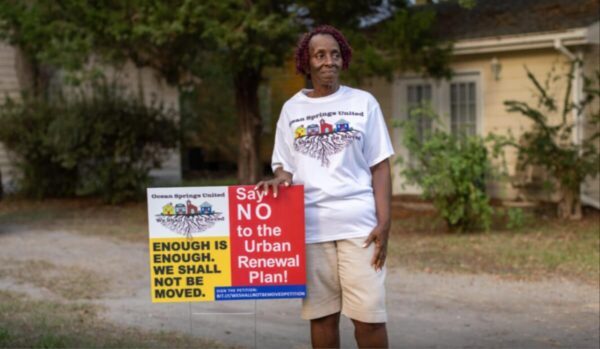
Cynthia Fisher, Esther Payton, Edward Williams, business owner Robert Zellner, and Macedonia Missionary Baptist Church are plaintiffs in this case. The Institute for Justice, a nonprofit public interest firm, is helping the group and filed the complaint in the U.S. Southern District of Mississippi. It claims the city violated the residents’ 14th Amendment rights.
Trending Today:
- Houston Power Couple Sentenced to a Combined 35 Years In Federal Workman’s Comp Fraud Scheme
- White TikToker Faces Backlash for Mocking Whoopi Goldberg’s Locs In Cringy Wig Review Video
- Man Walks Off Date After Woman Slurps Up 48 Oysters In One Sitting and Expects Him to Cover the Tab, Viral Video Shows
The area has a Black Railroad District, small businesses and a coveted church that has been a haven for residents for over a century.
The resolution, which was passed on April 4, 2023, was carried out without giving the plaintiffs’ notice about it or the short 10-day deadline they had to challenge it and defend their property, the lawsuit alleges. The group wasn’t made aware of it until months later, in August.
According to the lawsuit, Fisher owns a home that has been passed down through multiple generations, and she has no urge to move, as her daughter lives on the property, which has been on 1303 Robinson Street for more than 100 years. Through the new plan, the city ordered that the homeowner “minimize blighting influences” without much clarification. However, it also considered the street it’s on as “well maintained.”
“Cynthia did not learn that the City had placed her property within an urban renewal area —i.e., that it declared her property to be within a blight or slum zone — until August 2023,” the lawsuit stated. “Had Cynthia received adequate notice of the proposed urban-renewal-area designation, she would have presented evidence at the April 4 hearing. If the resolution still passed, she would have filed a challenge within the 10-day window.”
The other plaintiffs in the lawsuit had similar experiences and long-term ties to their respective properties. In a statement to The Associated Press, Ocean Springs Mayor Kenny Holloway said that the new plan did not violate the residents’ rights and invited them to discuss the matter further. According to the report, he added that the residents can ask to opt out of the urban renewal plan.
“Ocean Springs cannot brand neighborhoods as slums in secret,” Institute for Justice Senior Vice President and Litigation Director Dana Berliner said in a statement. “Depriving people of their property rights without any process is a clear violation of the U.S. Constitution. Ocean Springs should be happy to have such a closely-knit, warm community. It shouldn’t try to destroy it.”


