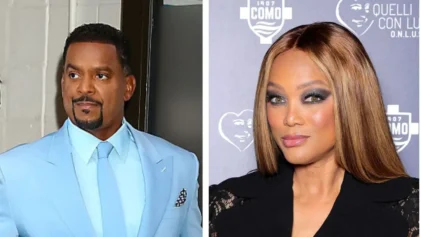
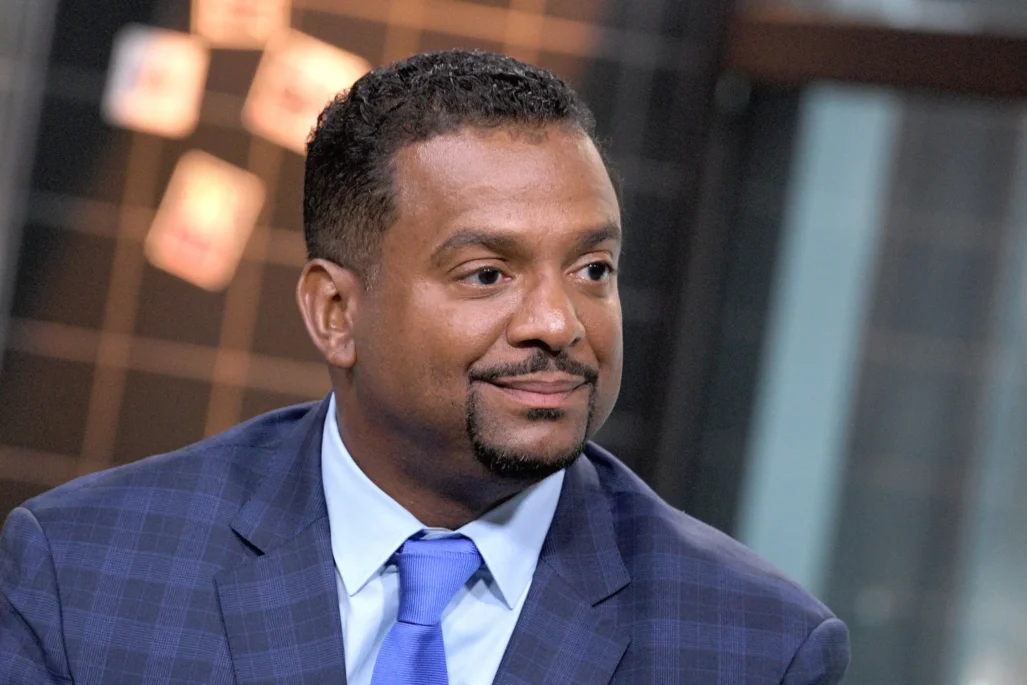
Alfonso Ribeiro has fond memories of starring alongside Will Smith on “The Fresh Prince of Bel-Air,” but his run on the successful sitcom became a bittersweet footnote to his entertainment career.
For six seasons that ran from September 1990 to May 1996, the former child star portrayed Carlton Banks, the uppity private school cousin of Smith’s street-smart, Philadelphia-bred Will.
The two found endless hi jinks to get into, keeping audiences entertained for 148 episodes, some of which were accented with moments of Ribeiro doing his fancy footwork, better known as the Carlton dance, to Tom Jones’ “It’s Not Unusual.”
Looking back on his time on the NBC set, he says what he enjoyed most were the times shared with his co-stars. “It was about the cast and spending time with them. Before every show, we would go into Will Smith’s dressing room, and we’d play music and dance and just have a great energy buildup to get ready for the show. Those are some great memories of just being together,” he tells Closer Weekly in a new interview.
However, aside from his role in LL Cool J’s scripted series “In The House” (1995-1999), he has seldomly appeared in front of the camera as anyone other than himself since leaving Bel-Air. His IMDb lists one, two, three, and four episode stints on “Things We Do For Love,” “The Brothers Garcia,” and “Cedric the Entertainer Presents,” as well as several animated voice gigs. But a standout role has evaded him since Carlton, and it’s not by happenstance.
Alfonso Ribeiro is suing Fortnite Battle Royale creators for using his signature “Carlton Dance” in the game without his permission, “exploiting Ribeiro’s protected creative expression and likeness and celebrity without his consent or authorization…” pic.twitter.com/afUwIn9iK3
— Jake Tapper (@jaketapper) December 18, 2018
“Playing Carlton on ‘Fresh Prince’ became a sacrifice,” he says. “I used to always say doing Carlton was the greatest and worst thing that ever happened to me. It was one of the greatest roles that I ever was fortunate enough to play, but it was also the role that stopped me from acting again because people couldn’t see me as anything else. The sacrifice was not having an acting career anymore.”
Ribeiro has since become a household staple from his victorious run with “Dancing With the Stars” and his years of hosting “America’s Funniest Home Videos,” which he has led since 2015, as well as a number of game shows. Some Instagram users, reacting to his reflection on his career, brought up Will Smith’s career. “Interesting it did the complete opposite for Will…,” said one fan. Another one said, ‘Will went on to be one of the biggest stars ever.’
However, a fan shared that they were ready to see him return to prime time while in his acting bag. “I could see him as a sitcom dad now with his own show,” wrote an Instagram user.
Another supporter said, “I never understood how people like him, Christopher B Duncan (Braxton), and Jaleel White (Steve Urkel), got typecast for blowing their roles out of the box. If anything, I would’ve thought that would open more doors.”
Ribeiro previously spoke to Atlanta Black Star about being typecast as Carlton. He said that a huge contributing factor to an actor’s success after their big role is continued support.
“Every actor typically gets one, maybe two opportunities after whatever they’re really known for. … If you’re a fan of somebody on a show, and they do something else, make it a priority to go watch whatever it is they’re doing even though it’s not what you’re used to seeing them do,” he said.
He also revealed that fans still ask him to do the Carlton dance, but it is something he rarely obliges.