During last week’s general election, there was a significant ballot shortage in a predominantly Black county in Mississippi, and local officials scrambled to figure out why.
Hinds County has an estimated 73.5 percent Black population, according to data from the US Census Bureau. The county is part of Jackson’s metropolitan area.
Local news reported a few mishaps that caused voters to wait several hours in long lines. Officials said split precincts, which allow individuals to vote in one district while others cast their vote at another polling site, played a role in the mix-up.
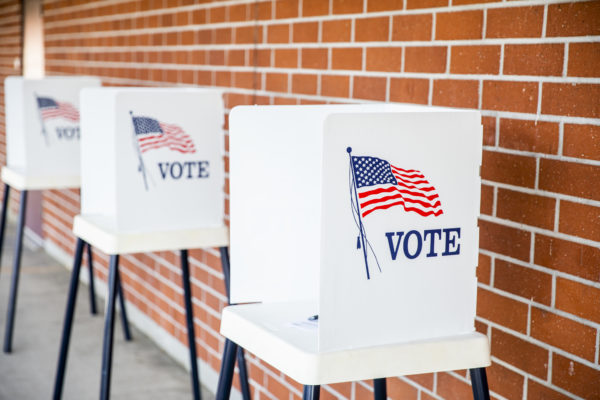
“What we tried to do is print out paper ballots to make sure people that were in line get a chance to vote on paper ballot, and then later on, we can transfer the paper ballots to scannable ballots, because we did run out of ballots last night with other issues, printer issues, things like that, but we tried to work it out the best we could,” Hinds County Circuit Clerk Zack Wallace told WJTV.
Nearly 10 polling precincts, some as early as 9 a.m., including Wildwood Baptist Church, ran out of ballots on Tuesday, according to WLBT. Jason McCarty, a county Democratic Executive Committee member, slammed local officials for the hold-up.
“This is unacceptable… We were not prepared for this amazing turnout,” he said on social media per the outlet, adding, “This is going to become an issue either way because regardless of who wins, the other side will say voters are disenfranchised.”
Amid the chaos, a county circuit judge declined the request from a state voting group to keep the polls open until 9 p.m., WLBT reported. Separately, Republicans reportedly pushed back against a previous court ruling that gave polling sites an hour extension, demanding that those who were not in line during the original deadline be “segregated and not counted with ballots of voters in line prior to 7 p.m.”
GOP incumbent Gov. Tate Reeves gained 51.6 percent of the votes and defeated Democrat Brandon Presley, who would’ve been the first official from the party in decades to be victorious in the state, Newsweek reported.
Advocates and civil rights groups urged people for months to cast their ballots this week, but the setbacks left them “disappointed” because people couldn’t wait in the long lines, according to USA Today. They tried to offer water and snacks, but it didn’t help in some cases.
“It also made me personally want to work to improve that and to really begin to think about strategies to help make sure this doesn’t happen again,” Cassandra Welchlin of the Mississippi Black Women’s Roundtable told the outlet.
The push to vote comes after HB 1020 would have allowed special circuit court judges to be appointed rather than elected in the county, ultimately disenfranchising Black voters. Residents sued the state, arguing that part of the measure and the “creation of four new appointed ‘temporary special circuit judges’ in the Seventh Circuit Court District for a specified, almost-four-year term violates our Constitition’s requirement that circuit judges be elected for a four-year term.”
The state Supreme Court rejected it, deeming it “unconstitutional.”
Trending Now:
- ‘Stop Arguing with Me!’: Viral Video Shows Cop Flipping His Story with Group of Women Who Refuse to Back Down After Being Accused of Shoplifting
- ‘I’m Not Scared of You’: Video of Store Manager Barking at, Belittling Older Employee for Not Clocking Out on Time Sparks Outrage
- ‘She Had to be Hearing Voices’: Outraged Family and Friends Question Motive of Kentucky Mom Accused of Fatally Shooting Her Two Biracial Sons
Never miss a story — sign up for ATLANTA BLACK STAR’S free daily newsletters to stay up-to-date on the latest developments, from top news headlines to celebrity news.


