What you’re about to read illustrates the very definition of “caucasity.”
Black Twitter is absolutely baffled by a few screenshots showcasing the contents of a fantasy novel series.
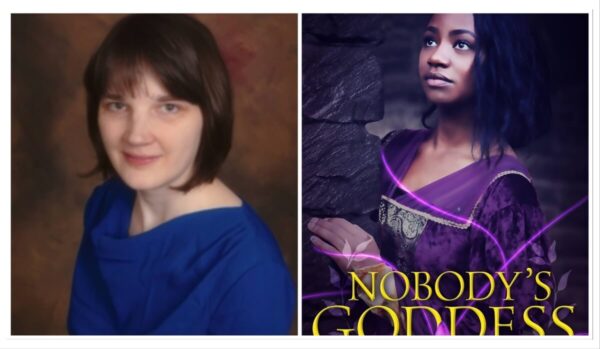
The series, known as the “Never Veil” series, was written by Amy McNulty.
Trending Today:
- Crazed Biker Who Stomped and Smashed Back Window of Car with Two Children In the Backseat Arrested
- Mother of Rasheem Carter Who Was Found In Pieces After Reporting He Was Being Harassed By White Men, Seeks Answers a Year Later
- ‘He’s Lucky to be Alive’: Video Shows Florida Cops Beating Black Man ‘Like a ‘Rag Doll.’
Although the author is white, the book covers for all three novels in the series depict young Black women. The books are called “Nobody’s Goddess,” “Nobody’s Lady,” and “Nobody’s Pawn.”
The excerpt that was posted on social media illustrates a scene where one of the Black female characters is getting her hair done by her mom, but this isn’t a touching, bonding scene between mother and child.
Instead, the author chooses to depict a mother struggling to comb through the character’s kinky hair and alludes to the use of bacon grease to moisturize her scalp.
Read if you dare:
“Mother dipped the wooden comb in the bowl of water she’d brought to the kitchen-table-turned-rack-of-torture. It wasn’t working too well. I could tell from the constant battle between my scalp and the roots of my hair that so badly wished to tear free of the skin. But it was either that or bacon grease, and I wasn’t having any pig fat slathered over my hair in attempt to tame it, not today.”
And yes, it only gets worse.
Read on again if you dare.
“She gripped a chunk of hair like the tail on a dead squirrel and ran the wooden comb upward. “Oh!” came the shout, followed quickly by the snap of the wooden comb Father had carved for her upon their Returning years ago. The comb that was only really a last resort, a gift meant for Mother to treasure and run through her own silky, wavy golden hair. “We’ve broken the last of them,” she sighed. “We can still use the grease.”
This scene is preceded by a self-deprecating thought process the character undergoing this so-called “hair treatment” has about her own hair not being “soft and supple” and ends with a comparison between her hair and her sister’s “wavy” and “golden hair.”
It’s unclear which book in the series the excerpt was taken from, and I’m unsure if the author takes time to input some checks and balances in other chapters to offset scenes like this or even slightly attempt to empower the characters she’s trying to portray, but after reading this one passage, I don’t really care.
If anyone’s tempted to know, the first book of this series was published in 2016. You can read the book synopsis as posted on Goodreads.
However, this portion of the book alone doesn’t attract me, as a Black woman, to the series as a whole. Why would I want to read about a character of my background getting her hair done with bacon grease? I wouldn’t read this in 2016, and most definitely not in 2023.
Other people chimed in with their criticisms, which, in my opinion, are well-deserved:
While many on the platform, recently renamed X, are calling for the book to be removed, the fictional novel has a 3.39 rating on Good Reads, with some saying it is fun to read.


