Gov. Gavin Newsom has announced that Laphonza Butler, the president of EMILY’s List, the nation’s largest organization dedicated to electing women, will complete the late U.S. Sen. Dianne Feinstein’s term until 2024.
Butler’s selection derives from Newsom’s vow to appoint a Black woman to the interim position, as there are currently no women of African descent in the Senate.
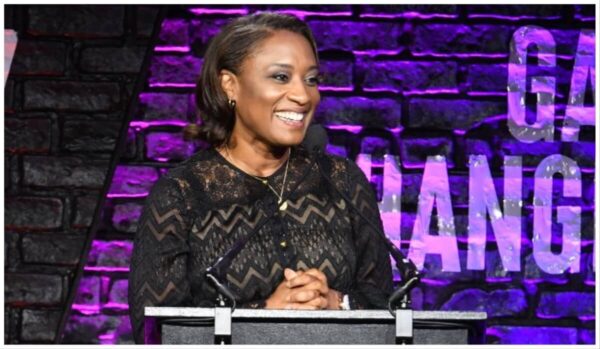
The governor faced criticism for the promise, with U.S. Rep. Barbara Lee, who is running for a full term in the seat, claiming it was “insulting” to the “countless” Black women if the interim senator were appointed just to “simply check a box.”
However, Lee has expressed her support for Butler since the announcement was made.
I wish @LaphonzaB well and look forward to working closely with her to deliver for the Golden State.
— Barbara Lee (@BarbaraLeeForCA) October 2, 2023
I am singularly focused on winning my campaign for Senate.
CA deserves an experienced Senator who will deliver on progressive priorities.
That’s exactly what I’m running to do.
While Butler’s appointment will diversify the U.S. Senate, it is a temporary solution to the lack of inclusion in the chamber of Congress. Butler will serve until the next general election in November 2024, at which point a special election will determine who will complete the term until January 2025.
Trending Today:
- ‘I Fight Kids. I’ll Fight You!’: LAPD Arrest Woman After Video Surfaces of Unprovoked Attack of 13-Year-Old Girl
- Black Tesla Employee Claims White Co-Workers, Supervisor’s ‘Preferred Pronoun’ to Use Was the N-word
- ‘He’s Lucky to be Alive’: Video Shows Florida Cops Beating Black Man ‘Like a ‘Rag Doll.’
Under California law, a special primary and general election must take place to fill a vacant Senate seat during the period between the nearest statewide general election following the vacancy and the commencement of the subsequent congressional term.
As the president of EMILY’s List, Butler is well-acquainted with the challenges of getting a Black woman elected to the predominantly white-male Senate. She also served as a senior adviser to Vice President Kamala Harris, who was formerly the sole female senator of African descent and represented California as well.
According to the Senate Historical Office, only 11 African-Americans have been elected to the U.S. Senate. Hiram R. Revels, the first Black lawmaker to serve in Congress, was elected by the Mississippi Legislature in January 1870 to fill a vacancy, serving for a year. Edward Brooke, the first Black U.S. senator seated through election by voters in 1967, served for 12 years, the longest tenure so far.
About two percent of the Senate’s membership has been composed of non-white individuals. With Butler’s impending entry into the Senate, this figure will rise to just over a third of the total, making her one of a dozen Black U.S. senators, as reported by The Washington Post.
Harris served in the Senate for four years after defeating Loretta Sanchez in 2016.
“As we mourn the significant loss of Senator Feinstein, the very freedoms she fought for — reproductive freedom, equal protection, and safety from gun violence — have never been under greater assault,” Newsom said in a statement. “Laphonza will carry the torch left by Senator Feinstein, continue to break glass ceilings, and fight for all Californians in Washington, D.C.
With her Senate appointment, Butler will step down from her role at EMILY’s List, where she made history as the first Black woman and mother to lead the organization, according to Newsom. Additionally, for over a decade, she served as the president of SEIU Local 2015, California’s largest labor union, representing over 325,000 nursing home and home-care workers.
Butler also served as the director of the board of governors of the Los Angeles branch of the Federal Reserve System, and was appointed to the University of California Board of Regents by Gov. Jerry Brown in 2018, serving until 2021. Former President Barack Obama once recognized her as a “Champion for Change.”


