Former president Donald Trump‘s usage of his historic mugshot on merchandise could potentially land him in legal trouble, according to a report.
Last month, Trump was booked at the Fulton County Jail in Atlanta, Georgia, after being charged with racketeering charges connected to his alleged attempt to overturn and interfere with the 2020 presidential election. Eighteen of his allies, including Rudy Guiliani, were also indicted.
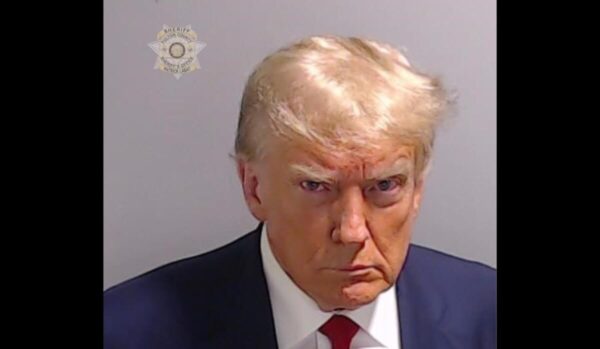
After the announcement that the group was expected to surrender by Aug. 25, social media waited for the mugshots on their timelines. After Trump took his photo —notably making him the first US president to get a mugshot — he shared it on X, formerly Twitter.
“Election interference,” he wrote on the platform after a lengthy hiatus. “Never surrender.”
Shortly after he left the jail, Trump’s campaign started selling merchandise with his booking photo, including T-shirts and mugs, among other items, CBS News reported, an effort that has helped him rack up millions.
Other people also took advantage of the opportunity and started selling mugshot merch on online marketplaces like Amazon and Etsy. However, legal expert and Case Western Reserve University professor told Spectrum News that it’s a potential copyright infringement violation.
“You’re prohibited from using it for a number of things without authorization,” Betsy Rosenblatt said. “You’re prohibited from reproducing it, making a derivative work of it, distributing it without authorization, or that is to say distributing anything that isn’t the one copy you already lawfully have, and various other things. Making a public display of it, making a public performance of it, which opens up all kinds of fascinating possibilities here,” the expert continued.
As Rosenblatt laid out, the Fulton County Sheriff’s Office, which owns the copyright, would have to decide if they want to pursue legal action against Trump and other people profiting from the image.
“But it’s also reasonable to think that the Fulton County Sheriff’s Office might think, you know, this is a public document, it belongs to the world in a way, [the] copyright belongs to us,” Rosenblatt explained to Spectrum. “But the news about it belongs to the world. And we’re not going to undertake the expense and trouble of hiring copyright counsel and sending out takedowns and cease and desist and letters, or in lawsuits.”


