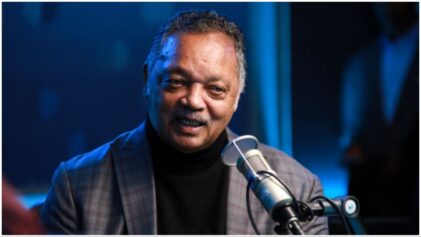
US civil rights leader Rev. Jesse Jackson is on the mend after suffering a head contusion when he fell on the campus of Howard University.
The congressman was most recently hospitalized, as well as his wife Jacqueline, after testing positive for COVID-19 in August.
Jackson, 80, reportedly fell and hit his head while entering a building on campus Monday, Nov. 1. The university confirmed the news in a tweet that read, “We can confirm that Rev. Jackson was taken to the hospital by a university administrator and was later joined by Dr. Wayne Frederick. Our prayers are with the Jackson family.”
He was admitted for overnight observation at Howard University Hospital where he also underwent testing that yielded normal results. Jackson’s daughter, Santita, provided an update on his status late Monday evening, stating, “Family, he’s resting comfortably & doing well: we thank u 4 ur prayers! Fighting 4 u is what he’ll always do. His goal is 2 ensure the well-being of Howard University students: #MissionAccomplished”
Jackson spent two days at the historically Black university meeting with officials and students who for weeks have protested campus housing conditions. On Oct. 12, just days before Howard’s homecoming festivities, students staged a sit-in, protesting claims of black mold found inside dorm rooms, a lack of overall housing availability and various other health and campus concerns. The protests and calls for action outgrew the Washington D.C., area where the school is located and quickly became a viral topic of discussion across social media.
Atlanta rapper Gucci Mane’s 1017 artist — secured as homecoming performers — even offered their support in joining students in their protest.
Rev. Mark Thompson, who accompanied Jackson to the university, said the civil rights leader made a “passionate appeal” to Howard’s president Dr. Wayne Frederick on behalf of students that led to some concessions that have yet to be publicized.
“All they’re asking for is better living conditions on their campus and that’s a reasonable demand,” said Thompson on Monday while speaking with journalist Roland Martin.
Jackson has a long history of protesting, having been one of the pillars alongside Dr. Martin Luther King Jr during the fight for civil rights. This past summer, while protesting attempts to derail the 1965 Voting Rights Act, he was arrested in the nation’s capitol. He shares that same passion in helping Howard’s students.
“He [Jackson] pledges to the students Sunday evening when we were here …that if authorities tried to pull these students out of [doing what they’re doing] he’d go to jail with them.”