A California news anchor was suspended indefinitely from a Bay Area news station last week, after he suggested KTVU air a short segment about the disproportionate media coverage of the Gabby Petito case.
Frank Somerville, 63, wanted to add a 46-second tagline following a longer report about the homicide investigation into Petito’s death, questioning the media coverage the story has received.
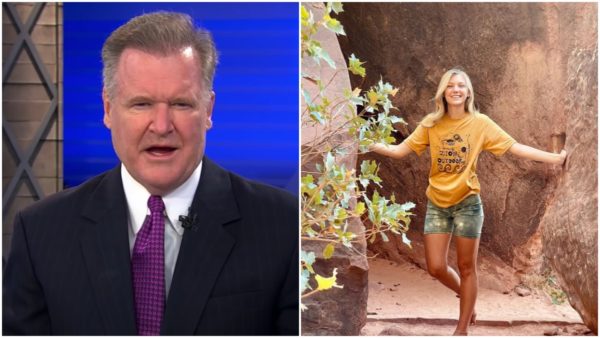
But news director Amber Eikel disagreed about the proposed addition calling it inappropriate, The Mercury News reported. Somerville, who pushed back against the assertion, learned the following day that he had been “suspended indefinitely.”
Somerville, who is white, is the father of an adopted Black teenage daughter.
After 23-year-old Brian Laundrie returned home to Florida without 22-year-old Petito following the couple’s cross-country trip, Petito’s family reported her missing.
Media platforms followed the Petito case closely as it unraveled from a missing person case to a homicide investigation.
Petito’s remains were found in Wyoming on Sept. 21, days after Laundrie was also reported missing by his parents on Sept. 17. Laundrie has been named a person of interest in the Petito case, and the FBI has also issued an arrest warrant after he fraudulently used a debit card.
After authorities spent more than a week combing through Florida swamps searching for Laundrie, the FBI announced Monday that it would be taking over the case from North Port Police.
Joy Reid took notice of the persistent coverage of the Petito case during a recent episode of “The ReidOut,” asking, “The way this story has captured media attention has many wondering, ‘why not the same media attention when people of color go missing?'”
The term “missing white woman syndrome,” which has resurfaced to the forefront of public discourse, was coined by late PBS journalist Gwen Ifill in 2004.
“If there is a missing white woman you’re going to cover that every day,” she joked at the time.
A 2010 study by The Ohio State University researchers found that Black children make up 33.2 percent of missing children cases but receive only 19.5 percent of news media coverage.
Controversy surrounding disparate news coverage of missing persons drew attention to other cases of missing Black people that had previously been overlooked.
Carmen Bolden-Day, the mother of 25-year-old graduate student Jelani Day, noted the difference in the way her son’s case has been handled by authorities and the media during a Newsy interview.
Day went missing on Aug. 24. A body discovered on Sept. 4 in the Illinois River remained unidentified for weeks until a coroner announced on Sept. 23 that the remains belonged to Day.
Before learning that her son was already dead, Day’s mother told Newsy on Sept. 17, “I know about Gabby, the missing girl. And she’s been missing for two days, and her face is plastered everywhere, and the FBI is involved. And I do not understand why Jelani doesn’t get that same coverage. Jelani doesn’t get that same attention.”


