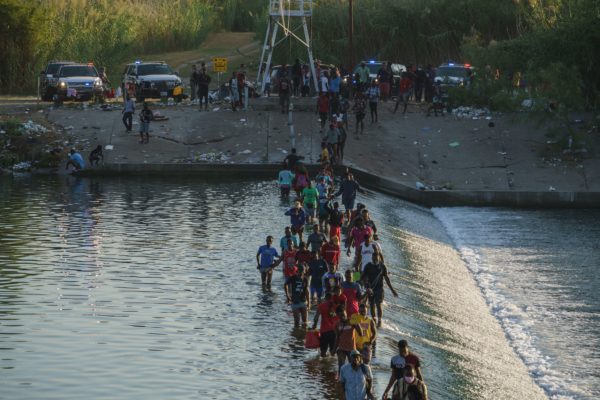
Thousands of migrants, most of them from Haiti, are assembled under poor conditions at a temporary camp under the Del Rio International Bridge as U.S. Border Patrol agents work to process an influx from Mexico that swelled the numbers in the makeshift habitation within a week.
Border Patrol officials told The New York Times last week that 9,000 migrants, mostly from Haiti, made it across the Rio Grande this week and are now awaiting processing on the Texas side of the U.S.-Mexico border amid significant delays.
In the coming days, thousands more migrants are expected to arrive. By Saturday, Sept. 18, local officials in Del Rio, Texas, were putting the number of asylum-seekers at more than 14,000.
The Biden administration has reacted by initiating plans to bypass the asylum approval process to deport many of the Haitians, beginning with single adults, back to their country on a ramped up series of flights to the Caribbean nation.
Earlier in the week, there were just a few hundred people at the temporary camp. The surge in migrants, which has persisted throughout the summer, comes amid turmoil in Haiti.
Even before Haitian president Jovennel Moïse was assassinated in July, there was a spike in violent crimes and kidnappings in the Caribbean nation. Then, the death of the president plummeted Haiti into political uncertainty over who would lead the country.
An August earthquake in Haiti killed more than 2,000 people. In July, the Biden administration extended temporary protected status for Haitians living in the U.S. who were displaced by the 2010 earthquake.
By Sunday, Sept. 19, Haitian national migration office chief Jean Negot Bonheur Delva told The New York Times his government expects 14,000 Haitians to be deported from the United States back to Haiti over the coming three weeks. “The Haitian state is not really capable to receive these deportees,” Bonheur Delva told the Times on Sunday.
The Border Patrol said more agents would be sent to the Del Rio area “to immediately address the current level of migrant encounters and to facilitate a safe, humane and orderly process.”
Of the makeshift tents in the area under the bridge, the Border Patrol said, their purpose was “prevent injuries from heat-related illness” while migrants were waiting to be taken into custody. Thousands already have been moved from the area by Border Patrol for processing.
Amid triple-digit temperatures, migrants have been sleeping on dirt as sanitary conditions worsen. Texas Gov. Greg Abbott condemned the conditions in a statement, and state police to assist at the border.
“The Biden administration is in complete disarray and is handling the border crisis as badly as the evacuation from Afghanistan,” Abbott said last week.
The mayor of San Antonio said the conditions at the border resemble a shantytown. Many migrants could wait two weeks before being processed and brought to a shelter. There is no running water, only 22 portable toilets, and migrants cross back and forth over the Rio Grande to get food.
To handle the influx of migrants, some migrants will be flown to other parts of the border not experiencing a significant surge, while others will be sent by plane back to Haiti to signal to other Haitians that they should not attempt to come to the border.
On Thursday, Texas officials said President Joe Biden’s administration had ordered the border be closed with the help of state officials, but Abbott later said the federal government reversed the decision. A spokesperson for the U.S. Customs Border later said an order asking Texas officials to aid in closing the border was not given.
Between March and Sept. 2, the Texas Department of Public Safety, arrested 6,000 migrants attempting to cross the border under the controversial new program Operation Lone Star.
A Texas judge also ordered Thursday that a Trump-era policy used to turn migrants away over coronavirus concerns no longer be used, starting in 14 days.


