Gabrielle Union candidly discussed in a new interview with Health Magazine on Sept. 9 how she felt experiencing a misdiagnosis regarding her infertility issues.
Prior to welcoming her daughter Kaavia James Union Wade with husband Dwyane Wade via surrogate in 2018, it is unclear what the actress was previously diagnosed with, as Union didn’t disclose that information. Still, ultimately in the end it was confirmed that she suffered from adenomyosis. Adenomyosis is a condition that thickens or enlarges the walls of the uterus, making it difficult to carry a fetus to term.
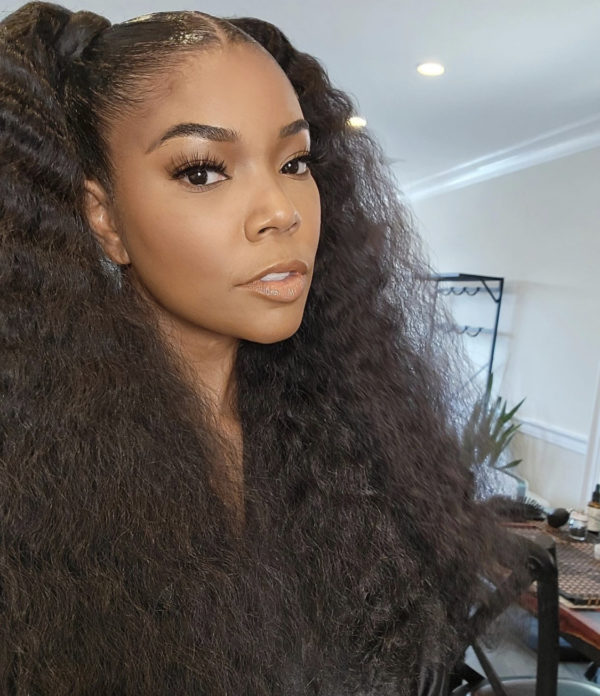
Union told the publication how infuriating it was to finally receive the answer to her struggles after going through failed in vitro fertilization treatments and about eight miscarriages, “It’s maddening. You get so focused on the thing that they’re saying that it is, and there’s not a lot I can do about being my age. When the reality is, it’s something that has nothing to do with that — it’s something that’s been plaguing me for over 25 years, and no one ever got to that issue.”
The 48-year-old continued by saying despite the emotions she experienced during the entire process, she was somewhat relieved to “tag” the condition as the problem. “By the time I got the answer, it was just like, ‘Are you f—ing kidding me?’ Then, it went from shock to anger. Rage, really, an all-consuming rage. And then relief that it wasn’t me. I felt like there was a thing that I could tag as the problem other than myself.”
In the past, the “Bring It On” star opened up about how she found out she had adenomyosis after also going “undiagnosed” for years. Union said during a “Katie’s Crib” podcast in 2020, “I went undiagnosed through multiple rounds of IVF with different leading doctors in the field around the country. Not until the last doctor, Dr. Kelly Baekin California. That first ultrasound, she was like, ‘Oh, so, you have adenomyosis. … I don’t know why no one would’ve noticed this.'”
She added while listing the side effects of adenomyosis which includes “heavy or prolonged” periods, “When Dr. Baek started asking me more questions going back to my periods and what my experience was like with my periods as a younger woman, I explained that I ended up getting on the pill not for birth control reasons, but because my periods were lasting, like, a third of the month and I was bleeding like I had been shot in the vagina.”


