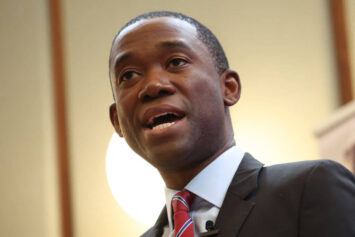
Gwinnett County appoints its first Black police chief to lead the state’s second largest police agency. James McClure, 50, intends to continue building the relationship between his department and the community. He wants the African-American community to know they will be treated fairly.
Within the Gwinnett County Police Department, a row of portraits lines the hallway showcasing current and former police chiefs, and up until now they have all been white. McClure is changing the complexion of the leadership and making history while doing it.
“I have a range of emotions from pride to joy, but fully recognizing this position is immense,” said McClure.
McClure says the significance of his appointment is not lost on him as the first Black chief in the department’s 28-year history.
McClure knew he wanted to be a police officer since he was 14 years old. After graduating high school, he joined the Marine Corps in 1989 and fought as a combat veteran as part of Operation Desert Storm.
After his military service, McClure pursued his long ambition of wearing the badge. He joined the Gwinnett County Police Department in 1996. He says much has changed since then.
“I think officers today realize they are under constant scrutiny if you will by the public recording their actions to their own body worn cameras, but there’s positives born out of that,” said McClure.
McClure points to how police approach community police, and the use of cameras including cell phones having had a significant impact on law enforcement. In recent years, police have come under intense scrutiny following controversial and tragic deaths of Black citizens at the hands of police including Breonna Taylor and George Floyd.
“George Floyd, that was a tragedy and I believe it was a preventable tragedy, but the thing we have to do as a law enforcement agency and the nation as a whole is try to grow from those experiences,” said McClure.
McClure understands policing in Black communities has often been an uphill battle. He says under his watch, everyone will be treated fairly.
“My message to the African American community, would be just that, we will treat everybody in a consistent fair manner, and if we do that, we’re more likely to be successful,” said McClure.
McClure says the loss of life has been the most challenging moments in his career, but with good policing comes a sense of accomplishment. This rings especially true for a case he worked on in December 2012, when then 14-year-old Paul Sampleton Jr. was murdered.
“To be able to go and see Mr. and Mrs. Sampleton and let them know we arrested the suspects who committed that heinous crime, it left me with a sense of pride and joy,” said McClure.
As McClure’s term as chief begins, his goals include building a stronger relationship with the community, boost police recruitment to better reflect Gwinnett County’s diverse population and keep everyone safe. He also wants to be strategic when tackling the current spike in crime affecting communities across the state and nation.
“Our goal is to be intentional about dealing with individuals who are driving this crime. What we don’t want to do is sweep a whole community in an act of trying to keep everybody safe,” said McClure.