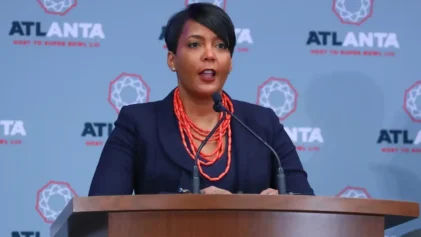
Atlanta Mayor Keisha Lance Bottoms has unveiled a $70 million plan to combat crime amid rising crime rates in the city.
Bottoms announced at a press conference on July 16 that her Anti-Violence Advisory Council has delivered its recommendations to combat the uptick in violent crime, after the council spent several weeks researching the issue to improve public safety.
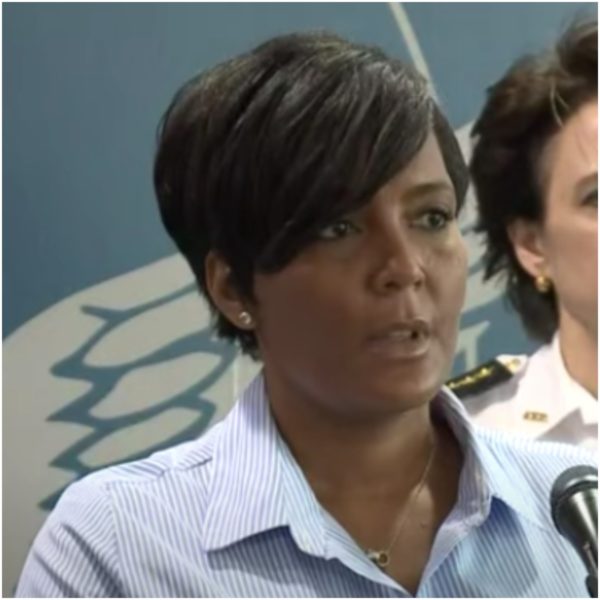
“Overall, the advisory council believes that the city has a very broad crime strategy plan but our efforts would be better focused if we really honed in on the strategy to specific locations and specific individuals who are most afflicted by crime. This framework will help determine where imminent crime-reduction initiatives should be implemented, and where they can have the most impact in reducing violent crime,” Bottoms said.
Bottoms announced the formation of the council, composed of 14 people, including nonprofit leaders, former law enforcement leaders and city council members in May. The group first met on May 19 and was tasked with finding solutions for the crime surges in Atlanta.
The Atlanta Journal-Constitution reported in June that this year Atlanta’s homicide rate had increased by 58 percent and shootings by 40 percent from 2020. The police force remained more than 400 officers under its authorized level after 200 officers quit last year, many after officers were charged in the death of Rayshard Brooks. “Roughly 70 percent of violent crimes defined as homicides, rape, aggravated assaults, and robbery are committed by people of the ages 25 and older,” Bottom said, sharing findings from the report. “Youth under 16 years of age committed 10 percent of the violent crimes.”
Bottoms also said that of the 46 percent of homicide cases in which the relationship between the perpetrator and victim could be determined, the victim knew the perpetrator in 70 percent of cases. She said the statistics emphasize the need for conflict resolution within communities. Bottoms also shared that 90 percent of homicides were caused by gun violence and that 939 guns have been seized from Atlanta’s streets since the year started.
Plans for reducing crime will include hiring 250 additional officers in fiscal year 2022, tracking repeat offenders, implementing conflict resolution and mediation programs to prevent retaliatory violence, expanding the use of surveillance cameras and license plate readers, and adding 10,000 new street lights by December 2022 as a part of the “Light Up the Night” initiative.
“The council also recommends an investment of $70 million to fund these actions and initiatives,” Bottoms said. About $50 million will come from public funding, while the remaining $20 million will come from nonprofit partners and philanthropic efforts. “It really will take a village to make dent and to make a difference,” she said.
Bottoms announced in May that she would not seek reelection, adding that the decision not to run for another term was made “from a position of strength.”
She added, “This has been my highest honor to serve as mayor of this city. … It is abundantly clear to me that it is time to pass the baton on to someone else.”