Charles Barkley’s connection to basketball legend Michael Jordan can be traced back to the 1984 NBA Draft. Over the years, their friendship appeared to thrive, despite their athletic rivalry on the basketball court and even on the golf field. However, during a recent interview, Barkley revealed that he and the former ballplayer were no longer as close-knit as they once were.
While talking to Bob Costas on HBO’s sports talk show “Back on the Record with Bob Costas,” the 11-time NBA All-Star opened up about his friendship with the former Chicago Bulls star, stating that he took “some responsibility for that.”
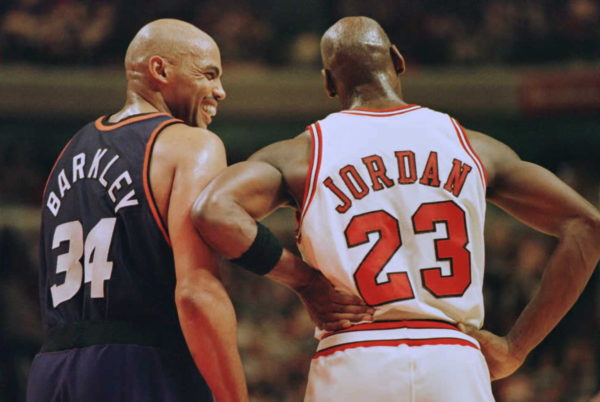
The former Philadelphia 76ers star seemingly confirmed that while offering his opinions — something for which he gets paid to do as a sports analyst — on his former buddy’s performance running the Charlotte Hornets, some feelings may have been hurt in the process. Jordan became a majority owner of the Hornets in 2010 after being a minority owner for four years prior.
“I criticized – he was one of my best friends, and I definitely love him and miss him, to be honest with you – but I, Bob, I have to do my job,” the “Inside the Game” anchor began. “I said, at the time, and we can debate whether I should have said it, but I was asked a question, and I’m told always be honest at my job. I said, ‘I don’t know if Michael’s ever going to be successful because I don’t know if he got enough strong people around him.’ “
However, it wasn’t the only time the former Phoenix Suns player would go on to call out his now-former friend on-air, most infamously during their joint Oprah Winfrey interview in 2005. Barkley slammed the star for surrounding himself with “yes-men,” and his obsession with having people around him that viewed him as superior.
The 2006 Hall of Famer expressed that the validity of his statement didn’t matter, “whether I was right or wrong, that’s debatable,” but said losing Jordan as a friend “was painful” and “it’s still painful.” He continued, “But when I’m asked a question on live television, I have to be honest because that’s just who I am.”
Barkley isn’t the only one whose relationship with Jordan has shifted over the years. Following the release of Jordan’s docuseries “The Last Dance,” former Bulls star Scottie Pippen expressed frustration over how he was portrayed as the sidekick.
During an interview last December, he stated, “I didn’t think those things stood out in the documentary. I thought it was more about Michael trying to uplift himself and to be glorified. I think it also backfired to some degree in that people got a chance to see what kind of personality Michael had.”

