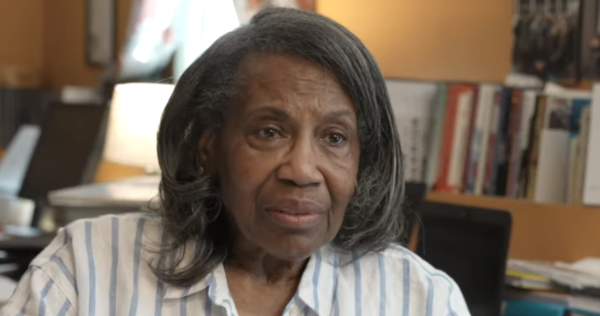
Seventy-six-year-old Gwen Levi is a free woman once again after finding herself back behind bars for failing to answer a phone call during a computer training class.
The Baltimore resident previously served 16 years of a 24-year sentence for conspiracy to sell at least one kilogram of heroin and was granted an early release to home confinement under President Donald Trump’s administration in 2020. Levi was among the estimated 4,500 inmates released, many of whom were elderly and in poor health, in an effort to help slow the spread of the coronavirus among prisoners.
Levi’s release was revoked for failing to answer phone calls from the Federal Bureau of Prisons on June 12, after her ankle monitor signaled she was not home and she remained out of contact with the bureau for more than four hours, violating the terms of her release. Although she missed the calls because she was attending a computer word-processing course at Baltimore’s Inner Harbor district, Levi was taken to jail to be transferred back to prison after being accused of attempting to “escape.”
“I feel like I was attempting to do all the right things,” Levi previously said of her reincarceration in a statement through her attorney. “Breaking rules is not who I am. I tried to explain what happened and to tell the truth. At no time did I think I wasn’t supposed to go to that class. I apologize to my mother and my family for what this is doing to them.”
The senior citizen is back at home with her family once again, however, after being granted a compassionate release by a federal judge and having her sentence reduced to time served, according to court documents reviewed by The Washington Post.
According to Levi’s lawyer, Sapna Mirchandani of Maryland’s Office of the Federal Public Defender, she will have to report to a probation officer for five years and will be able to request early termination of supervision after one year.
Judge Deborah K. Chasanow of the U.S. District Court for the District of Maryland commended Levi for her how she’s conducted herself while on home confinement, “the current question of the missed call notwithstanding,” and went on to state that it would serve no real purpose for her to remain in full custody at the correctional facility.
“Because of her release to home confinement, the most pressing initial concerns (COVID, age, and health) were addressed,” wrote Judge Chasanow in her opinion. “The court concludes that it would do little (if anything) to serve the goals of sentencing to require her to return to full custody.”
Levi’s case has stirred conversation surrounding a Justice Department memo calling for all prisoners who were sent home due to COVID-19 emergency protocols to return to correctional facilities once the emergency is lifted “unless they are otherwise eligible for home confinement.”
The White House and the Justice Department have not addressed whether they plan to rescind the memo, so while Levi’s case eventually ended up working out in her favor, many inmates’ futures are still up in the air.