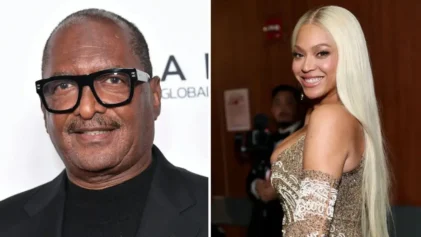
The name Beyoncé is arguably one of the most famous in the world, being synonymous with critically acclaimed music, and a high level of celebrity. Her mother Tina Knowles-Lawson recently spoke about the name and how racism played a part in its spelling. She talked about it during an interview on the podcast “In My Head With Heather Thomson,” which was released on Tuesday, Sept. 15.
The famous mom also said that Beyoncé comes from her maiden name and the spelling varies among her seven siblings, because some of them spell it in the same way the singer does, while others use B-E-Y-I-N-C-E.
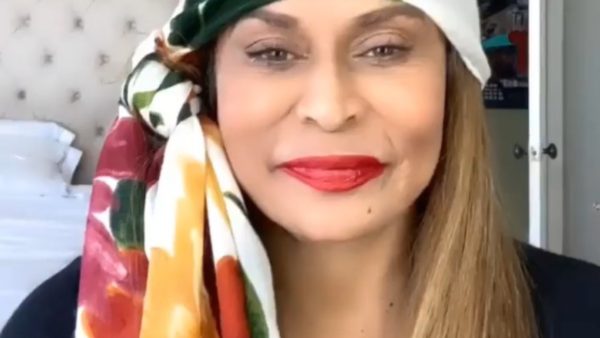
“It’s interesting because a lot of people don’t know that Beyoncé is my last name,” said Knowles-Lawson at the interview’s 7:32 mark. “It’s my maiden name. My name was Celestine Beyonce, which at that time was not a cool thing to have that weird name. I wanted my name to be ‘Linda Smith,’ because those were the cool names. But all of us have a different spelling. I think me and my brother Skip were the only two that had Beyonce.”
Knowles-Lawson then said she once asked her mother about her last name being spelled differently in her family.
“That’s what they put on your birth certificate,” her mother replied.
“‘Well, why didn’t you argue and make them correct it?'” Knowles-Lawson said she asked her mom. “And she said, ‘I did one time, the first time, and I was told, ‘Be happy that you’re getting a birth certificate,’ because at one time Black people didn’t get birth certificates.”
The celebrity mother, who grew up in Galveston, Texas, also talked about experiencing segregation as a child, remembering when eateries and lunch counters eventually became desegregated.
Knowles-Lawson has been speaking a lot about Black issues this year due to COVID-19 spreading and protests for racial equality breaking out.
In June she spoke to Gayle King about combating systemic racism and voter suppression, saying that it’s everyone’s responsibility to do what they can to fight both.
One month prior, Knowles-Lawson teamed with Beyoncé’s BeyGood foundation to help give 1,000 coronavirus tests in Houston, Texas, one of the many U.S. cities where Blacks were disproportionately dying from the virus compared to other communities.
During her interview with Thomson, Beyoncé’s mother talked about Blacks not being able to get birth certificates in the past and what it she believes it meant.
“They didn’t even have a birth certificate, because it meant that you really didn’t exist,” she explained. “You weren’t important. It was that subliminal message. And so I understood that that must have been horrible for her, not to even be able to have her children’s names spelled correctly.”
“They were like, ‘How dare you have a French name?’ Like, ‘We’re gonna screw this up real good for you.’ And that’s what they did. So we all have different spellings,” Knowles-Lawson added.