When Halle Berry gave her acceptance speech for winning Best Actress at the Oscars in 2002 for “Monster’s Ball,” she said it was a moment that would open doors for other “women of color.” But in a new interview with Variety, she said that hasn’t been the case.
The veteran actress is the first and only Black woman to ever win the Best Actress award and said she thought major roles would come pouring in for her afterward. However, that didn’t happen either.
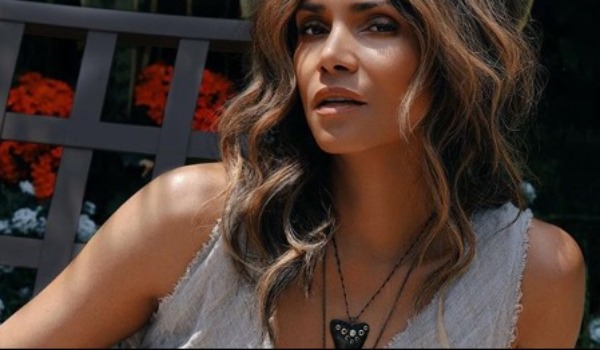
“I think it’s largely because there was no place for someone like me,” Berry explained. “I thought, ‘Oh, all these great scripts are going to come my way; these great directors are going to be banging on my door.’ It didn’t happen. It actually got a little harder. They call it the Oscar curse. You’re expected to turn in award-worthy performances.”
Perhaps to fully understand Berry’s disappointment, one may have to watch or read her memorable Oscar speech, which she gave through streaming tears.
“Oh my God. I’m sorry,” said a quivering Berry after composing herself. “This moment is so much bigger than me. This moment is for Dorothy Dandridge, Lena Horne, Diahann Carroll. It’s for the women that stand beside me, Jada Pinkett, Angela Bassett, Vivica Fox. And it’s for every nameless, faceless woman of color that now has a chance because this door tonight has been opened.”
In her Variety interview, Berry said that she’s baffled why no Black women have won Best Actress at the Oscars and questions what her award really means.
“I thought Cynthia [Erivo, who starred in ‘Harriet’] was going to do it last year,” she stated. “I thought Ruth [Negga, nominated for 2016’s ‘Loving’] had a really good shot at it too. I thought there were women that rightfully, arguably, could have, should have. I hoped they would have, but why it hasn’t gone that way, I don’t have the answer.”
“It’s one of my biggest heartbreaks,” Berry added. “The morning after, I thought, ‘Wow, I was chosen to open a door,’ and then, to have no one … I question, ‘Was that an important moment, or was it just an important moment for me?’ I wanted to believe it was so much bigger than me. It felt so much bigger than me, mainly because I knew others should have been there before me and they weren’t.”
After the Oscar win, Berry starred in a string of action-adventure films, probably not the type of roles one might associate with an Oscar winner.
In 2004 she starred in the heavily panned “Catwoman,” and reprised her role as Storm in the “X-Men” films after that. She also starred in 2012’s action-adventure flick “Dark Tide.”
Berry said after the Oscar win, she had to do what she always did in Hollywood: Create something out of nothing when trying to secure work.
“Just because I won an award doesn’t mean that, magically, the next day, there was a place for me,” she explained. “I was just continuing to forge a way out of no way.”
Berry is now promoting her new film “Bruised,” her directorial debut, which is about an MMA fighter trying to regain custody of her son. The film premieres at the Toronto Film Festival on Saturday, Sept. 12.


