Actress Tiffany Haddish is the latest celebrity revealed to have fallen victim to the SARS-CoV-2 virus that causes the COVID-19 disease. The “Night School” star recently opened up about testing positive for the virus during an interview with the director of the National Institute of Allergy and Infectious Diseases, Dr. Anthony Fauci. The two discussed getting tested, safety measures, and how the deadly virus has impacted Black and brown communities.
In the video posted on her YouTube channel on Monday, Aug. 31, the actress revealed that she got tested for the coronavirus after two people she had been in contact with contracted the virus. Haddish said the whole ordeal took place about three months ago.
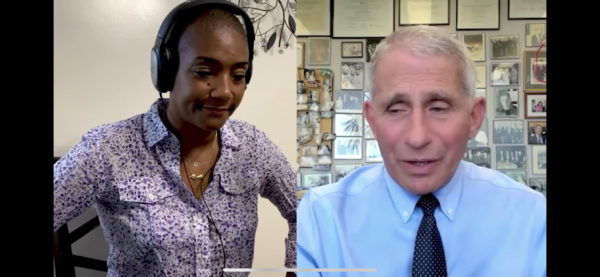
“I was working on a movie, and someone in the movie contracted coronavirus, right? I wasn’t in direct contact with them, but they sent all of us home, and we stopped the movie. Then they suggested that I go get tested. I went and got tested, got the results back like two days later, they said I didn’t have the coronavirus,” Haddish explained. She continued, “Then someone else I know who was around the week before, they contracted the coronavirus, and so I went and got tested again. … Anyway, I get the test, I’m not feeling any symptoms or anything, it comes back two days later, and they say I did have the coronavirus.”
The “Girl’s Trip” star said after testing positive, she self-quarantined and later got retested for the disease. “Then I went and tested again, didn’t have the virus, and then I got tested for antibodies, they said I had antibodies,” Haddish said. She added, “That was three months ago, I’ve been tested 12 times now because I’ve been working and everything. Then I get tested again, no virus, and then I had them test me for antibodies again, and then they said I don’t have any antibodies. So, I think I’m superhuman.”
According to expert Fauci, the best way to prevent getting contracting the virus is to wear a mask and practice “physical distancing.” Fauci also advised Haddish and anyone else who has contracted the coronavirus to take it easy, get adequate sleep, and exercise. “The most important thing is that you have the societal responsibility not to be propagating the outbreak,” Fauci said. “To be part of the solution, not the problem.”
The two also spoke on how people from Black and brown communities were disproportionately being affected by the virus.
“Not only do they have a greater chance of getting infected, because they usually – not always, it’s dangerous to generalize – but people know they usually have jobs that don’t allow them to talk to a computer. They’re out on the front lines, doing the manual labor jobs that require interaction with people,” Fauci said. “Then when you look at the African-American and Latinx population … they have a much greater likelihood of having the underlying conditions that means that when you do get infected, you likely would have a serious outcome.”
Last week, Dwayne “The Rock” Johnson revealed that he, his wife, and two daughters contracted the virus from a family friend who was unaware that he or she was infected. In a video posted to his Instagram page, the former wrestler urged his fans to wear masks, stating, “It has nothing to do with politics. Wear your mask. It is a fact, and it is the right thing to do. And it’s the responsible thing to do not only for yourself, but for your family and loved ones, but also for your fellow human beings.”
Check out the full interview from Tiffany Haddish and Dr. Fauci below.

