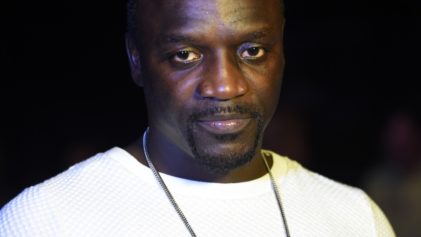
Akon caught the ire of those who were taken aback after he told Black Americans to get over slavery so they can have a more prosperous future.
The singer, who spent a good portion of his childhood in the West African country of Senegal, shared that opinion during an interview with VladTV, released on YouTube, Tuesday, Aug. 11.
“In Senegal, we’ve kind of overcome the thought of slavery, we don’t even think about it,” said Akon. “The only time we think about it, honestly, is when we’re doing tours at Gorèe Island. Outside of that, people have lived and moved way beyond the slavery concept idea and mind state.”
“I think it’s the art of just letting the past go and moving towards the future,” he added. “And I think, in the U.S., they have this stigma of just not letting go of the past and blaming the past on every mishap or, you know, disappointment. I think as long as you hold onto that past, there’s a lot of weight that you carry with you everywhere you go. It’s hard to move forward and move fast when you got a weight on your back. You just gotta let it go.”
Akon later said in the interview that Black people should move to Africa because the United States doesn’t care about how Blacks have been affected by slavery, which ended in 1865. He also believes if the U.S. wanted to give reparations to Black folks for the slave trade, it would’ve happened already.
“[The United States] aren’t sorry. They don’t care,” Akon explained. “So do you want to stay here and continue to be treated this way or just go back home, where you’re not no longer the minority? You actually are the majority, and you control your destiny, and your future, and your land. … America did a good job at brainwashing. The moment you mention Africa, they start shaking. They don’t even know why.”
The backlash that Akon received for his slavery comments came swift and in large numbers.
“Either He’s an Ignorant Afrakan! Or He’s acting in His Buffer Class Status as a so called Black Elite,” someone wrote on YouTube.
“South African here: I missed the part where this pop singer became the spokesperson for all Africans,” another person commented.
“I think that’s BS because Europe still has control over major chunks of industry on the African continent (they still have plantations), they still brain drain the universities from various nations, they still have many African nations currencies pegged against European currencies — especially France,” a third person wrote. “So, yeah, Africans may not think about slavery, but they d–n sure think about Colonialism… because it still hasn’t fully ended.”
If more Black Americans do move to Africa as Akon advised, they may be able to see the launch of “Akon City,” a city that he’s building in Senegal. This past January, he said it would be functioning in 10 years time.
“The Locked” Up crooner has already been given 2,000 acres of land for the city by Senegal President Macky Sall.