Tracee Ellis Ross said she always wanted to sing for people, but fear got the best of her. The actress’ fear didn’t have to do with stage fright or lack of singing skills. Rather, her trepidation came from being the daughter of one of the world’s most iconic vocalists: Diana Ross.
Ellis Ross plays a singer in the film “The High Note,” which debuts on-demand, Friday, May 29. In an interview with People, she talked about overcoming the fear of flexing those singing chops, something that her mother has always encouraged her to do.
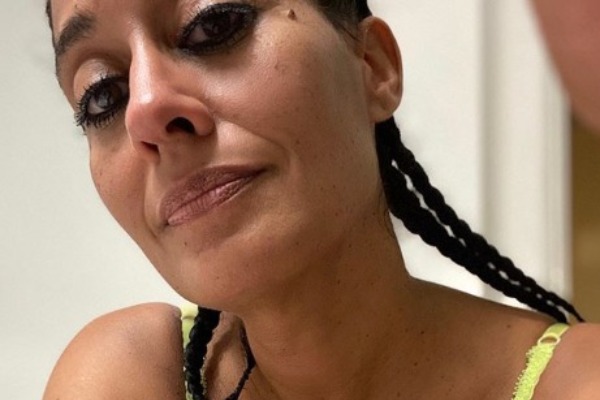
“There’s a reason I waited 47 years to let my voice out publicly,” Ellis Ross explained. “It was my childhood dream to sing, but terrifying when your mother is who my mother is. The idea of comparison that’s in a child’s mind or an adult’s mind. I could be taken down and obliterated.”
Ellis Ross played a song called “Love Myself” for her mother after she drove to her house and they sat in the driveway. Both women became emotional when the song was over, and Ross asked her daughter to play it again.
“It felt like bringing her my heart, and then my mother said, ‘Finally, finally,’ ” recalled the “black-ish” star. “I have wanted to sing for so long. My mom teared up and we just kept looking at each other. We were both so excited. My mom has always known I could sing. There have been gentle nudges over the years, so this was a big moment.”
“The High Note” follows the story of Ellis Ross’ character who’s in the latter part of her career, has a Las Vegas residency, and is battling with a music industry that was kinder to her when she was younger.
The film also stars Ice Cube, Kelvin Harrison Jr., and Dakota Johnson, who plays Ellis Ross’ assistant and wants to become a music producer. It was supposed to be in theaters on May 8, but was pushed back and released digitally because of COVID-19.
Ellis Ross said playing the role of a singer forced her to face her long-standing fear and taught her that she can sing without comparing herself to her mother.
“Singing was terrifying and invigorating and the most fun I’ve ever had with my clothes on,” she explained. “You tell yourself you want to do something and then you dive in and are like, ‘What the hell have I done?’ ”
She added, “This movie was just the perfect thing to allow me to face the fear of singing. And to realize that me singing has nothing to do with my mom. It’s my voice. This was me telling my own truth.”
Ellis Ross said that she’s so comfortable singing in public or on a track these days, she’s open to dueting with her mother and siblings Evan Ross, Rhonda Ross, and step-sister Leona Naess.
“For God’s sake, while we are at it, I could also do a duet with Rihanna, John Legend, Childish Gambino. Shall I go on?” joked Ellis Ross. “Looks like I want a future in this singing thing.”


