If you watch the business competition show “Shark Tank,” then you might’ve seen Christopher Gray walk into the room and present his app Scholly, which streamlines the process of finding and obtaining scholarships for college.
“Scholarships are extremely hard to find,” Gray told the “Shark Tank” judges during the episode. “This causes millions of dollars in free money to go to waste, as many students don’t know this money exists.”
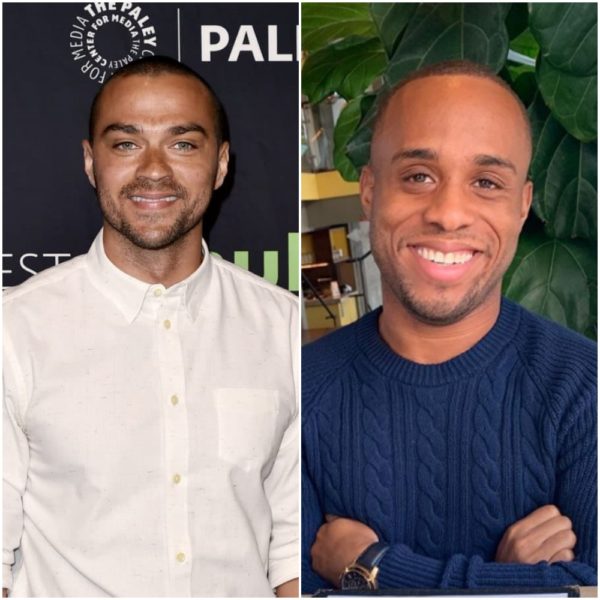
Lori Greiner, one of the judges, as well as FUBU co-founder, Daymond John, decided to partner with Gray after a bidding war ensued. They took a 15 percent stake in Scholly for a $20,000 investment.
But Gray’s business moves with the app were far from over at that point.
Because the actor Jesse Williams saw that 2015 episode and was instantly taken with the young entrepreneur and his app. He then met Gray at a conference, and the two men teamed up.
Williams said he personally related to Scholly, because he struggled to pay for college himself. And as a former educator, the app spoke to him on a business level.
Today, Scholly not only helps people find scholarships in an easy way, the company is now helping folks pay off their student loans. In fact, Gray said he’s already assisted 13 graduates in paying off loans up to $150,000.
“As a student, I struggled in college too,” said Williams in an interview published by BET. “With the stresses of student loans and being able to pay for school every single semester, doing ROTC and holding work-study jobs, I worried that I was gonna have to drop out.”
“So it related to me, personally. Then, as a former teacher, I know it was a big issue for my students. So we connected,” he added.
During his “Shark Tank” visit, Gray said he created a list of 20,000 different scholarships for the app and sold 92,000 downloads for 99 cents each at that time.
These days, Scholly’s user count is in the millions, and Gray explained what else he wants to accomplish with the app.
“Right now, we have three million users, and we’ve helped students raise over $100 million in scholarships so far,” he said. “You go through the app and click a button and just start applying for the scholarship instantly.”
“My interest and excitement about the product is really about creating a great equalizer,” he added. “Because the barriers around education are entirely tied intrinsically to race and class. So we want to create that connective tissue that allows you to actually just peek into the window and see what your opportunities could be.”
Williams then said the app allows users to take control of their future when it comes to higher education, as opposed to waiting for assistance from someone else.
“This is really about helping people from working-class families,” Williams stated. “I want to also say that this has everything to do with an ongoing and escalating conversation around the crippling cost of schools and universities, but also black economy and black economics.”
“We need to try to get a handle on the steering wheel of our own destiny and think about what we can do without waiting with our hands out for somebody else to solve our problem,” he added. “And this young brother [Gray] has figured out a way to actually tackle our issue ourselves.”
For his own studies at Drexel University, Gray told the “Shark Tank” judges that he secured $1.3 million in scholarship money.

