Facebook on Thursday announced plans to purge its platform of some of its most controversial users, including Nation of Islam leader Louis Farrakhan, for violating the site’s rules against hate speech.
Farrakhan, who’s faced criticism for his anti-Semitic rhetoric, is among the seven “dangerous” voices — many of them conservative — banned by the social media giant in its latest, and broadest, crackdown on the “dangerous individuals [and] organizations” populating its platform.
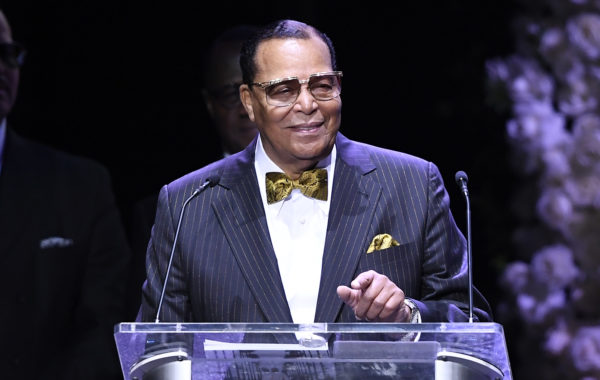
Min. Louis Farrakhan has frequently faced backlash for his rhetoric. (Photo: Kevork Djansezian/Getty Images For All Money In Records and Atlantic Records)
Right-wing conspiracy theorist and InfoWars founder Alex Jones has been evicted from the social site, along with Paul Nehlen, a white nationalist anti-Semite who ran unsuccessfully for Congress in 2018, and ex-Breitbart editor and right-wing provocateur Milo Yiannopoulos, who was kicked off Twitter after leading a harassment campaign against Black comedienne Leslie Jones in 2016.
Other people banned on Thursday included Paul Joseph Watson, an InfoWars contributor, and Laura Loomer, a right-wing personality and conspiracy theorist.
In a statement, Facebook said these figures were no longer permitted to use its platforms, including Instagram, under its policies combating hate speech and extremist views.
“We’ve always banned individuals or organizations that promote or engage in violence and hate, regardless of ideology,” a Facebook spokesperson said in a statement. “The process [for] evaluating potential violators is extensive and it is what led us to our decision to remove these accounts today.”
Groups, pages and accounts created to support the banned individuals will also be removed, the spokesperson said.
The move comes a little over a month after the Silicon Valley firm extended its ban on hate speech to prohibit ideas supporting white nationalism, along with white separatism. For many, the crackdown on such harmful ideas was long overdue.
The recent banishment of Farrakhan, however, elicited a strong response from the minister’s supporters, especially after The Washington Post and other outlets labeled him as a “far-right” leader.
“What in the actual hell?” writer Kira Davis tweeted. “Louis Farrakhan has never once been considered on ‘the right’ — far, or otherwise. @washington post what are you doing?? You don’t even have to dig much to get a list of all the appearances he’s made w/ lefties over the years.”
“They labelled Farrakhan ‘far right’ to hide the fact that these bans were purely a partisan political purge,” Paul Joseph Watson added.
Others wondered how Facebook could ban the minister but not President Donald Trump, who’s come under fire for his incendiary rhetoric as well. Trump doesn’t have a Facebook account, however.
Rapper Snoop Dogg also took issue with Facebook’s ban on Farrakhan, and challenged the platform to ban him as well.
“Really, that’s how y’all feel?” the rapper said in a video posted to Instagram after learning Farrakhan, 85, had been banished. “I wanna know for what though? All he ever does is tell the truth. But y’all wanna ban him though.”
“I stand with him, I’m with him,” he continued. Ban me, motherf—-r. Ban me. Cuz I’ma keep posting this sh-t. I’ma keep putting Farrakhan out there [because] that’s my dear brother. F–k y’all that got a problem with it.”
After months of uncertainty on how to handle fear- and hate-mongering on its website, Facebook took its efforts a step further on Thursday by banning problematic users entirely rather than just removing harmful content/posts as it had done in the past.
According to CNN Business, a spokesperson for the company said Facebook “goes through a lengthy process” and considers a number of factors before labeling an individual “dangerous.” These factors include whether an individual has used hate speech or slurs in the “About Me” section of their online profiles; advocated for violence against individuals based on race, ethnicity or national origin; or have ever had their pages deleted by Facebook for violating policies against hate speech.
Some of the users who’ve been dubbed as “dangerous” have responded to the ban since Facebook announced their ousters. On Twitter, Watson wrote, “In an authoritarian society controlled by a handful of Silicon Valley giants, all dissent must be purged.”
Loomer took to Instagram Thursday night, where she denied ever violating Facebook’s terms of service. She encouraged her fans to follow her on other social platforms, before adding, “Looks like you guys will probably never hear from me again.”
Farrakhan has yet to comment on his banishment.


