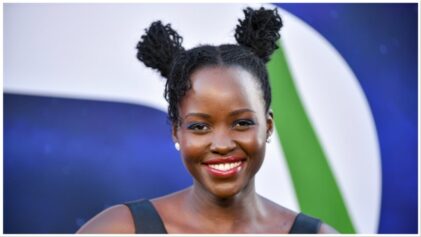
Lupita Nyong’o used to relax her hair as a young woman in Kenya, but not anymore, and she feels African-American women have influenced that decision, while helping other Black women around the globe embrace their natural locks too.
It’s something The Oscar winner said when she recently sat down with Net-A-Porter to promote her new Jordan Peele film “Us.”
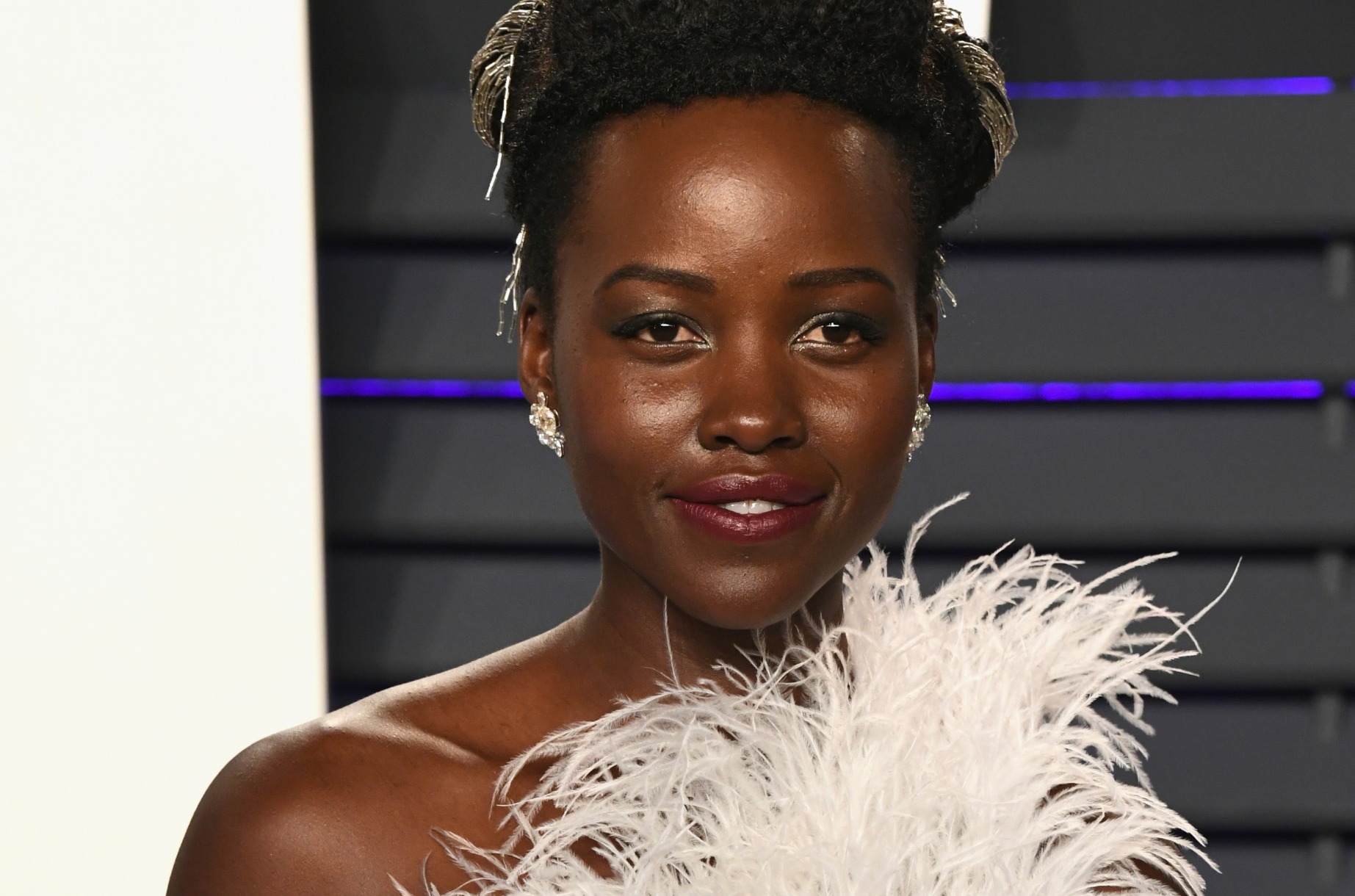
Lupita Nyong’o said African-American women have influenced Black women around the globe to embrace their natural hair. (Photo: Getty Images, Jon Kopaloff)
“I remember when I was a teenager in Kenya, I had relaxed hair and I decided on a whim that I was going to cut it all off and grow my hair natural,” Nyong’o recalled.
“I’d been going to the same hairstylist for years, he was a Kenyan, like me, and when I went natural he didn’t know what to do with it,” she added. “He was like, ‘They don’t teach us how to style natural hair in school.’ There’s been a whole revolution, led by African America for sure, where we are embracing our natural hair texture and returning to a past glory.”
Nyong’o also said she was 10 years old the first time she saw natural hair being celebrated outside of Kenya. It was in images captured by director and Nazi propagandist Leni Riefenstahl, which she said was refreshing but problematic at the same time.
“This deeply colonialist, white supremacist gaze was introducing me to the people and hairstyles of the Nuba, Dinka and Shilluk of Sudan,” she said of Riefenstahl. “Essentially, even when we as a colonized or oppressed people are engaging with images or notions of our ancestry, it is so often within a Eurocentric gaze.”
“That idea has stayed with me,” added the actress. “Now at least it seems like we are waking up to ourselves again and are like, Hey, hold on, wait a minute, our hair is kind of fabulous and it’s like clay and we can do all sorts of things with it.”
In other Nyong’o news, the 36-year-old was tapped to play in the next James Bond film with Daniel Craig and new Oscar winner Rami Malek, but, according to Deadline, she turned it down for unknown reasons.
“Us,” however, also starring Winston Duke, hits theaters on March 22.