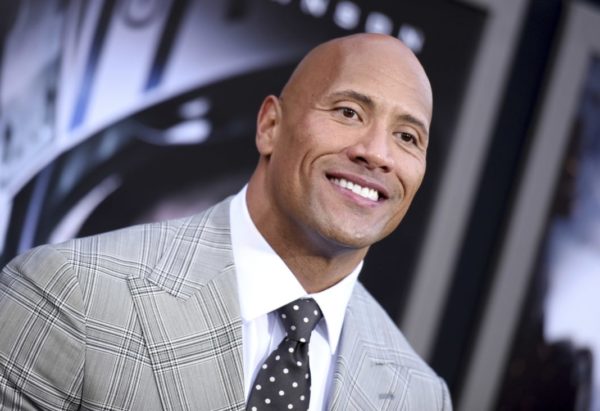
FILE – In this May 26, 2015, file photo, Dwayne Johnson arrives at the premiere of “San Andreas” at the TCL Chinese Theatre in Los Angeles. Johnson told GQ for a story published May 10, 2017, that he is seriously considering a run for president. (Photo by Richard Shotwell/Invision/AP, File)aw
Dwayne “The Rock” Johnson, known for his action and fun comedic roles in movies, has opened up about mental illness. The “Jumanji” actor spoke to “Daily Express” about his battle with depression and his mother’s suicide attempt. “She (his mother) got out of the car on Interstate 65 in Nashville and walked into oncoming traffic. I grabbed her and pulled her back on the gravel shoulder of the road,” Johnson recalled while shooting for the upcoming season of “Ballers.”
The “Fast and Furious” star was 15-years-old when he saved his mother’s life. “What’s crazy about that suicide attempt is that to this day, she has no recollection of it whatsoever…Probably best she doesn’t.” He said he was “devastated and depressed” after this.
Years later, the award-winning actor experienced more low points. First, he was released from the Canadian Football League due to injuries and then his longtime girlfriend broke up with him. Although this time in his life was dark, the “Jumanji” star said if he didn’t find the “inner strength to go on he could have easily become suicidal like his mother.”
Now, Johnson said he will use those dark moments to help others. “We (Johnson and his mother) both healed but we’ve always got to do our best to pay attention when other people are in pain. We have to help them through it and remind them they are not alone.”
While fans thanked the actor for his courage and inspiration, Johnson said the key is “not to be afraid to open up.”
Got tons of responses to this. Thank you. We all go thru the sludge/shit and depression never discriminates. Took me a long time to realize it but the key is to not be afraid to open up. Especially us dudes have a tendency to keep it in. You’re not alone
— Dwayne Johnson (@TheRock) April 2, 2018


