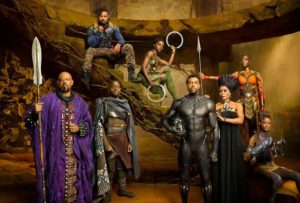
 Marvel’s “Black Panther” has made way from the silver screen to the classroom, thanks to the efforts of a Chicago teacher working to use the film to educate her students about the legacy of colonialism in Africa.
Tess Raser, who teaches at an elementary school on the city’s Southside, treated her sixth graders to a screening of the film last week and is now encouraging other teachers to draw from the movie’s Afro-centric themes and incorporate them into their classroom curricula, Think Progress reported.
“Black Panther” follows King T’Challah, ruler of the imaginary nation of Wakanda, as he struggles to lead the technologically-advanced country as he fights to keep its precious resources out of the wrong hands. The film explores deeper topics, as well, touching on everything from pan-Africanism to an African nation escaping white imperialism and even the age-old Africans v African-Americans beef.
Raser is looking to use these themes to her advantage, allowing her students to ruminate on the wonders of Africa and the diaspora through film but also connecting the themes to real places and events. As the students enjoy the action-packed scenes featuring acclaimed Black actors they also got to see a variety of real African traditions and tribes represented on screen. Raser’s lesson plan, which she posted for other teachers online, compares the film’s characters to existing cultures. For instance, General Okoye, Black Panther’s number one fighter, sported Ndebele-inspired neck rings in the movie.
“The Ndebele people in Zimbabwe/South Africa wear these rings as a sign of wealth and status,” she told Think Progress.
“It’s easy to engage [students] in things they’re already interested in and what is contemporary,” she added.
Raser is challenging her students to think critically about the film, just as they would with any other creative work. “Black Panther” is shaping up to be as entertaining as it is educational.