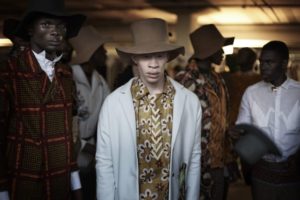
Sanele Junior Xaba wants to help orphanages in Tanzania. (Per-Anders Pettersson/Getty Images)
South African model Sanele Junior Xaba wants to use his unique appearance to shake up the fashion industry. At 21, he’s faced his fair share of obstacles with albinism and he’s not letting that get in his way.
“I’ve had situations where casting directors have said, ‘No thanks, we’ve worked with Shaun Ross already,” he told The Guardian of having to compete with other models with albinism like Ross, who appeared in Beyoncé’s “Pretty Hurts” video. “Well, it makes me want to say, ‘How many white models have you used this week?’ They’re not all considered to be the same person.
“I realize it sounds a bit ‘Zoolander,’ but I want to play my part to promote diversity in the industry. The commercial end of fashion is crucial as it dictates what’s cool, and the idea of cool is changing drastically. It feels more inclusive, but it can still do a whole lot better.”
Albinism In the News
In Tanzania, Albinos Face Death and Persecution
Leonardo DiCaprio Secures Rights to Book About Black Brothers Kidnapped for Circus Freak Show
And Xaba wants to do his part to inspire others with albinism. While 20,000 Instagram followers and nearly as many Twitter followers have been exposed to his movement, he knows there are communities whose lives are at risk for something they cannot help. According to estimates from the United Nations, at least 75 people with albinism were killed in Tanzania between 2000 and 2015. One in 1,400 of the population is affected by the congenital disorder, and children can be targeted for their limbs, which are then sold on the black market, according to Global News.
“There’s a whole industry run by so-called spiritual leaders,” Sanele said.
He’s planning to visit Tanzania with the Dutch charity Inside The Same, which works on behalf of individuals with albinism.
“The charity provides the kids with sunscreen and medical treatment because a lot of them have skin cancer,” Xaba said. “Now that I’ve realized I can use my looks to raise awareness and to challenge the perceptions and stereotypes about the condition, I’ve started to take a lot more pride in my own albinism.”