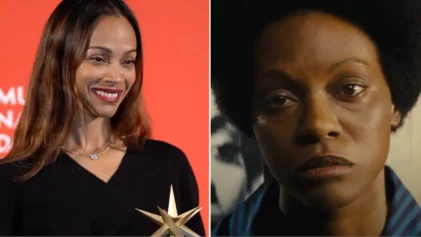
Zoe Saldana is confident in her Blackness but enjoys the transformation of science fiction. (Gage Skidmore)
If the social troubles of being nonwhite in America get you down, Zoe Saldana might recommend a part in a science fiction movie to calm you. The actress says such roles gave her the ability to be colorblind and forget about her Puerto Rican and Dominican parentage.
Saldana has played in hit films like “Star Trek,” “Avatar” and “Guardians of the Galaxy,” the latter two of which obscured her natural skin tone with CGI blue or actual green makeup.
“I get to imagine the unimaginable,” Saldana told Stellar in an interview published Sunday, April 8. “I’m always in awe of writers, directors and actors who are able to pull off a world we’ve never seen. I love working with people who let their imaginations go. Plus, you get to play characters who defy gravity. I like that.
“It makes me feel superhuman because, obviously, it’s been brought to my attention continuously since I was born that I’m not a conventional person because of the color of my skin or my gender or my cultural background,” she said. “So, I think science fiction has given me the ability as an artist to be colorblind, and gender-blind, and to imagine and reinvent myself and be the chameleon actors are supposed to be.”

Zoe Saldana’s green color for “Guardians of the Galaxy” was physically applied while her “Avatar” look was completed in post-production. (Marvel Studios/20th Century Fox)
Saldana’s idea of race and not noticing it should come as no surprise. After playing singer and political activist Nina Simone in a critically panned 2016 film, Saldana defended her portrayal by noting the importance of the story getting told. She downplayed the fact that she, a lighter-skinned woman with less-Afrocentric features, portrayed the late icon, who was dark-skinned with prominent African features — and proud of it.
“I made a choice,” Saldana told Allure magazine at the time. “Do I continue passing on the script and hope that the ‘right’ Black person will do it, or do I say, ‘You know what? Whatever consequences this may bring about, my casting is nothing in comparison to the fact that this story must be told.'”
In that same interview, however, Saldana affirmed she does consider herself Black and added she never wanted to be questioned about it.
“I’m Black the way I know how to be. You have no idea who I am. I am Black,” she said. “Don’t you ever think you can look at me and address me with such disdain.”