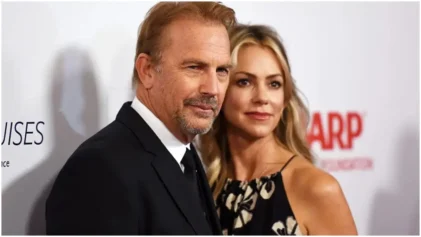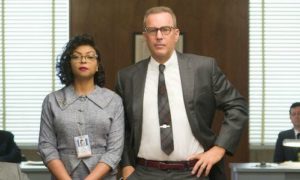
Taraji P. Henson and Kevin Costner in “Hidden Figures” (Fox)
Director Theodore Melfi has admitted to whitewashing a couple of scenes in the Oscar-nominated movie “Hidden Figures,” which starred Taraji P. Henson, Octavia Spencer and Janelle Monáe as the Black female mathematicians who helped the U.S. win the 1960s space race.
When interviewed by Vice, Theodore Melfi said there was nothing wrong with placing a white savior into the story.
“There needs to be white people who do the right thing,” he said. There needs to be Black people who do the right thing and someone does the right thing. And so who cares who does the right thing, as long as the right thing is achieved?”
In one scene, Henson as Katherine Johnson became soaked from the rain when she ran across NASA’s campus to use the only “colored” restroom available at Langley Research Center. When her boss, Kevin Coster’s Al Harrison, learned this, he was surprised and headed to the restroom with a crowbar in hand. Harrison hacked off the “Colored Ladies Room” sign in front of a divided group of Black women and white men and delivered a short speech.
“No more colored restrooms,” he said. “No more white restrooms. Just plain ole toilets. Go whereever you damn well please. … Here at NASA, we all pee the same color.”
Margot Lee Shetterly, who wrote the book upon which the film is based (also titled “Hidden Figures),” revealed Johnson “refused to so much as enter the Colored bathrooms.”
The 98-year-old physicist confirmed the real story to Vice Wednesday, Jan. 25. “I just went on in the white one,” she said.
Another fictional scene showed Johnson attempting to deliver her final calculations for John Glenn’s launch to mission control, but being prohibited from entering until Harrison brought her in to announce the results together.
Johnson told Vice she was actually unable to enter mission control and was at her desk when the launch occurred. The book said she, “sat tight in the office, watching the transmission on a television.”