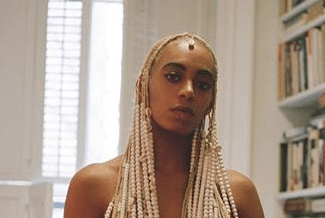
Solange (@saintrecords/Instagram)
Solange’s album “A Seat at the Table” was released to critical and fan acclaim in September, but it was a racist comment by a white male writer that led to its creation. The singer posted a series of tweets in January 2013 where she defended Brandy over critics who bashed her new music. Ultimately, that led a white newspaper writer to warn her not to “bite the hand that feeds you.”
The “Cranes in the Sky” singer told WQXR’s Helga that her online profession of love for Brandy attracted the attention of white indie music critics who criticized Solange for doing so.
“I think that they thought there was a bit of irony to it,” Solange explained. “Which I was not expressing at all. I essentially challenged writers that if they were writing about R&B music that they needed to know who Brandy was.”
Solange also commented on the lack of support for “conscious and intelligent” hip-hop. After her remarks attracted a negative reaction, she said The New York Times invited her onto writer Jon Caramanica’s podcast to discuss cultural tourism. But Solange refused.
“I didn’t really feel the need to have a debate about something that I culturally was a part of, and I didn’t feel the need to defend that,” she said.
But her remarks were discussed in the podcast regardless. That’s when Caramanica pointed out Solange’s then-predominantly white fan base and said, “Let’s talk about biting the hand that feeds you. If I was Solange, I would be a little bit worried about that.”
The singer, who had recently parted ways with a label and gone independent, said the comment sparked a dialogue about ownership and having control over her music.
“I was challenged … by essentially being told this audience had ownership over me,” Solange said. “That was kind of the turning point in the transition for me writing the album that is now ‘A Seat at the Table.’ I began to think a lot about that conversation and replaying it, and it haunted me. … And also the racial subtleties — [that] are not so subtle — of what that encompasses when you say that to a Black woman. Then, you connect it by saying ‘Do you know who’s buying your records?’ So I was essentially being told to shut up.”
Recently, Solange has made it a point not to be silenced on issues of racism and embracing Blackness. In July, she declared she would switch to a Black-owned bank. Now, “Table,” filled with poignant lyrics about living as a Black person, has earned the singer her first Grammy nomination.