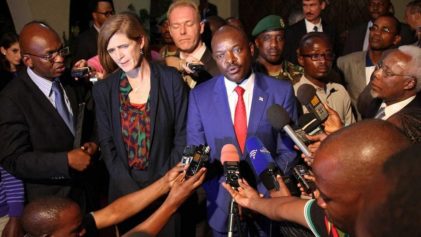
AFP /President Yahya Jammeh has ruled Gambia since 1994.
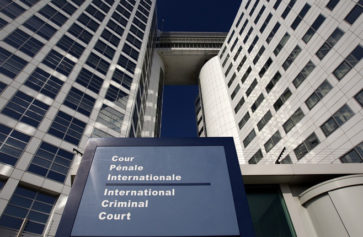
The Gambia says it will pull of the International Criminal Court (ICC) after accusing the tribunal of persecuting and humiliating Africans.
The small West African nation joins South Africa and Burundi in withdrawing from the court. The ICC was set up to try the world’s worst crimes but has been accused of unfairly targeting African leaders.
Gambian Information Minister Sheriff Bojang said the court had ignored Western war crimes. He said the ICC, for example, had failed to indict former British Prime Minister Tony Blair over the Iraq war.
Speaking on state television, he said the ICC was “an International Caucasian Court for the persecution and humiliation of people of colour, especially Africans”.
The ICC’s chief prosecutor, Fatou Bensouda, is a former Gambian justice minister.
President Yahya Jammeh has ruled The Gambia since taking power in a coup in 1994. Elections are due in December, but opposition leader Ousainou Darboe and 18 others were jailed for three years earlier this year over an unauthorized protest.
The country has been unsuccessfully trying to have the European Union indicted by the court over the deaths of thousands of African migrants trying to reach the continent by boat.
South Africa said last week that it had formally begun the process of withdrawing from the ICC because it did not want to execute arrest warrants which would lead to “regime change.”
Last year, a South African court criticized the government for refusing to arrest Sudan’s President Omar al-Bashir, who is wanted by the court.
Burundi has also said it will leave the court, while other Africa countries like Kenya and Namibia have said they might. All but one of the ICC’s 10 investigations have been Africa-based.
Read more here.