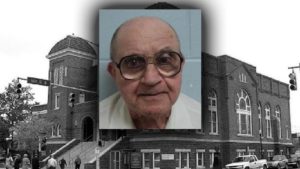
Thomas Edwin Blanton, Jr. Image courtesy of ABC3340.com
It looks like Birmingham church bomber Thomas Edward Blanton, Jr. isn’t getting out of prison any time soon.
According to NBC News, an Alabama parole board denied Blanton’s request for parole Wednesday, keeping him behind bars. The now 86-year-old is serving four life sentences for the Sept. 15, 1963 bombing that killed four young Black girls at the 16th Street Baptist church. A spokeswoman for the Alabama Board of Pardons and Paroles said Blanton won’t be able to apply for parole again for another five years.
The board’s decision was met with applause from a group a NAACP member who attended the hearing, NBC News reports. Each of them wore yellow lanyards that read “No Parole for Thomas Blanton.”
Blanton is the last surviving Ku Klux Klan member convicted in the 1963 church bombing; fellow Klansmen Robert Edward Chambliss and Bobby Frank Cherry both died in prison. Herman Frank Cash, another Klansman involved in the horrific bombing, died before he could be brought to justice.
“This is something that many of them thought that they wouldn’t have to revisit again in their lifetime,” local NAACP chief Hezekiah Jackson told NBC affiliate WVTM-13. “So this is now almost like opening old wounds.”
According to AL.com, the Alabama Board of Pardons and Paroles took about 80 seconds to deliberate and deny parole for the Birmingham church bomber; the entire hearing only lasted about 30 minutes. The two-member board heard from the family members of the young girls killed in the fiery blast – Addie Mae Collins, Cynthia Wesley, Carole Robertson, and Denise McNair. Prosecutors who opposed parole for Blanton were present at the hearing as well, the news site reports.
“It is appalling. It is shocking. It is very sorrowful and it’s very upsetting to not only me and my family, but this nation,” said Dianne Robertson Braddock, sister of Carole Robertson, in reference to the letter she received alerting her to Blanton’s request for parole. “My parents never recovered from the loss of their youngest child.”
Blanton was convicted in 2001 and has only served 15 years of his four consecutive life sentences. A jury of four African-Americans and eight whites indicted the former Klansman on four counts of first-degree murder, nearly four decades after the tragedy, Atlanta Black Star reports. The first conviction in the Birmingham bombing didn’t happen until 1977 when Alabama Attorney General Baxley reopened the case, prosecuting Chambliss. Cherry was convicted after Blanton in 2002, according to ABS
Braddock said it would be a “travesty of justice” for the board to release Blanton from prison and “exonerate” him from serving his life sentence(s).
The New York Daily News reports that the Birmingham bomber wasn’t present for the hearing, as it isn’t a custom for inmates to attend such proceedings. No one showed up on behalf of the former Klansman either.
Douglas Jones, a former U.S. attorney for Alabama’s Northern District who led the prosecution team against Blanton, strongly opposed the elderly inmate’s release from prison because he’s never expressed remorse or taken responsibility for the crime that ended the lives of four young girls.
“He has shown no remorse,” Jones said. “He’s shown no acceptance of responsibility. He has not reached out to the families or the community to show acceptance of responsibility. I think that’s an important part of parole considerations, and it’s completely lacking in this case.”
Blanton cannot request parole again until 2021.